This buying guide explains how to choose the right sports bag based on your routine, sport type, and training frequency—rather than “bigger is better.” It breaks down real differences between a កាបូបកីឡាបាល់ទាត់ និង ក កាបូបកីឡាបាល់បោះ, when a កាបូបកីឡា is the smartest everyday option, what makes a កាបូបកីឡាស្ត្រី feel more comfortable for multi-scenario use, and how beginners can pick my first sports bag without overbuying. You’ll also learn why compartments matter more than size, especially for hygiene and moisture control with a កាបូបស្បែកជើងកីឡា or shoe compartment, plus a practical checklist to avoid regret and choose a bag that fits training and daily life.
This guide is written from a manufacturing and supply-side perspective, based on years of hands-on experience working with sports bag production, OEM projects, and international buyers. Over time, we have seen how different កាបូបកីឡា perform in real use—not just in catalogs, but in gyms, locker rooms, schools, and training grounds.
Many buying mistakes do not come from poor product quality, but from mismatched use cases: bags designed for occasional gym use being pushed into daily team training, or oversized bags chosen for beginners who only need lightweight organization. This article is built to clarify those decisions before purchase, using practical scenarios rather than marketing claims.
Start With One Question — What Do You Actually Use a Sports Bag For?
Before comparing materials, compartments, or styles, every buyer should start with one simple question: what do you actually use a sports bag for?
Many people buy the wrong sports bag not because the product is bad, but because it was designed for a completely different use case. A bag that works perfectly for casual gym sessions may fail quickly in team sports. A bag that looks great for daily commuting might feel uncomfortable once it is fully loaded with sports gear.
The function of a sports bag is determined by three core factors:
Type of activity (gym training, team sports, school sports, daily fitness)
Once these three factors are clear, choosing the right sports bag becomes much easier. This guide breaks down those decisions step by step, using real-world scenarios rather than generic product descriptions.
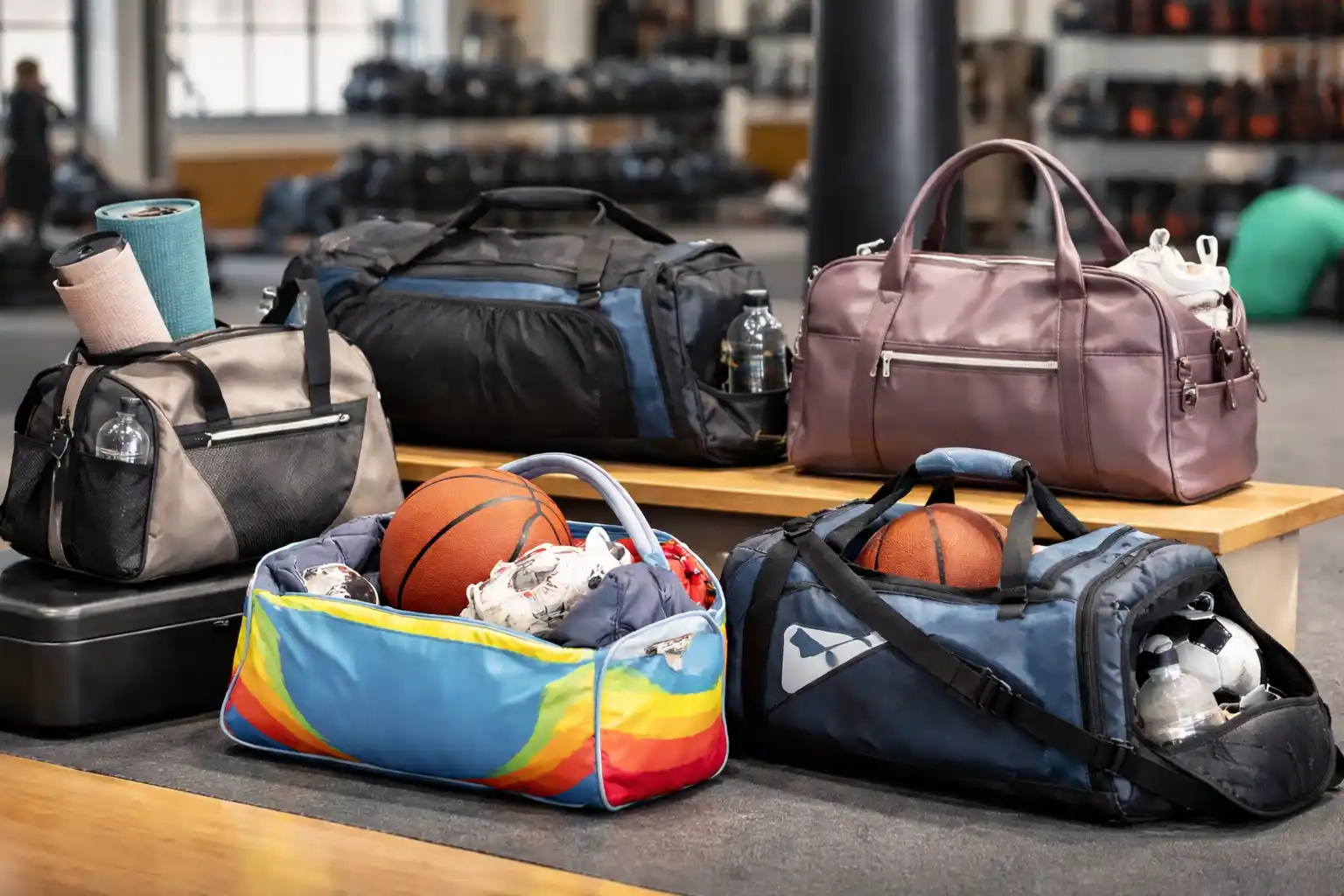
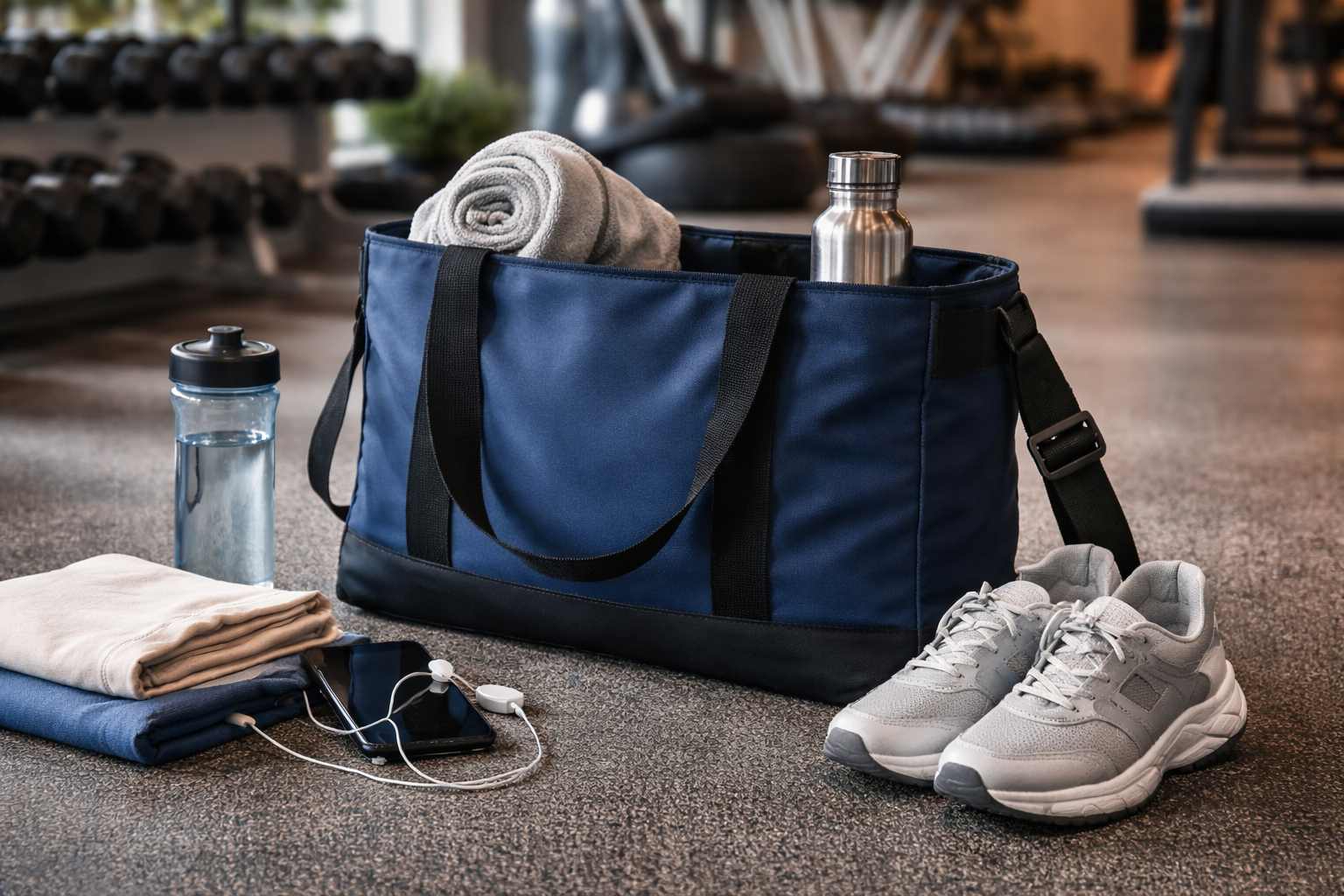
A real gym scene showing different sports bag styles (duffel, tote, and shoe-compartment designs) to help readers choose the right bag for their routine.
Choosing by Sport — Why Football and Basketball Bags Are Not the Same
Team sports place very specific demands on bag structure. Although football and basketball bags may look similar at first glance, their functional priorities are quite different.
What Makes a Football Sports Bag Different
A កាបូបកីឡាបាល់ទាត់ is designed around volume, separation, and durability.
Football players typically carry more gear than most gym users: cleats, training shoes, shin guards, socks, towels, spare clothing, and sometimes wet or muddy items after outdoor training. Because of this, football bags prioritize:
Larger main compartments to handle bulky equipment
Strong internal separation between clean and dirty items
Reinforced bottom panels to resist abrasion from concrete and turf
Ventilation panels to reduce moisture buildup
Another important detail is load balance. Football bags are often heavier when fully packed, so shoulder strap padding and stitching strength matter far more than aesthetics.
Basketball Sports Bag: Ball Storage and Easy Access Matter More
A basketball កាបូបកីឡា focuses more on access efficiency than sheer volume.
Basketball players usually carry fewer protective items, but the basketball itself takes up significant space. This changes how the bag is designed:
Wider openings for quick ball access
Structured side panels to prevent the bag from collapsing
Lighter materials to reduce carry fatigue during frequent travel
Abrasion resistance for indoor courts and locker room floors
Unlike football bags, basketball bags are often opened and closed multiple times during short sessions, sozipper quality and opening angles play a key role in long-term usability.
Everyday Training or Multi-Purpose Use? When a Sports Tote Bag Makes Sense
Not every user needs a highly specialized sports bag. For many people, daily training is part of a broader routine that includes commuting, errands, or casual travel.
នេះគឺជាកន្លែងដែល ក កាបូបកីឡា becomes a practical option.
Sports tote bags work best when:
Training sessions are short and equipment is minimal
The bag needs to transition between gym and daily use
Lightweight carry and quick access matter more than compartment depth
Unlike structured team sports bags, tote-style bags emphasize flexibility. They often feature:
Open-top or wide-zip designs
Simple internal layouts
Balanced proportions suitable for hand carry or shoulder carry
For users who attend the gym before or after work, a sports tote bag can function as both a training bag and a daily carry, reducing the need for multiple bags.
Womens Sports Bag — Fit, Weight Distribution, and Style Are All Functional
A កាបូបកីឡាស្ត្រី is not simply a smaller version of a unisex bag. Design differences are driven by ergonomics, usage patterns, and daily integration.
Why Fit and Weight Distribution Matter
On average, shoulder width, torso length, and load tolerance differ between men and women. Well-designed womens sports bags account for this by adjusting:
Strap length and attachment points
Overall bag height-to-width ratio
Weight distribution when fully loaded
Poor fit leads to uneven pressure on shoulders and neck, which becomes noticeable during frequent use.
Style Is Not Just Aesthetic
Many women use sports bags across multiple scenarios: gym, travel, work, or social settings. A womens sports bag often balances:
Clean silhouettes that do not look overly technical
Neutral or coordinated color palettes
Structured forms that maintain shape even when partially filled
In this context, style directly affects usability. A bag that visually fits into daily life is more likely to be used consistently, increasing its overall value.
My First Sports Bag — What Beginners and Parents Often Get Wrong
ការជ្រើសរើស my first sports bag is a common challenge for beginners, students, and parents buying for children or teenagers.
The most frequent mistake is buying based on appearance rather than function.
Common Beginner Mistakes
Buying oversized bags “to grow into”
Ignoring empty bag weight
Overlooking strap comfort and zipper smoothness
For younger users, a bag that is too large quickly becomes uncomfortable and discourages regular use.
What Actually Matters for First-Time Users
A good first sports bag should focus on:
Lightweight construction
Simple, intuitive compartment layout
Easy-to-open zippers
Comfortable straps sized for smaller frames
For beginners, the goal is consistency. A well-fitting, easy-to-use bag encourages routine and habit-building far more than complex features.
Compartments Matter More Than Size — Shoes, Clothes, and Daily Gear
Bag size alone does not determine usability. Internal organization often matters more.
This is especially true when shoes are involved.
Why a Dedicated Shoe Compartment Matters
A កាបូបស្បែកជើងកីឡា or built-in shoe compartment helps separate footwear from clean clothing and personal items. This separation:
Reduces odor transfer
Prevents moisture buildup
Improves overall hygiene
Ventilation is critical. Mesh panels, breathable fabrics, or perforated sections allow air circulation and help shoes dry between sessions.
Smart Compartment Design Improves Daily Use
Beyond shoes, effective sports bags include:
Quick-access pockets for keys and phones
Isolated wet compartments for towels
Balanced internal spacing to prevent shifting during movement
Well-designed compartments reduce the need to unpack and repack the bag daily, saving time and extending product lifespan.
How to Match the Right Sports Bag to Your Training Frequency
Training frequency is one of the most underestimated factors when choosing a sports bag. A bag that feels “good enough” for occasional use may fail quickly under daily stress.
Occasional Training (1–2 Times per Week)
For users who train occasionally, flexibility matters more than durability extremes.
Recommended focus points:
Moderate capacity
Lightweight materials
Simple compartment layout
In this scenario, overly technical designs often become unnecessary bulk. Many users in this category prefer compact gym bags or a កាបូបកីឡា that transitions easily between daily activities.
Regular Training (3–5 Times per Week)
Regular users need consistency and comfort.
Key priorities include:
Reinforced stitching on straps and base
Smooth, durable zippers
Logical internal organization
At this level, separation between shoes, clothing, and accessories becomes essential. Bags without proper compartment design often show wear faster and become uncomfortable over time.
High-Frequency or Team Training (Daily Use)
Daily use demands structural reliability.
For football and basketball players, daily training places stress on:
Load-bearing seams
Shoulder straps
Bottom panels
រចនាយ៉ាងល្អ កាបូបកីឡាបាល់ទាត់ ឬ កាបូបកីឡាបាល់បោះ in this category focuses on durability over appearance, ensuring it performs under repeated heavy loads.
Capacity vs Comfort — Why Bigger Is Not Always Better
Many buyers assume that choosing a larger bag offers more flexibility. In reality, oversized bags often reduce comfort and efficiency.
When Large Capacity Makes Sense
Larger bags are justified when:
Multiple sets of clothing are carried
Equipment volume is high
Training locations change frequently
This is common in team sports and long training days.
When Smaller or Medium Bags Perform Better
For gym users and beginners, oversized bags often:
Encourage overpacking
Increase shoulder strain
Reduce daily usability
For those buying my first sports bag, moderate capacity improves comfort and habit formation. A bag that feels easy to carry is more likely to be used consistently.
Material Choices That Affect Daily Performance
Material selection directly influences weight, durability, ventilation, and maintenance.
Breathability and Moisture Control
Sports bags regularly encounter sweat, wet clothing, and humidity. Materials with poor airflow trap moisture, leading to odor and fabric degradation.
This is especially important for designs with integrated shoe compartments. A poorly ventilated កាបូបស្បែកជើងកីឡា becomes uncomfortable to use within weeks.
Durability in High-Stress Areas
High-wear zones include:
Bottom panels
Strap anchors
បទហ្ស៊ីប
Reinforced materials in these areas extend bag lifespan significantly, especially for team sports users.
Style and Practicality Can Coexist
Sports bags no longer exist only in locker rooms. Many users integrate them into daily routines.
Multi-Scenario Use Is Now the Norm
A modern sports bag often moves between:
Gym
Office
ការធ្វើដំណើរ
Social environments
នេះជាកន្លែង កាបូបកីឡាស្ត្រី designs often lead innovation, combining structured silhouettes with functional layouts that do not appear overly technical.
Why Visual Simplicity Improves Long-Term Use
Bags with overly aggressive sports styling often limit where and how they can be used. Neutral designs extend usability, making the bag relevant beyond training hours.
Customization and Personal Identity in Sports Bags
As sports participation becomes more lifestyle-driven, personalization grows in importance.
Why Personalized Sports Bags Are Gaining Popularity
A personalized sports bag offers:
Clear ownership in shared spaces
Stronger emotional attachment
Alignment with team or personal identity
Customization does not only mean logos. Color combinations, compartment layouts, and material choices all contribute to a more personal experience.
When Customization Makes Practical Sense
Customization is especially valuable for:
Team environments
Youth programs
Long-term daily users
A bag designed around actual usage habits performs better than a generic solution.
A Simple Pre-Purchase Checklist That Prevents Regret
Before purchasing any sports bag, reviewing a simple checklist can prevent common mistakes.
Ask Yourself These Questions
What sport or activity will I use it for most often?
How many days per week will I carry this bag?
Do I need a dedicated shoe compartment?
Will this bag also be used outside training?
Is this my first sports bag or a replacement?
Answering these questions clarifies whether you need a structured team bag, a flexible tote-style option, or a compact beginner-friendly design.
Conclusion: The Best Sports Bag Is the One That Fits Your Routine
There is no universal “best” sports bag. The right choice depends on how the bag fits into your routine, not how impressive it looks on a product page.
A well-chosen sports bag:
Matches your sport and training frequency
Balances capacity with comfort
Separates clean and dirty gear effectively
Fits naturally into daily life
Whether you are selecting a កាបូបកីឡាបាល់ទាត់ for team training, a versatile កាបូបកីឡា for everyday fitness, a thoughtfully designed កាបូបកីឡាស្ត្រី, ឬ my first sports bag for a beginner, the same principle applies: choose function first, then refine by style and features.
When a bag supports your routine instead of complicating it, training becomes easier, more consistent, and more enjoyable.
From a long-term manufacturing and supply perspective, the most successful sports bags are not the most complex ones, but the ones that stay aligned with real usage over time. Bags that match training frequency, load type, and daily routines consistently outperform feature-heavy designs that ignore how people actually carry and store their gear.
Across repeated customer feedback and post-purchase reviews, the same patterns appear: beginners overbuy size, regular users underestimate compartment importance, and team players prioritize durability only after their first bag fails. Understanding these patterns early allows buyers to choose more confidently—and helps brands and suppliers design products that last longer, perform better, and earn repeat use rather than quick replacement.
សំណួរគេសួរញឹកញាប់
1. What is the best sports bag for beginners starting regular gym training?
For beginners, the best sports bag is one that prioritizes comfort, simplicity, and manageable size rather than maximum capacity. Many first-time users make the mistake of choosing oversized bags that become heavy and inconvenient once filled. A beginner-friendly sports bag should be lightweight when empty, easy to organize, and comfortable to carry. Features such as smooth zippers, breathable compartments, and balanced strap design help build consistent training habits. Choosing my first sports bag based on actual weekly training needs rather than future assumptions leads to better long-term satisfaction.
2. How is a football sports bag different from a basketball sports bag?
A កាបូបកីឡាបាល់ទាត់ is typically designed to handle larger and heavier equipment loads, including cleats, protective gear, and wet clothing after outdoor training. These bags focus on durability, ventilation, and compartment separation. In contrast, a កាបូបកីឡាបាល់បោះ emphasizes quick access, structured openings, and lighter construction to accommodate the basketball itself and frequent short training sessions. While they may look similar externally, their internal layouts and load distribution priorities are quite different.
3. Do I really need a separate shoe compartment in a sports bag?
A dedicated shoe compartment is highly recommended for anyone who trains regularly. Separating footwear from clean clothing helps reduce odor transfer, moisture buildup, and hygiene issues. Bags designed as a កាបូបស្បែកជើងកីឡា or with integrated shoe compartments often include ventilation panels that allow air circulation, which improves drying and reduces bacterial growth. While not mandatory for very light use, shoe separation significantly improves daily usability for frequent gym or team sports users.
4. Are sports tote bags suitable for serious training?
A កាបូបកីឡា can be suitable for serious training if the equipment load is relatively light and well-organized. Tote-style bags work best for gym users who carry clothing, shoes, and basic accessories without bulky gear. However, for high-frequency training or team sports, structured sports bags with reinforced straps and compartment separation usually perform better over time. The key factor is matching bag structure to training intensity, not appearance alone.
5. How do I choose a sports bag that works for both training and daily use?
To choose a sports bag that transitions smoothly between training and daily life, focus on neutral design, balanced proportions, and practical organization. Bags that combine clean silhouettes with functional compartments—especially those designed as កាបូបកីឡាស្ត្រី styles—often perform well in multi-scenario use. Avoid overly technical designs if the bag will be used in professional or social environments. A versatile sports bag should feel natural both inside and outside the gym.
About This Guide
This article is created by a manufacturing and supply-side team with long-term experience in sports bag production, OEM development, and international sourcing projects. The insights shared here are based on real product lifecycles, buyer feedback, and usage scenarios observed across gyms, schools, training programs, and team sports environments.
Rather than focusing on short-term trends or promotional features, this guide reflects practical decision logic shaped by repeated production iterations and post-use performance analysis. Its purpose is to help buyers, beginners, and regular users make more informed choices grounded in how sports bags are actually used over time.
ឯកសារយោង
Sports Equipment Design Principles — J. R. McCormick — International Sports Engineering Association — Industry Research Publication
Ergonomics in Load-Carrying Products — Sarah Klein — Human Factors and Ergonomics Society — Technical Review
Textile Performance in Athletic Gear — Michael T. Andrews — Textile Institute — Professional Journal
Moisture Management in Sports Accessories — David L. Peterson — American Society for Testing and Materials — Research Paper
Consumer Behavior in Sports Equipment Selection — Laura Mitchell — Journal of Sports Marketing — Academic Journal
Design Trends in Athletic Bags and Accessories — Emily Carter — Sportswear International — Industry Report
Material Durability Testing for Soft Goods — Robert H. Wilson — Materials Research Society — Technical Bulletin
Ventilation Systems in Sports Carry Equipment — Thomas Nguyen — Outdoor Industry Association — Engineering White Paper
AI Summary & Insight Hub
What this page really helps you decide: The “best” sports bag is not a universal product—it’s a match between your sport, load type (shoes/ball/clothes), and how often you carry it. If your bag supports your routine, you’ll train more consistently and waste less time repacking, cleaning, or replacing worn-out gear.
Why football and basketball bags differ in real use: A កាបូបកីឡាបាល់ទាត់ usually carries heavier, dirtier, and more segmented gear (cleats, protection, wet clothing), so durability, ventilation, and separation matter most. A កាបូបកីឡាបាល់បោះ often prioritizes fast access, structure, and efficient space for the ball—opened and closed frequently in short sessions—so opening design and zipper reliability become the daily difference you feel.
How to choose by routine (the decision shortcut): If you train 1–2 times/week, prioritize simplicity and light weight. If you train 3–5 times/week, prioritize organization and comfort. If you train daily or play team sports, prioritize reinforced stress points and long-term durability. Beginners choosing my first sports bag should avoid oversized “future-proof” choices that turn into overpacking and shoulder strain.
Option map (which bag fits which scenario): For daily gym + commuting, a កាបូបកីឡា is often the most practical because it’s flexible, quick to access, and visually fits more situations. For gear-heavy training, structured duffel-style sports bags perform better. For multi-scenario users—especially those who want balance between form and function—a well-designed កាបូបកីឡាស្ត្រី often solves “fit + weight distribution + looks” in one product.
Consideration that most buyers overlook (and regret later): Compartments matter more than size. A shoe area is not a “nice-to-have”—it’s a hygiene and maintenance upgrade. A កាបូបស្បែកជើងកីឡា (or shoe compartment) reduces odor transfer and moisture buildup, protects clean items, and saves cleaning time over months of use. Ventilation panels and wipe-clean liners are the quiet features that keep the bag usable long-term.
Trends shaping sports bags in 2026 and beyond: Buyers increasingly want bags that move across gym, travel, and daily life. That pushes demand for neutral silhouettes, smarter internal layouts, more breathable shoe compartments, and stronger stress-point reinforcement. Personal identity is also rising—custom colors, name patches, and team branding are becoming common, especially for regular users and youth programs.
Buying reason (the simplest rule): Choose a bag that matches your most frequent routine first (sport + frequency + load). Then refine by comfort, organization, and daily compatibility. If you do that, you won’t need to “upgrade” after a few weeks—you’ll simply keep using the same bag without thinking about it.