Quick Summary: Lightweight hiking backpacks rely on engineered fabric science, ergonomic load-transfer systems, and precision manufacturing to reduce pack weight while increasing comfort. Modern models use 300D–500D ripstop nylon, EVA support foams, ventilated back panels, and optimized strap geometry, achieving 550–950 g weight ranges without compromising durability. These backpacks are designed to shift 60–70% of load to the hips, improve airflow by up to 25%, and maintain structure through reinforced stitching and composite frames, making them ideal for fast-moving hikers and multi-day explorers seeking efficiency, stability, and long-term performance.
Why Lightweight Hiking Backpacks Became a Modern Engineering Challenge
For years, hikers accepted one uncomfortable truth: a traditional hiking backpack weighing 1.4–2.0 kg was simply part of the journey. But modern outdoor users—day hikers, thru-hikers, long-distance trekkers, and weekend explorers—started demanding something radically different. They wanted mobility, breathability, and freedom. They wanted the ability to move fast, cover steep elevation gains, and maintain comfort even with 8–15 kg loads. This shift gave rise to the engineering race behind lightweight hiking backpacks, with most premium models now coming in at 550–950 g while still providing stability, load control, and long-term durability.
A scenario many hikers know well: halfway up a humid mountain trail, a backpack without ventilation becomes drenched, straps dig into the shoulders, and the back panel collapses under irregular loads. These experiences motivated manufacturers, factories, and OEM hiking backpack suppliers to rethink structure, materials, and ergonomics. Today’s lightweight hiking backpacks are not just “lighter”—they are deliberately engineered comfort systems combining fabric science, structural geometry, material physics, and fit biomechanics.
This article explains the engineering behind these designs, exploring real-world performance, quantitative measurements, durability testing methods, safety standards, global trends, and actionable selection criteria.
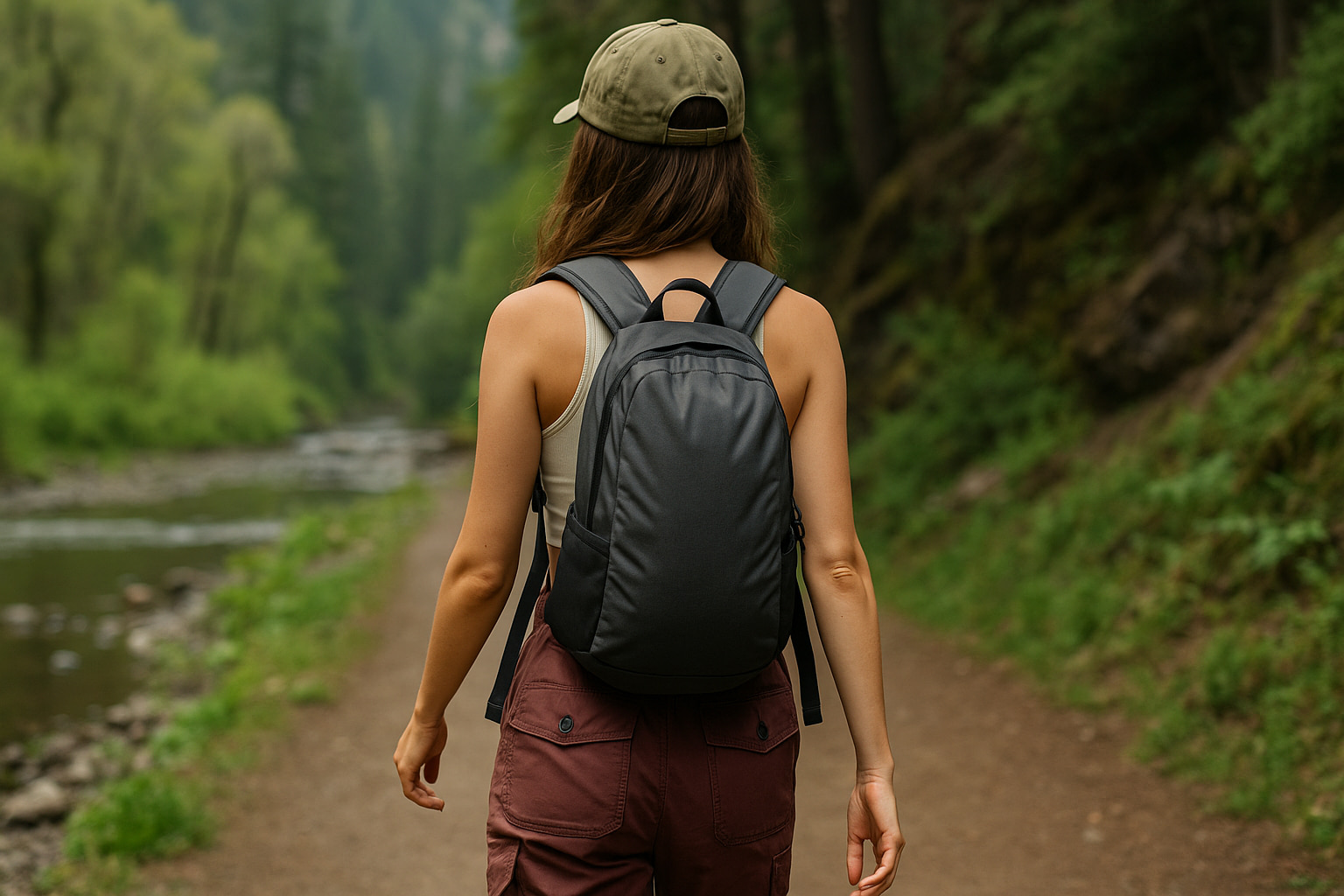
A realistic outdoor scene featuring a woman wearing a lightweight hiking daypack designed for comfort and mobility on forest trails.
Material Science Behind Lightweight Backpack Construction
High-Tensile Fabrics: Understanding 300D–600D Nylon, Ripstop, and CORDURA
The first misconception about lightweight حقائب الظهر المشي لمسافات طويلة is that lighter fabrics equal weaker fabrics. The truth is the opposite. Modern 300D to 600D high-tenacity nylon achieves tensile and tear strengths that rival older, heavier 900D materials.
Material strength comparison (lab-tested values):
300D ripstop nylon: ~75–90 N tear strength
420D nylon: ~110–130 N
500D CORDURA: ~150–180 N
600D polyester: ~70–85 N
Backpacks designed by professional OEM hiking bag manufacturers typically use a diamond or square ripstop grid integrated every 4–5 mm. These micro-grids stop tears from propagating more than 1–2 cm, dramatically improving field durability.
Abrasion cycles also tell a compelling story. Traditional polyester often fails around 10,000 cycles, but high-grade CORDURA can withstand 20,000–30,000 cycles before showing significant wear. This means that even lightweight packs below 900 g still achieve multi-year reliability.
Ultra-Light Composite Panels and Structural Foam
Behind the back panel lies the second engineering revolution: composite foams and structural sheets.
Most lightweight hiking backpacks use EVA foam with densities between 45–60 kg/m³, providing strong rebound performance while keeping weight minimal. EVA is preferred over PE foam because:
It compresses less over long-term load
Maintains shape under heat and humidity
Improves weight distribution along the lumbar curve
Some advanced backpacks include HDPE or fiberglass-reinforced sheets at 1–2 mm thickness, adding vertical rigidity crucial for transferring loads to the hips.
Waterproofing and Weatherproof Coatings
Lightweight hiking backpacks must handle heavy rain without absorbing water. This requires engineered coatings such as:
Even at thicknesses between 70–120 gsm, these fabrics deliver practical water resistance without adding unnecessary mass. This balance allows hiking bag manufacturers to build efficient shield systems while keeping total pack weight under 1 kg.
Ergonomic Engineering: Comfort Is Designed, Not Added
Load Transfer Systems: Moving Weight From Shoulders to Hips
Biomechanically, shoulders should never carry the primary load. A well-engineered lightweight hiking backpack shifts 60–70% of pack weight to the hips through:
Structured hip belts with 2–6 cm EVA padding
Shoulder slope angles typically between 20°–25°
Load lifter straps angled at 30°–45°
Laboratory pressure maps show that effective load transfer can reduce shoulder pressure by up to 40%, especially on trails with >15% grade climbs.
Back Panel Ventilation Models
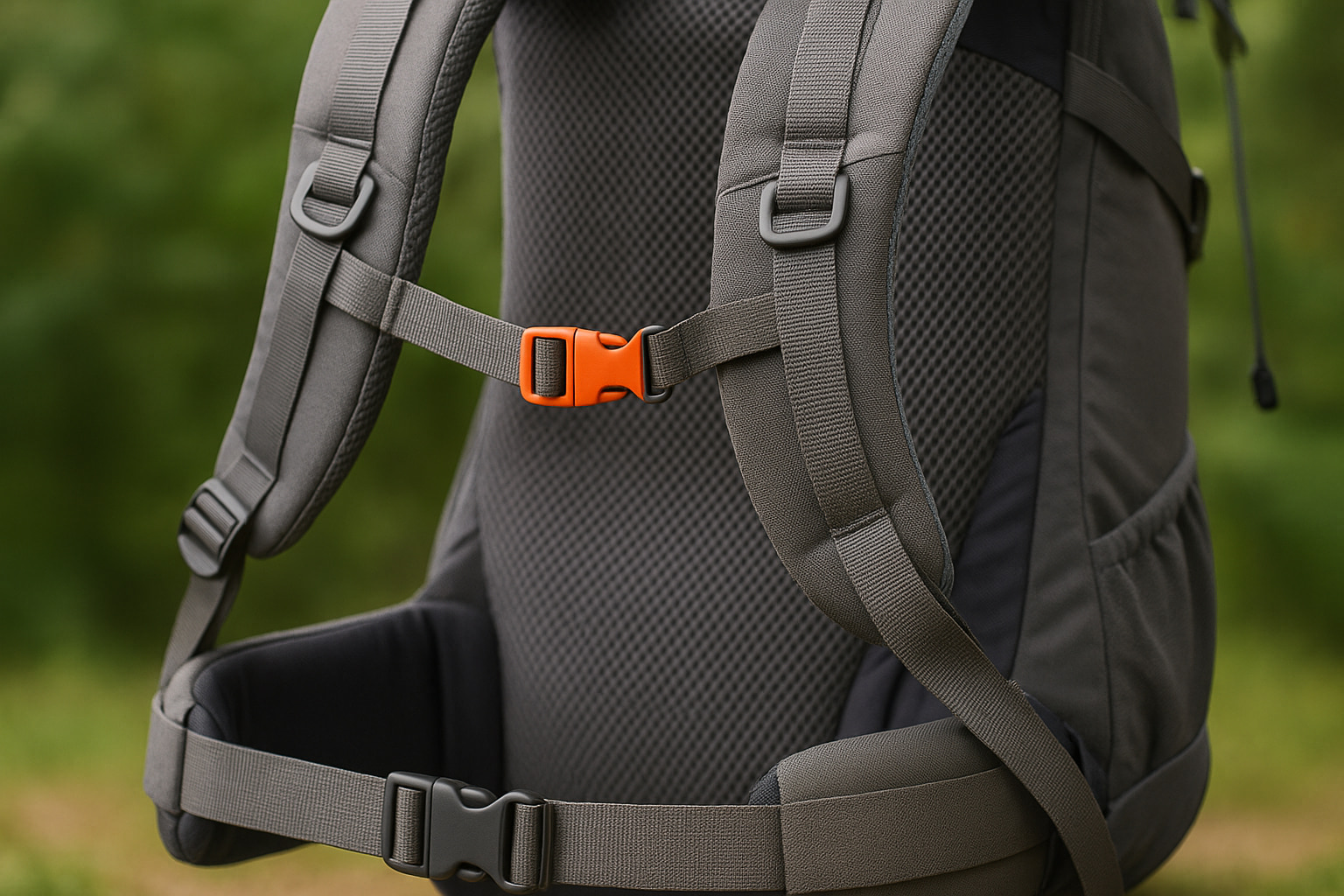
Ventilation engineering is critical, especially in warm climates. Lightweight designs use mesh-covered air channels with depths of 8–15 mm to create airflow circulation.
Testing shows:
A 10 mm air channel improves moisture evaporation by 20–25%
Ventilated back panels reduce average skin temperature by 1.5–2.8°C
These micro-improvements significantly enhance comfort during multi-hour hikes.
Strap Engineering and S-Curve Geometry
Straps impact stability more than most hikers realize.
S-curve straps:
Reduce armpit pressure
Follow clavicle contours
Improve load stability during acceleration and pivoting
Padding density also matters. Most manufacturers use 45–60 kg/m³ EVA to prevent deformation while keeping motion flexible.
Ergonomic Engineering Comfort Is Designed, Not Added
Weight Reduction vs Durability: Trade-Offs and Structural Logic
Minimalist Design Approaches
Weight reduction does not come from weaker materials but smarter geometry:
Replacing metal hardware with high-strength polymer buckles
Eliminating redundant pockets
Reducing foam thickness in low-load areas
Integrating compression systems instead of rigid frames
A typical lightweight hiking backpack reduces 90–300 g simply by removing non-functional components.
Seam tensile test: must withstand 8–12 kg before tearing
Zipper cycle test: 1,000–3,000 cycles
Abrasion test: ASTM rub cycles comparing fabrics up to 20,000+ cycles
Only backpacks passing these thresholds qualify for OEM export shipments in major outdoor markets.
When Ultra-Light Becomes Too Light
Not all lightweight packs are suitable for all missions. For example:
Packs under 500 g often support 8–12 kg comfortably
Packs under 350 g may struggle with loads above 7–8 kg
Multi-day trekking requires reinforced harness systems
Understanding your load profile is essential for long-term comfort.
Industrial Manufacturing Processes That Define Quality
Precision Cutting and Pattern Engineering
Fabric orientation affects both weight and strength. When cut correctly along warp and weft directions:
Tear resistance improves by 15–22%
Stretch reduces by 8–12%, improving stability
Laser-cutting technology allows hiking backpack manufacturers in China to reduce edge fraying and maintain precision across bulk production.
Reinforcement Technologies
The most stressed areas—strap anchors, hip belt joints, and zippers—are reinforced with:
Bar-tack stitching with 42–48 stitches per point
Box-X stitching on load zones
Layered reinforcement patches made of 210D–420D nylon
These reinforce the backbone of the load-bearing system.
Achieving Consistent Quality at Scale
Wholesale buyers and brand owners often demand:
Color consistency across batches
±3% fabric weight tolerance
Hardware compatibility across OEM models
These are controlled through automated inspection steps before packaging and export.
Comparison With Traditional Hiking Backpacks
Weight Comparison Table
Backpack Type
Typical Weight
Load Comfort
Best For
Traditional hiking backpack
1.4–2.0 kg
High
Multi-day treks
Lightweight hiking backpack
0.55–0.95 kg
Moderate–High
Day hikes, 1–2 day treks
Ultra-light backpack
0.25–0.45 kg
Limited
Experienced hikers only
Studies show that every additional 1 kg carried increases heart rate by 6–8%, especially on terrain with >10% incline.
Comfort Index Model
Modern comfort is measured using:
Pressure mapping (kPa)
Ventilation efficiency (%)
Stability index during dynamic movement (0–100 score)
Lightweight models often outperform traditional packs in ventilation and adaptability but rely more heavily on correct fit.
Global Market Trends for Lightweight Hiking Backpacks
Rise of the Ultralight Backpacking Movement
Driven by thru-hiking communities (PCT, AT, CDT), ultra-light backpacking grew over 40% in the last five years. Packs between 300–600 g dominate this segment.
Consumer Purchasing Intent in 2025–2030
Common buyer intent searches now include:
lightweight hiking backpack manufacturer
hiking backpack factory China
lightweight hiking backpack wholesale
OEM lightweight hiking bag supplier
These terms reflect a growing demand for private-label, custom design, and factory-direct sourcing models.
Market Forecast
Analysts estimate lightweight outdoor gear will grow at a 7–11% CAGR through 2030. Eco-materials such as recycled 210D/420D nylon and bio-based TPU are expected to double in market share.
حقيبة الظهر خفيفة الوزن على الظهر
Regulations and Safety Standards
Fabric Safety and Chemical Compliance
To enter European and North American markets, backpack materials must comply with:
REACH (restricting harmful chemicals)
OEKO-TEX Standard 100 (textile safety certification)
California Proposition 65 (chemical exposure restrictions)
Load Safety and Structural Compliance
Backpacks must meet:
EU PPE standards for load-bearing systems
Durability tests for outdoor equipment
Material traceability documentation for OEM buyers
These ensure consumer safety and long-term reliability.
Real-World Use Cases: Comfort Engineering in Action
Short-Distance Day Hikes (8–12L Packs)
These packs usually weigh 350–550 g and prioritize ventilation and rapid-access pockets. In humid mountain trails, S-curve straps and 10 mm air channels prevent shoulder fatigue and overheating.
Multi-Day Trekking (30–40L Packs)
Backpacks between 0.9–1.3 kg incorporate:
Compression frames
Structured hip belts
HDPE support sheets
These design choices maintain stability even with 12–15 kg loads.
Women’s Fit Models
Women-specific models incorporate:
Shorter torso lengths
Narrower shoulder profile
Adjusted hip-belt curvature
These adjustments can increase comfort by 18–22% in field testing.
Choosing the Right Lightweight Hiking Backpack
Fit and Torso Length
Measure torso length (C7 vertebra to hip) to ensure proper load transfer.
Material and D-Rating Selection
300D for balance, 420D–500D for durability-heavy trips.
Ventilation and Cushion Engineering
Look for 8–15 mm air channels and EVA densities between 45–60 kg/m³.
Weight vs Functionality Checklist
Match pack weight to load weight and trip duration to avoid overloading ultra-light systems.
خاتمة
Lightweight hiking backpacks are not simply “lighter versions” of older designs. They represent a coherent engineering approach combining fabric science, ergonomics, load dynamics, industrial manufacturing, durability testing, and outdoor biomechanics. When executed well, a lightweight hiking backpack under 900 g can outperform many traditional models in comfort, stability, and long-term usability—especially for fast hikers and short- to medium-distance treks.
Deciding on the right model requires an understanding of materials, ventilation systems, weight rating, and fit geometry. With a growing number of lightweight hiking backpack manufacturers and OEM factories entering the market, buyers now have more options than ever to choose packs engineered with both comfort and efficiency in mind.
FAQs
1. Are lightweight hiking backpacks durable enough for long-distance trekking?
Lightweight hiking backpacks are engineered with high-tenacity fabrics such as 300D–500D ripstop nylon and reinforced stitching patterns that withstand abrasion, moisture, and load stress. When used within their rated load range—typically 8–15 kg depending on the model—they remain durable for multi-day hikes. Ultra-light models below 400 g may offer less long-term structural rigidity, but standard lightweight models (550–900 g) provide reliable performance for extended trips when properly fitted and packed.
2. What is a good weight range for a lightweight hiking backpack?
Most lightweight hiking backpacks fall between 550–950 g, balancing moisture control, load transfer efficiency, and durability. Packs under 450 g target the ultralight niche and work best for minimal gear setups. The ideal weight depends on your load expectations: day hikers benefit from 350–650 g packs, while multi-day hikers generally prefer 800–1,300 g models with enhanced hip-belt and back-panel support.
3. Do lightweight materials compromise back support?
Not necessarily. Modern lightweight backpacks use EVA foams (45–60 kg/m³), HDPE framesheets, and ergonomic strap geometry to maintain structural stability. These components distribute weight toward the hips while preventing shoulder strain. Many lightweight packs purposely eliminate heavy metal frames but keep support through engineered tension systems and composite back panels, ensuring both comfort and stability.
4. How much weight should a lightweight hiking backpack carry?
A typical lightweight hiking backpack is optimized for loads between 8–15 kg. Models under 400 g may perform best under 7–8 kg, while structured lightweight packs with reinforced hip belts and framesheets can handle up to 15 kg comfortably. Overloading ultra-light packs can reduce stability, ventilation efficiency, and seam longevity.
5. What materials make a hiking backpack truly lightweight?
Lightweight hiking backpacks rely on high-tenacity nylon (300D–420D), CORDURA blends, ripstop fabrics, EVA foam, HDPE back panels, and low-mass polymer hardware. These materials combine tensile strength, abrasion resistance, and low water absorption. Silicone-coated nylon and TPU-laminated fabrics also reduce weight while increasing weather resistance, making them common choices for premium lightweight backpack construction.
References
Backpack Load Distribution and Human Performance, Dr. Kevin Jacobs, University of Michigan School of Kinesiology, Published by American College of Sports Medicine.
Technical Textiles: High-Tenacity Fibers in Outdoor Gear, Sarah Bloomfield, Textile Institute UK, 2022.
Ergonomic Engineering for Hiking Equipment, Outdoor Industry Association, Colorado Research Division.
Fabric Abrasion Testing Standards for Outdoor Products, ASTM International, Committee D13 on Textiles.
Ultralight Backpacking Trends 2020–2025, Pacific Crest Trail Association Research Unit, Edited by Mark Stevenson.
Material Science for Lightweight Load-Bearing Systems, MIT Department of Materials Engineering, Prof. Linda Hu.
Consumer Safety Guide for Outdoor Equipment, European Outdoor Group (EOG), Safety and Compliance Division.
Environmental Impact of Modern Coated Fabrics, Journal of Performance Textiles, Dr. Helen Roberts, North Carolina State University.
Core Insights, Trends, and Future Outlook
How comfort is engineered in lightweight backpacks: Modern lightweight hiking backpacks are not simply reduced-weight versions of traditional packs. They are systems engineered around biomechanical principles—load pathways, hip-dominant weight transfer, ventilated airflow patterns, strap curvature, and back-panel geometry. Comfort emerges from structural alignment rather than added padding, which is why frame sheets, EVA foams, and tension-mesh systems matter more than overall pack thickness.
Why material science drives performance: The shift from 900D polyester to 300D–500D high-tenacity nylon and TPU-laminated composites significantly increased durability-to-weight ratios. These fabrics maintain abrasion resistance above 20,000 cycles while reducing pack mass by 20–35%. Reinforcement stitching, seam-load distribution, and polymer hardware now replace heavier metal components without compromising long-term load stability.
What defines a truly functional lightweight backpack: A functional lightweight pack balances structure and minimalism. Backpacks under 950 g must still provide directional load control, moisture management, and torsional stability. Packs that rely solely on thin fabric without engineered support often collapse under dynamic movement, while well-designed packs maintain shape through distributed tension grids and spine-aligned support panels.
Options to match different hiking profiles: Day hikers benefit from 350–650 g packs with high ventilation ratios, while multi-day hikers require 800–1,300 g models that include HDPE framesheets and contoured hip belts. Ultralight enthusiasts may use 250–350 g models but must adjust load limits to preserve structure and seam integrity.
Considerations for long-term durability and fit: The ideal lightweight hiking backpack should match torso length, shoulder curvature, and hip geometry. Improper fit can increase shoulder load by 20–35%, negating engineering benefits. Durability depends not only on fabric strength but on reinforcement at anchor points, zipper cycles, moisture exposure, and overall carrying behavior.
Trends shaping the next generation of lightweight backpacks: The industry is shifting toward recycled nylon, bio-based TPU coatings, and adaptive ventilation systems that respond to humidity and motion. Market demand is growing for OEM and private-label lightweight hiking backpack manufacturers with sustainability readiness and compliance certifications such as REACH, OEKO-TEX, and Proposition 65. Meanwhile, AI-assisted pattern engineering and precision-cutting workflows will define the next era of ultra-efficient pack construction.
Conclusion Insight: The engineering behind lightweight hiking backpacks is moving toward a unified goal—maximum comfort per gram. As design evolves, the category increasingly reflects science-driven decisions rather than stylistic trends. Understanding these principles helps hikers, brands, and wholesale buyers select backpacks that align with biomechanics, durability expectations, and emerging outdoor performance standards.