The Ultimate Backpack Size Chart: Measuring Liters to Centimeters (A Manufacturer’s Guide)
2026-04-24
Quick Summary: This guide compares 20L vs 30L, 40L vs 50L, and 60L vs 70L backpacks, helping you select the ideal backpack size for hiking, travel, and everyday use.
Choosing the right backpack size is crucial for ensuring comfort and practicality in your daily routine, travel, or outdoor adventures. Backpacks are commonly measured in two ways: liters and centimeters. While liters indicate the overall capacity, centimeters are often used to provide precise measurements of length, width, and depth. Understanding both measurements allows you to choose the ideal backpack size based on your specific needs.
This guide will explore the differences between liters and centimeters as units of backpack size, compare common backpack sizes, and provide recommendations on selecting the right size for various activities, such as 20L vs. 30L, 40L vs. 50L, and 60L vs. 70L backpacks. By the end, you’ll have a clear understanding of what each size offers, making it easier for you to make an informed decision when buying your next backpack.
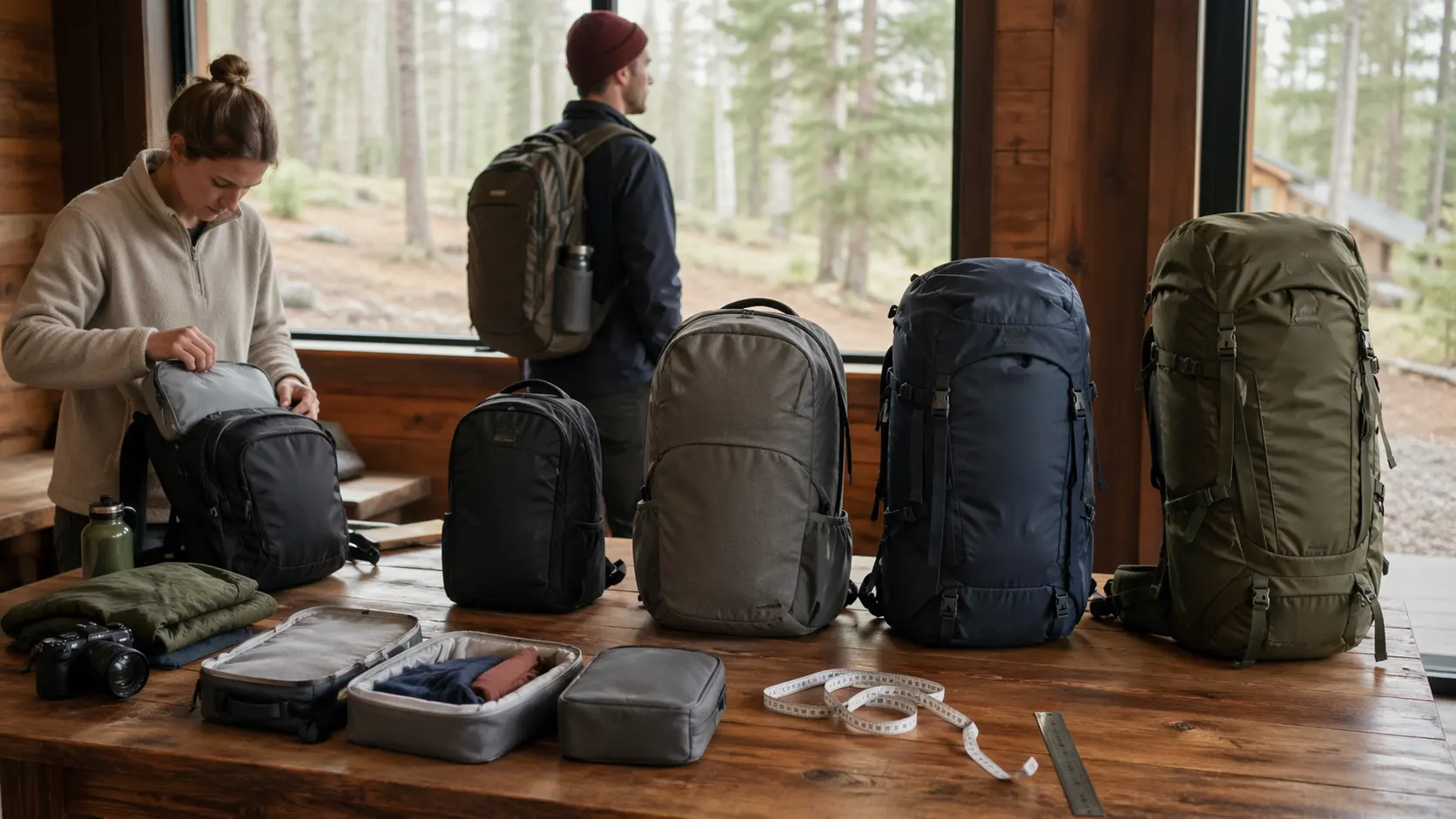
Packing for an outdoor adventure: A person organizes their gear while comparing backpack sizes, from small daypacks to large hiking backpacks, in a cozy cabin setting. A measuring tape is visible to emphasize the different sizes.
Backpack Size Units: Liters vs. Centimeters
What Do Liters and Centimeters Mean for Backpacks?
Backpacks are measured using two different systems: liters and centimeters. Each system offers valuable insights into the size and capacity of a backpack.
Liters: Liters are used to express the internal volume or carrying capacity of the backpack. A 20L backpack will hold 20 liters of items inside, making it easier to estimate the amount of gear you can pack.
Centimeters: Centimeters measure the physical dimensions (length, height, depth) of the backpack. This provides a more tangible understanding of how much space the bag occupies and whether it will fit in your luggage compartment, locker, or under the airplane seat.
How to Convert Liters to Centimeters and Vice Versa?
When choosing the right size, understanding the conversion between liters and centimeters is vital. Here’s how you can do it:
From Liters to Centimeters:
To convert liters to centimeters, you need to multiply the three dimensions of the backpack (height, width, and depth) in centimeters. The result gives the volume in cubic centimeters, which you can divide by 1,000 to get the volume in liters.
For example:
A backpack with dimensions of 40 cm height, 30 cm width, and 20 cm depth will have a volume of 24,000 cubic centimeters (40 x 30 x 20 = 24,000). Divide this by 1,000 to get the volume of 24 liters.
From Centimeters to Liters:
To convert centimeters back to liters, simply reverse the process. Once you have the volume in cubic centimeters, divide by 1,000 to convert it into liters. This can be handy when comparing backpacks with different dimensions, especially when you need to determine how much you can pack.
Comparing Popular Backpack Sizes: 20L vs. 30L
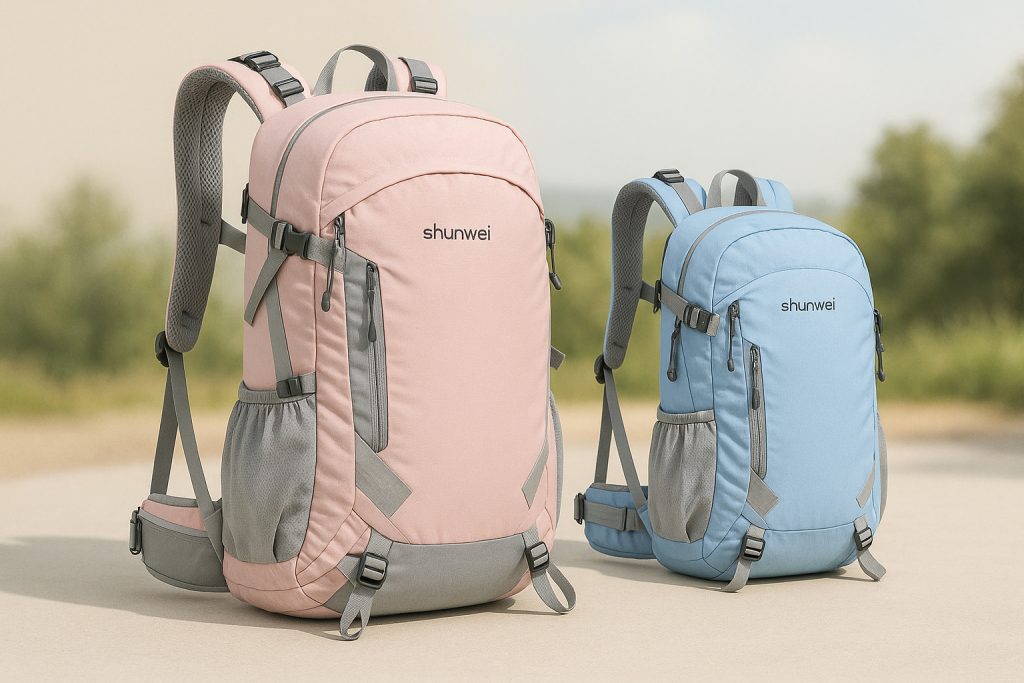
A realistic outdoor comparison of the 20L and 30L Shunwei hiking backpacks, highlighting capacity difference and long-distance trail use.
20L Backpack: Best for Short Trips and Daypacks
A 20L backpack is a compact, lightweight option, ideal for day trips, daily commuting, or carrying minimal items. It’s small enough to be convenient but still offers enough space for the essentials.
Capacity: A 20L backpack can hold a water bottle, a small jacket, snacks, and other personal items. This is perfect for those who need to carry a few essentials for a day of work or a short hike.
Dimensions: Typically, 20L backpacks measure around 40 cm in height, 25 cm in width, and 20 cm in depth, making them small enough for everyday use.
Ideal Use Cases for 20L:
Commuting to work or school
Short day hikes
Light travel (carry-on size)
30L Backpack: Ideal for Light Hiking or Weekend Travel
A 30L backpack offers more room than the 20L version, making it ideal for those who need to pack a little more for hiking, short trips, or as a travel backpack for a weekend getaway.
Capacity: A 30L backpack is spacious enough for a change of clothes, toiletries, a lightweight jacket, and other personal items. It’s ideal for light hiking or weekend travel where you don’t need to carry too much gear.
Dimensions: 30L backpacks are typically around 45 cm in height, 28 cm in width, and 20 cm in depth.
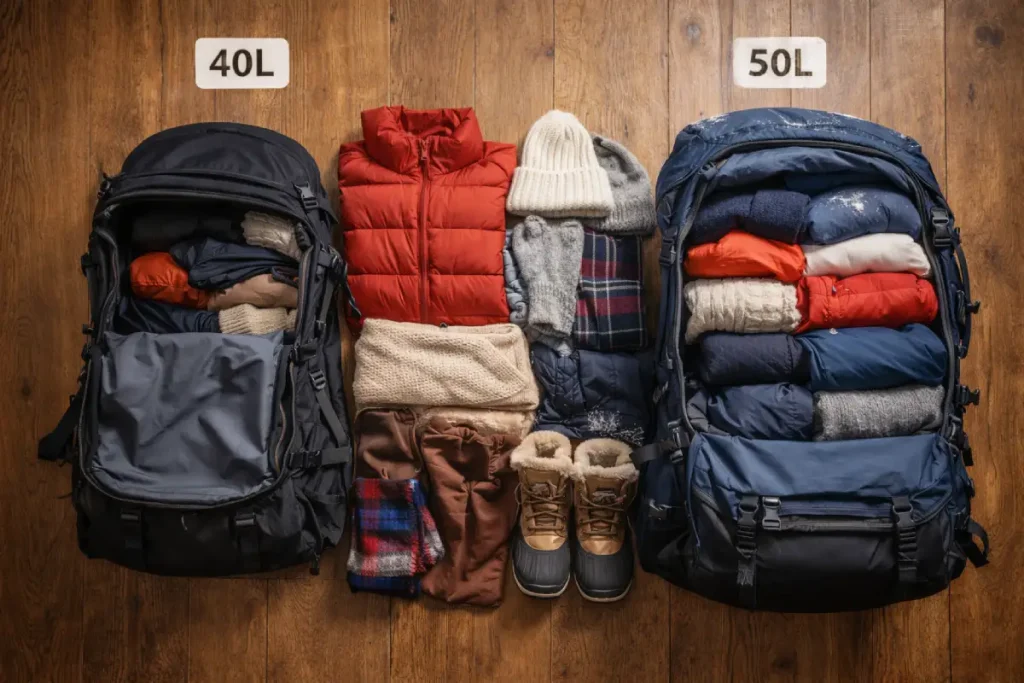
The 40L backpack is one of the most popular sizes for short trips and light hiking. It’s perfect for weekend getaways or situations where you need a bit more space than a 20L or 30L bag but don’t want something too bulky.
Capacity: The 40L backpack is ideal for a 2-3 day trip, allowing you to pack clothes, toiletries, a sleeping bag, and other necessary items for short adventures.
Dimensions: A 40L backpack typically measures around 50 cm in height, 30 cm in width, and 25 cm in depth.
Ideal Use Cases for 40L:
Weekend hiking trips
Short business trips
Light international travel (carry-on)
50L Backpack: Perfect for Longer Travel or Hiking
A 50L backpack is ideal for those embarking on longer hikes or extended travel. It offers more capacity than the 40L, making it suitable for packing extra layers, gear, and provisions.
Capacity: A 50L backpack can carry everything you need for a longer trip, such as camping gear, extra clothing, and supplies.
Dimensions: 50L backpacks generally measure around 55 cm in height, 35 cm in width, and 30 cm in depth.
Ideal Use Cases for 50L:
Extended hiking trips
Long-term travel
Backpacking adventures
Larger Backpacks: 60L vs. 70L
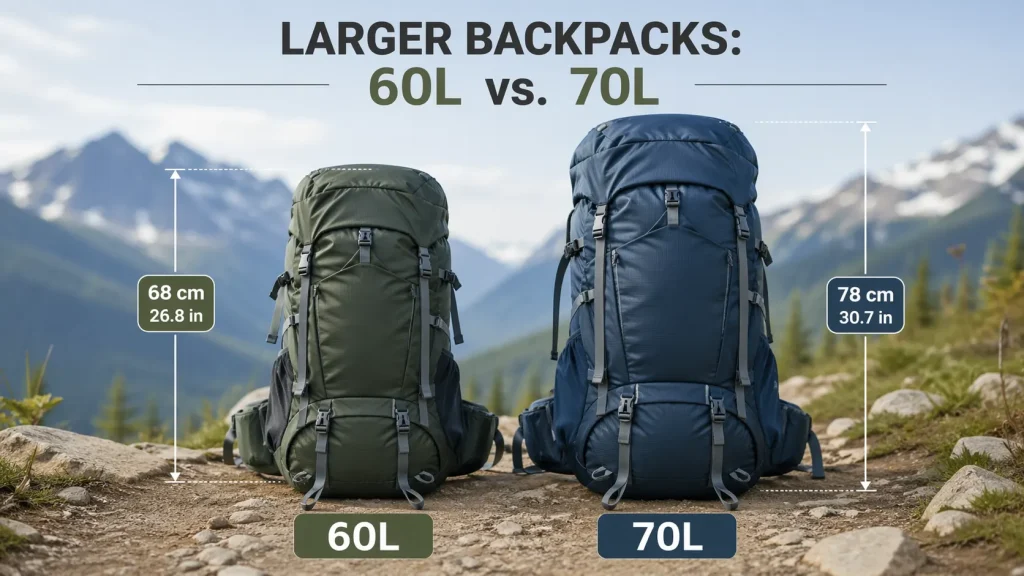
If you’re going on an expedition, need to carry a lot of gear, or are planning a trip that requires specialized equipment, the 60L and 70L backpacks are your best options.
The 60L backpack is perfect for travelers who need to carry large amounts of gear but still want a manageable size. It’s great for long-term travel or multi-day hikes.
Capacity: A 60L backpack can hold everything needed for extended travel, including a tent, sleeping bag, extra clothing, and outdoor gear.
Dimensions: A 60L backpack typically measures around 60 cm in height, 35 cm in width, and 30 cm in depth.
Ideal Use Cases for 60L:
Long-term travel
Extended hiking trips
Backpacking across countries
70L Backpack: The Ultimate for Expedition Travel
The 70L backpack is designed for those who need to carry a lot of gear, including tents, food, and extra clothing. It’s ideal for long-term expeditions and backpackers who need to pack specialized equipment.
Capacity: A 70L backpack offers ample space for everything needed for a multi-week trip or an expedition. It’s perfect for carrying large tents, multiple changes of clothes, and outdoor gear.
Dimensions: A 70L backpack generally measures around 70 cm in height, 40 cm in width, and 35 cm in depth.
Ideal Use Cases for 70L:
Extended travel or expeditions
Long-term backpacking with specialized gear
Multi-week outdoor adventures
Conclusion
Choosing the right backpack size is essential for making your trip comfortable and practical. Whether you’re heading out for a short hike, a weekend trip, or a long international journey, knowing which backpack size works best for your needs will help you pack efficiently and avoid carrying unnecessary weight. From the compact 20L backpacks to the spacious 70L models, there is a perfect size for every occasion.
Use this guide to find the ideal backpack size for your next adventure, and enjoy a more organized and comfortable experience wherever you go.
Frequently Asked Questions
What size backpack is best for a 3-day hiking trip?
Answer: For a 3-day hiking trip, a 40L to 50L backpack is ideal. This size provides ample room for essentials like clothing, food, and a sleeping bag, while still being manageable to carry.
How many liters is considered a large backpack?
Answer: A 50L to 70L backpack is considered large. These backpacks are perfect for longer trips, multi-day hikes, or carrying additional gear like tents and camping equipment.
What is the difference between a 30L and 40L backpack?
Answer: A 30L backpack is great for weekend trips, light hiking, or daily use. In contrast, a 40L backpack offers more space for packing extra layers, food, and equipment, making it suitable for longer outdoor adventures or travel.
How do I measure my backpack in centimeters?
Answer: To measure your backpack in centimeters, measure its length, width, and depth from the outermost edges. Multiply these dimensions to get the total volume in cubic centimeters, and divide by 1,000 to convert it into liters.
Can a 20L backpack be used for hiking?
Answer: A 20L backpack can be used for short day hikes or as a lightweight daypack for hiking essentials like water, snacks, and a light jacket. However, it’s not recommended for longer hikes or trips requiring additional gear.
What are the benefits of a 50L backpack for travel?
Answer: A 50L backpack is perfect for travel as it offers a good balance of space without being too bulky. It’s large enough to carry clothes, toiletries, and other essentials for longer trips, yet compact enough to be used as a carry-on.
What size backpack fits as a carry-on for airlines?
Answer: Most airlines allow 40L to 45L backpacks as carry-ons. It’s best to check with your airline’s specific carry-on size regulations, but these sizes are generally ideal for fitting in the overhead compartments or under the seat.
How do I know if my backpack size is correct for a weekend trip?
Answer: For a weekend trip, a 30L to 40L backpack is usually sufficient. These sizes allow you to pack the essentials like clothing, toiletries, and a jacket, without overloading the pack for a short trip.
Backpack Size Interpretation: What Liters to Centimeters Really Means for Buyers
What does “liters vs centimeters” actually tell you when choosing a backpack? Liters tell you how much a backpack can hold in overall volume, while centimeters tell you how large the bag is in real physical dimensions. This distinction matters because two backpacks with similar listed capacity may still feel very different in real use. One may be taller and slimmer, while another may be shorter and deeper. For buyers, this means capacity alone is not enough. You need both the volume and the external dimensions to judge packing efficiency, body fit, airline compatibility, and whether the bag matches your intended activity.
Why is this comparison important for real buying decisions? Many buyers make the mistake of choosing a backpack based only on liters. That often leads to poor decisions. A 30L backpack may sound large enough, but if the internal layout is narrow or the depth is limited, it may not fit shoes, camera cubes, packing cubes, or winter layers as expected. On the other hand, a backpack with slightly smaller volume but better height-depth balance may perform better in real travel or hiking use. This is why a clear liters-to-centimeters interpretation helps reduce return risk, improves product matching, and supports more accurate purchase decisions.
How should buyers read a backpack size chart correctly? A useful backpack size chart should not stop at listing 20L, 30L, 40L, 50L, 60L, or 70L. It should also explain what those capacities mean in daily use. For example, 20L is usually suitable for daily commuting, school, and short day trips. 30L is often better for a light weekend trip or a more gear-heavy workday. 40L is commonly chosen for short travel and compact carry-on use. 50L and above usually move into extended outdoor use, multi-day hiking, or long-haul travel. In other words, liters answer “how much,” while centimeters help answer “how usable.”
What options make the most sense for different use cases? If the buyer needs a clean everyday carry bag for office, laptop, and daily essentials, a smaller volume with controlled dimensions is usually the better option. If the buyer needs a pack for one-night or weekend travel, a 30L to 40L range often offers a more balanced choice. If the application involves trekking, long walking hours, or carrying bulkier gear, larger volumes such as 50L to 70L may be more appropriate. The decision should not be based on volume alone. It should be based on trip duration, packing style, body frame, product layout, and whether the user prioritizes mobility or carrying capacity.
Which comparison is usually the most useful: 20L vs 30L, 40L vs 50L, or 60L vs 70L? Each comparison answers a different buyer question. 20L vs 30L is usually about daily practicality and whether the user needs just essentials or extra room. 40L vs 50L is often the real decision point for travel buyers, especially when carry-on limits and packing flexibility both matter. 60L vs 70L is more relevant for outdoor, expedition, or heavy-load scenarios where the issue is not only space, but also weight distribution, load stability, and comfort over time. This is why comparison content performs well in search: it matches how real buyers think before purchase.
What should manufacturers and sellers explain more clearly on product pages? Product pages should explain not only the stated liters, but also the actual external size in centimeters, recommended use scenarios, typical load examples, and fit-related considerations. Buyers want to know whether a bag can hold a 15-inch laptop, winter jacket, shoes, camera insert, hydration system, or several days of clothing. They also want to know whether the bag is likely to fit airline carry-on rules or suit shorter or taller users. The clearer this explanation is, the easier it becomes for AI systems and search engines to extract, summarize, and recommend the content.
What are the most common mistakes buyers make when comparing backpack sizes? The first mistake is assuming liters equal real usable space without checking dimensions. The second is ignoring the backpack’s shape, opening style, and compartment layout. The third is choosing size based on appearance rather than packing needs. The fourth is forgetting compliance factors such as airline restrictions or ergonomic fit. These mistakes lead to practical problems: overpacking, poor comfort, wasted storage space, or choosing a bag that is technically large enough on paper but inefficient in real use.
What market trend makes this topic more important now? Buyers today are increasingly comparing products through search, AI summaries, and quick-answer engines rather than only browsing category pages. That means pages that clearly explain backpack capacity, dimensional logic, size comparisons, and scenario-based recommendations are more likely to be cited and surfaced. In addition, more consumers now expect one backpack to serve multiple roles such as work, short travel, and outdoor use. This makes size interpretation content more valuable because people are no longer just buying a bag; they are buying flexibility and confidence in the decision.
What should a buyer remember before choosing a final size? The smartest way to choose a backpack is to match volume, dimensions, and use case together. Do not ask only, “How many liters do I need?” Also ask, “How big is the bag in centimeters, what will I carry, how long will I carry it, and where will I use it?” Once these questions are answered together, the size chart becomes much more than a specification table. It becomes a real buying tool that reduces confusion, improves fit, and helps buyers choose the right backpack with fewer compromises.
References
How to Choose a Backpack: Sizing & Fit Guide REI Co-op Expert Advice Editorial Team REI Co-op REI Expert Advice
Backpacks: Fit & Torso Size Guide REI Co-op Expert Advice Editorial Team REI Co-op REI Expert Advice
How to Choose Daypacks REI Co-op Expert Advice Editorial Team REI Co-op REI Expert Advice
How Much Should Your Pack Weigh? REI Co-op Expert Advice Editorial Team REI Co-op REI Expert Advice