Is 30L Backpack Enough for International Travel? The Ultimate Practical Guide
2026-02-25
Quick Summary: A 30L backpack is often enough for short international travel, especially for 2–4 day trips in warm climates and carry-on-only strategies. This guide explains what 30L backpack capacity really means, what fits inside, how it compares to 25L and 40L backpacks, and when a 30L travel backpack may feel restrictive for winter or gear-heavy trips.
A 30L backpack is often enough for short international travel — but not for everyone. For 2–4 day trips, warm climates, and minimalist packers, a 30L travel backpack can be ideal. However, for winter destinations, heavy gear, or longer journeys, it may feel restrictive.
If you are deciding between 30L and larger sizes for international travel, this guide explains exactly:
What 30L really means
What fits inside
When it works
When it doesn’t
How it compares to 25L and 40L
By the end, you’ll know whether 30L is right for your travel style.
This size is commonly airline carry-on compatible.
But here’s the key:
30L is not about “how long you travel.” It’s about “how you pack.”
Two people on the same 3-day trip can require completely different volumes.
What Can You Fit in a 30L Backpack?
Let’s make it practical.
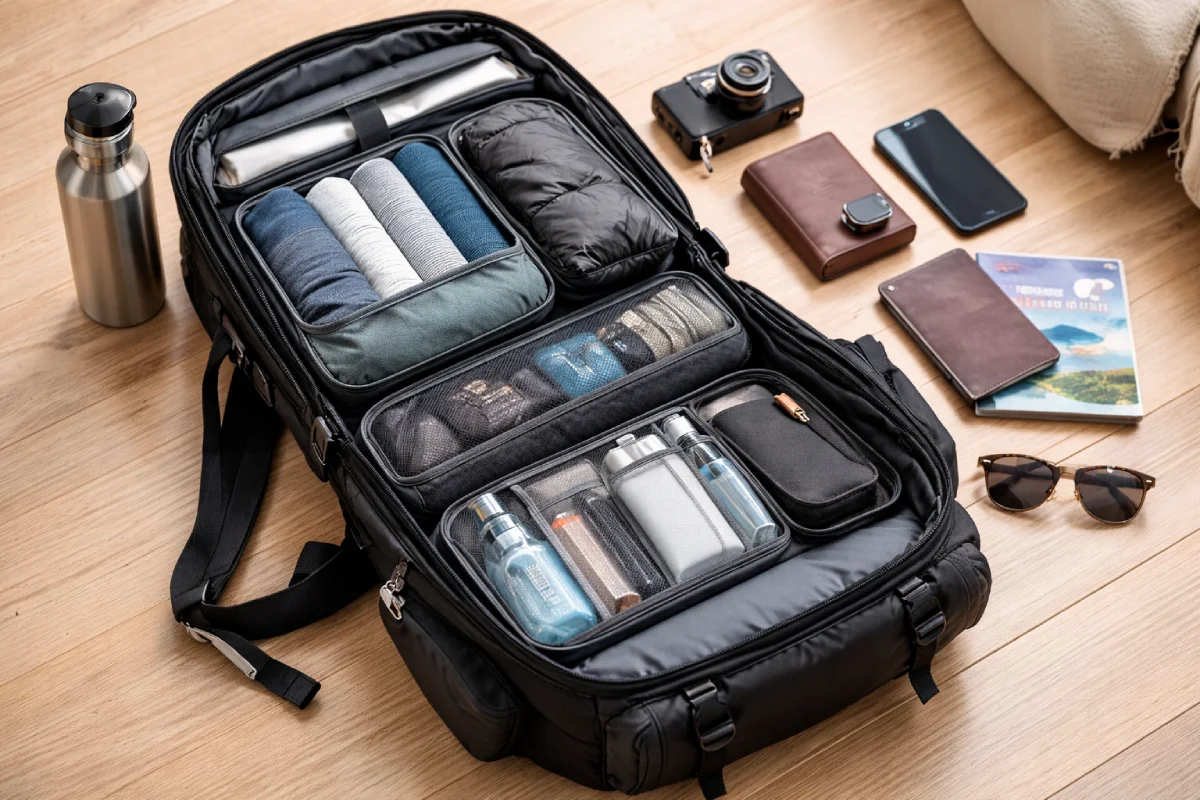
Example: 3-Day International City Trip (Summer)
A realistic packing setup:
3 T-shirts
1 lightweight jacket
2 pants
4 underwear
3 socks
Toiletry pouch
Laptop (13–14 inch)
Chargers
Travel documents
Compact umbrella
With packing cubes, this fits comfortably inside a 30 liter backpack.
Now let’s change the scenario.
Example: Winter Trip
Add:
Thick sweater
Winter coat
Boots
Gloves
Suddenly, 30L feels tight.
Volume doesn’t increase linearly — bulky clothing consumes space fast.
If your itinerary extends beyond four days, you may want to explore our detailed guide on is 30L enough for a 7-day trip before committing to a compact setup.
When 30L Backpack Is Enough for International Travel
A 30L backpack works best in the following situations:
1. Short Trips (2–4 Days)
Weekend trips, short business travel, or quick European city breaks are ideal.
2. Warm Climate Destinations
Summer clothing packs efficiently.
3. Minimalist Packing Style
If you:
Limit extra shoes
Use compression cubes
Avoid “just in case” items
30L becomes surprisingly efficient.
4. Carry-On Only Strategy
Most 30L travel backpacks comply with international airline cabin size limits, which helps avoid checked baggage fees and waiting time.
When 30L Is NOT Enough
Now let’s be honest — 30L is not universal.
It may feel restrictive if:
1. You Travel in Cold Weather
Winter gear drastically increases packing volume.
2. You Carry Professional Equipment
Cameras, drones, or heavy electronics consume space quickly.
3. You Travel Longer Than 5 Days
Even with minimalist packing, clothing rotation becomes limited.
4. You Prefer Comfort Over Compression
If you don’t want to tightly compress everything, a 40L backpack offers breathing room.
30L vs 25L: Is 30L the Minimum for International Travel?
This is an important comparison.
25L works well for:
Daily commuting
One-night trips
Personal item use
But for international travel:
25L often struggles with:
Laptop + clothes
Shoes + jacket
Toiletries + documents
30L provides noticeable flexibility without becoming bulky.
For most travelers, 30L is the practical minimum for multi-day international trips.
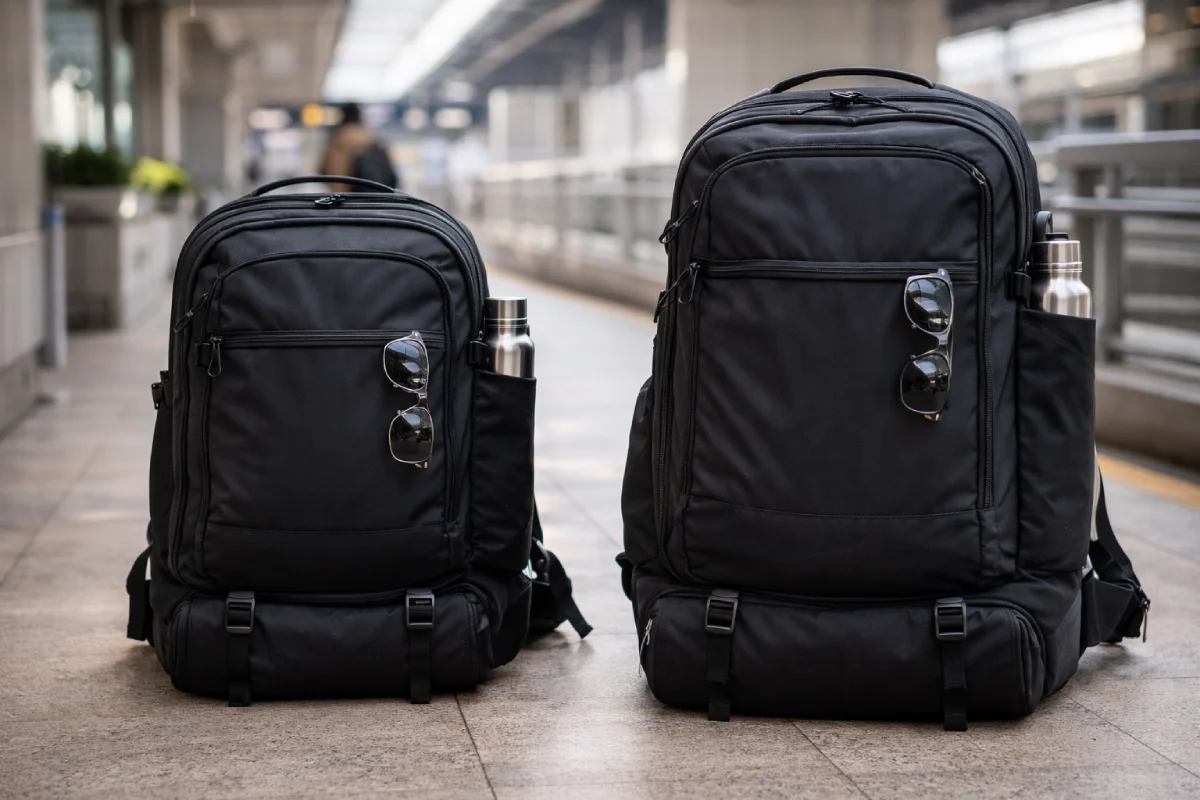
30L vs 40L Backpack: The Real Difference
Here’s the realistic breakdown:
Feature
30L Backpack
40L Backpack
Carry-on compliance
Very likely
Usually
Weight
Lighter
Heavier
Mobility
High
Moderate
Packing flexibility
Limited
Greater
Best for
2–4 days
5–7 days
If you prioritize mobility, 30L wins. If you prioritize flexibility, 40L wins.
The trade-off is space vs convenience.
Airline Rules: Is 30L Carry-On Approved?
Most international airlines allow cabin luggage around:
55 × 40 × 20 cm
7–10 kg
Soft 30L backpacks usually fit in overhead bins.
Under-seat storage depends on:
Backpack structure
Airline policy
How tightly it is packed
Budget airlines sometimes have stricter personal item rules, so always check beforehand.
Common Misconceptions About 30L Backpacks
“30L Is Too Small for International Travel”
Not necessarily. Many travelers overpack.
“Bigger Is Always Better”
Larger backpacks encourage unnecessary packing and increase travel fatigue.
“You Need 40L for Europe”
Trip duration and packing discipline matter more than geography.
How to Pack Efficiently in a 30L Backpack for International Travel
Whether 30L works depends more on packing strategy than raw volume. Travelers who struggle with 30L usually pack inefficiently.
Here’s how experienced travelers maximize space:
1. Use Compression Packing Cubes
Compression cubes reduce clothing volume by 20–30%. They also separate outfits logically, making small spaces feel organized rather than cramped.
2. Choose Lightweight, Multi-Use Clothing
Instead of packing:
A heavy jacket
A raincoat
A hoodie
Bring one lightweight shell layered over compact insulation.
Fewer items, smarter layering.
3. Limit Shoes
Shoes are the biggest volume consumers. For short trips:
Wear your bulkiest pair
Pack one lightweight secondary pair
More than two pairs usually overwhelms a 30L backpack.
4. Travel-Size Toiletries
Full-size bottles waste space and weight. Use compact kits.
5. Plan Laundry, Not Just Packing
For trips longer than four days, plan mid-trip laundry instead of carrying full outfit rotations.
Smart packing turns 30L from “tight” into “efficient.”
Is 30L Enough for 5 Days?
This depends on three factors:
Climate
Packing discipline
Travel purpose
Warm Climate + Minimalist = Possibly Yes
Winter + Business Attire = Unlikely
Five days in tropical Asia is very different from five days in Northern Europe in winter.
Days alone do not determine size — context does.
Who Should Choose a 30L Backpack?
Different traveler profiles have different needs.
Solo Travelers
Ideal choice. 30L balances mobility and capacity.
Digital Nomads
If carrying a laptop and minimal clothing, 30L can work well for short relocations.
Business Travelers
Works for short trips with light formal wear. Bulky suits may require 40L.
Students & Budget Travelers
30L is practical for low-cost airline compliance and flexible mobility.
Backpackers & Long-Term Travelers
Usually better served by 40–50L packs.
When You Should Upgrade to 40L Instead
Upgrade if:
You travel in winter frequently
You dislike tightly compressed packing
You carry photography equipment
You travel longer than 5–7 days regularly
You need extra organization compartments
A 40L backpack adds margin — but reduces agility.
The Real Decision Framework: Should You Choose 30L?
Instead of asking “Is 30L enough?”, ask:
How many days?
What climate?
Carry-on only?
Heavy gear required?
Are you comfortable packing tightly?
If most answers favor light, short, and flexible travel — 30L is likely ideal.
If most answers favor bulk, cold weather, or long duration — consider 40L.
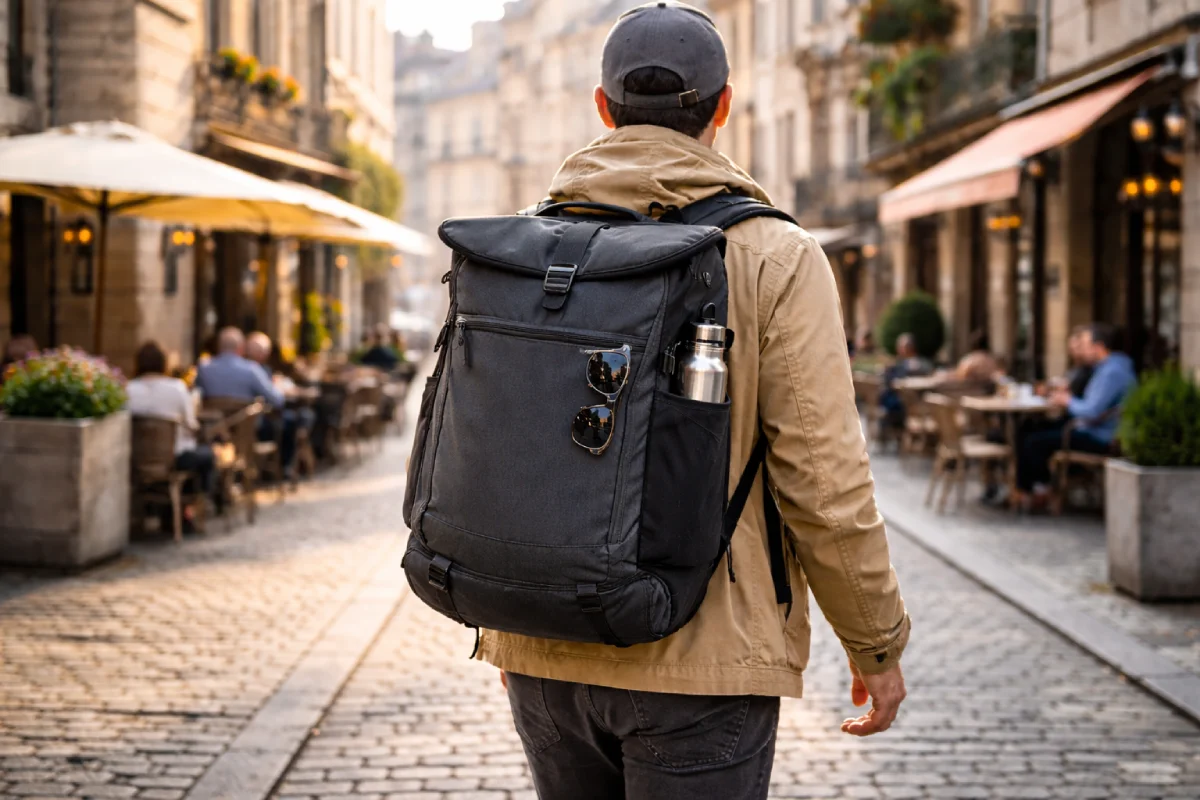
The Mobility Advantage of 30L
One underestimated benefit of a 30L backpack is movement efficiency.
In crowded cities, train stations, airports, and narrow sidewalks:
Smaller packs reduce strain
Lighter loads reduce fatigue
Mobility increases travel comfort
A slightly smaller bag often improves overall travel experience.
Final Verdict: Is 30L Backpack Enough for International Travel?
Yes — for short international travel, warm climates, and disciplined packers, a 30L backpack is often the most balanced size.
No — for winter travel, gear-heavy packing, or extended trips, it may feel restrictive.
The right backpack size is not about “maximum space.” It’s about matching volume to real needs.
For many modern travelers who prioritize carry-on efficiency, flexibility, and mobility, 30L is more than enough.
FAQ
1. Is a 30L backpack considered carry-on size for international airlines?
Yes, most 30L backpacks fall within standard international carry-on size limits, typically around 55 × 40 × 20 cm. However, compliance depends on the backpack’s shape, rigidity, and how fully it is packed. Soft-shell 30L travel backpacks are more likely to fit overhead bins comfortably, while structured designs may feel tighter on smaller regional airlines. Always verify airline-specific size and weight policies before departure.
2. How many outfits can fit in a 30L backpack for travel?
A 30L backpack can typically hold 3–4 lightweight outfits, underwear, socks, a compact toiletry kit, and a small laptop when packed efficiently. In warm climates, this capacity can stretch to 4–5 days if you pack minimal footwear and avoid bulky clothing. Winter garments significantly reduce usable volume due to their thickness.
3. Is 30L enough for a 5-day international trip?
It can be sufficient for a 5-day trip if you pack strategically, choose lightweight fabrics, and plan for laundry access. For colder climates or trips requiring formal attire, photography equipment, or extra shoes, 30L may feel restrictive. In those cases, a 40L backpack provides better flexibility.
4. What is the difference between a 30L and 40L backpack for travel?
The main difference lies in packing flexibility and margin for bulkier items. A 30L backpack prioritizes mobility, lighter weight, and easier airline compliance. A 40L backpack allows more clothing rotation and extra gear but adds weight and reduces compactness. The decision depends on trip duration and packing discipline.
5. Is 30L too small for long-term backpacking?
For multi-week backpacking trips, 30L is generally considered compact. While experienced minimalist travelers may manage with strict packing limits, most long-term backpackers prefer 40–50L backpacks for additional space, organization, and seasonal adaptability.
References
“Carry-On Luggage Size Guide” – Transportation Security Administration (TSA), U.S. Department of Homeland Security
“International Cabin Baggage Standards” – International Air Transport Association (IATA)
“Backpack Sizing and Fit Guide” – REI Co-op Expert Advice, REI
“How to Pack Light for International Travel” – Rick Steves Europe Travel Guide
“Choosing the Right Backpack Volume” – Outdoor Industry Association (OIA)
“Travel Packing Strategies for Minimalists” – Lonely Planet Travel Guides
“Airline Personal Item and Cabin Rules Comparison” – Skyscanner Travel Research
“Ergonomic Load Carrying and Backpack Capacity Study” – Journal of Travel Medicine & Health Research
How to Decide If a 30L Backpack Matches Your Travel Style
What does “30L backpack” truly represent in modern travel?
A 30L backpack represents a balance between mobility and capacity. In today’s carry-on-focused travel culture, it reflects a shift toward lighter, more flexible travel systems rather than maximum storage. Volume alone does not define suitability — packing efficiency, clothing density, and trip context matter more.
Why do many travelers choose 30L for international trips?
Airline carry-on limits, airport mobility, and urban transit convenience have made 30L a strategic size. It reduces baggage fees, eliminates check-in wait times, and improves physical comfort during movement-heavy itineraries.
When does 30L become restrictive?
Cold climates, bulky footwear, photography equipment, and multi-layer winter clothing increase volume consumption exponentially. In these scenarios, 40L backpacks provide practical margin without excessive overcapacity.
Option Analysis: 30L vs 40L Backpack
Choosing between 30L and 40L is not about “bigger is better.” It is about travel style alignment. 30L optimizes agility and cabin compliance. 40L prioritizes flexibility and packing comfort. The correct decision depends on trip duration, climate, and personal packing tolerance.
Consideration: The Future of Carry-On Travel
With rising airline fees and stricter cabin rules globally, many international travelers are adopting compact, optimized packing systems. The 30L backpack increasingly aligns with minimalist travel trends, digital nomad mobility, and efficient urban exploration models.
Final Insight
A 30L backpack is not universally sufficient — but for disciplined, short-term international travel, it often represents the most balanced combination of size, freedom, and efficiency. The right volume is not the largest one available, but the one that matches your real travel behavior.