Modern hiking backpacks rely heavily on material science. Nylon, polyester, Oxford, and ripstop fabrics each influence strength, abrasion resistance, weight, and waterproofing. Coatings such as PU, TPU, and silicone determine long-term weather protection and compliance with PFAS-free regulations. Choosing the right material affects durability, carrying comfort, and performance across different terrains and climates, whether selecting a lightweight daypack or a fully waterproof technical backpack.
Why Backpack Materials Matter More Than Most Hikers Realize
If you ask most hikers what matters in a backpack, they usually mention capacity, pockets, or comfort. Yet the true lifespan and performance of any pack begin with its material—the fabric threads, coating system, and reinforcement patterns that determine durability, waterproofing, abrasion resistance, and long-term reliability on the trail.
Materials also govern the weight efficiency of modern packs. A lightweight hiking backpack today can achieve the same strength as a heavier pack made 10 years ago due to improved Denier fibers, advanced weaves, and TPU/PU lamination. But with more options comes more confusion—420D? 600D? Oxford? Ripstop? TPU coating? Do these numbers actually matter?
This guide breaks down what each material does, where it excels, and how to choose the right one for your needs—whether you’re considering a20L hiking backpack for day trips or a 30L hiking bag waterproof model built for harsher mountain weather.
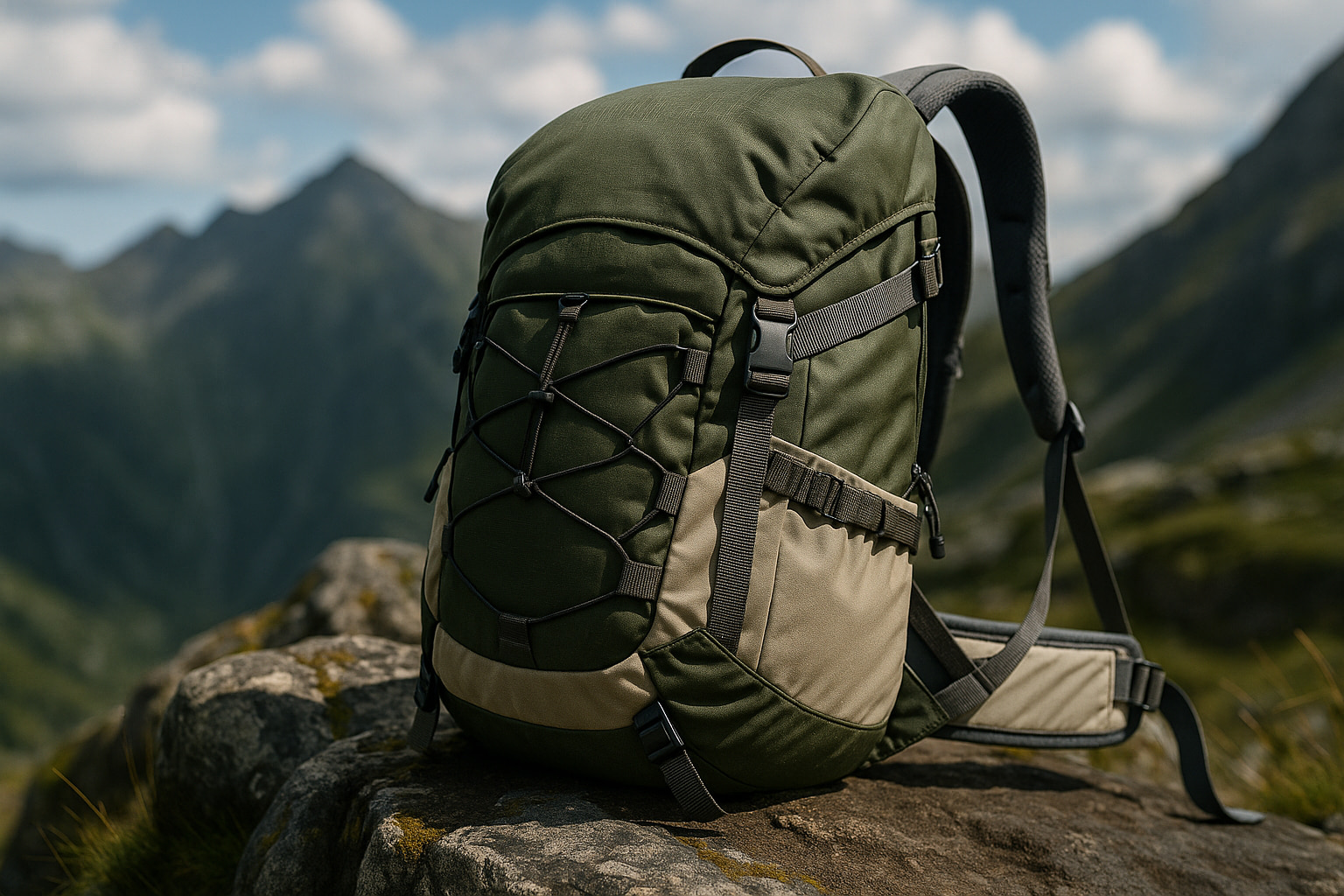
Field-tested hiking backpack highlighting how different materials such as ripstop nylon and 600D Oxford perform in real outdoor environments.
Understanding Denier: The Foundation of Backpack Strength
Denier (D) is the unit used to measure the thickness of fibers. Higher Denier means stronger and heavier fabric, but not always better performance.
What Denier Really Measures
Denier = mass in grams per 9,000 meters of yarn. Example: • 420D nylon → lightweight but strong • 600D polyester → thicker, more abrasion-resistant
Most performance trekking packs fall between 210D and 600D, balancing strength and weight.
Typical Denier Ranges for Hiking Backpacks
Material
Common Denier
Use Case
210D Nylon
Ultralight bags
fastpacking, minimal loads
420D Nylon
Premium midweight
long-distance packs, durable daypacks
600D Oxford Polyester
Heavy-duty durability
entry-level packs, budget designs
420D Ripstop Nylon
Enhanced tear resistance
technical packs, alpine-use
Why Denier Alone Does Not Determine Quality
Two 420D fabrics can behave differently depending on: • weave density • coating type (PU, TPU, silicone) • finish (calendered, ripstop, laminated)
This is why one ripstop hiking backpack may resist tearing 5× better than another even with the same Denier rating.
Nylon vs Polyester: Which Material Performs Better for Hiking Packs?
Nylon and polyesterare the two dominant fibers in hiking backpacks, but they behave very differently.
Strength and Abrasion Resistance
Studies show nylon has 10–15% higher tensile strength than polyester at the same Denier. This makes nylon the preferred choice for: • rough terrain • scrambling • rocky trails
Polyester, however, offers better UV resistance, which matters for desert trails or prolonged sun exposure.
Weight Efficiency
Nylonprovides more strength per gram, making it ideal for lightweight hiking backpack designs or premium trekking models.
Waterproofing and Coating Compatibility
Polyester absorbs less water than nylon (0.4% vs 4–5%), but nylon bonds better with TPU coatings used in premium waterproof packs.
A waterproof hiking backpack using TPU-laminated nylon will outperform PU-coated polyester in long-term hydrostatic pressure tests.
Oxford Fabric: The Workhorse Material for Durable Hiking Packs
Oxford polyester (usually 300D–600D) is widely used because it is: • affordable • strong • easy to dye • naturally abrasion-resistant
Where Oxford Excels
Oxford is ideal for budget-friendly everyday packs orbackpacks for travel, especially when reinforced with PU coatings.
Limitations
It is heavier than nylon and less efficient for technical mountain packs. But modern 600D Oxford with high-density weaving can last years even with heavy loads.
Ripstop Fabric: The Backbone of High-End Ultramarine & Trekking Packs
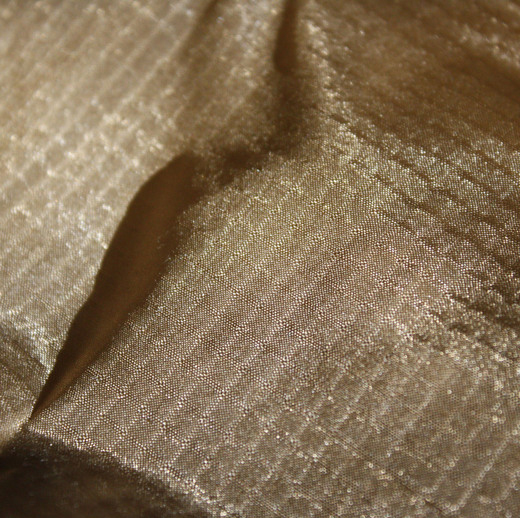
Ripstop fabric incorporates a grid of thicker reinforced threads calculated every 5–8 mm, creating a structure that stops tears from spreading.
Why Ripstop Matters
• increases tear resistance by 3–4× • improves puncture control • reduces catastrophic fabric failure
If you are designing OEM packs or comparing materials from a hiking bag manufacturer, ripstop is the industry’s preferred structure.
Ripstop Nylon vs Ripstop Polyester
Ripstop nylon remains the gold standard for technical packs, while ripstop polyester offers better UV resistance for tropical and desert environments.
Waterproof Coatings Explained: PU vs TPU vs Silicone
Backpack waterproofing is not determined by the fabric alone—the coating or lamination has equal, if not greater, impact. A waterproof hiking backpack only performs well when coating, seam sealing, and fabric structure work together.
Polyurethane Coating (PU)
PU is the most commonly used coating because it is inexpensive and easy to apply.
Advantages • affordable for mass production • acceptable waterproofing (1,500–3,000mm) • flexible and compatible with Oxford fabrics
Limitations • degrades faster in humidity • hydrolysis reduces waterproofing after 1–2 years • not suitable for heavy alpine rain
PU-coated nylon or polyester is enough for casual daypacks or 20L hiking backpack models meant for good-weather day trips.
Thermoplastic Polyurethane Lamination (TPU)
TPU is the premium option for modern technical packs.
Advantages • maintains waterproof integrity longer • supports welded seams • hydrostatic head up to 10,000–20,000mm • abrasion-resistant • compliant with latest PFAS-free regulations
This is why premium 30L hiking backpack waterproof designs use TPU lamination instead of PU spray coatings.
Limitations • higher cost • heavier than silicone-coated models
Silicone Coating (Silnylon / Silpoly)
Silicone-coated nylon—known as Silnylon—is favored for ultralight packs.
Advantages • highest tear strength-to-weight ratio • excellent water repellency • flexible and resistant to cold cracking
Limitations • cannot be seam-taped easily • more slippery and difficult to sew • hydrostatic head varies widely
Waterproof Ratings: What They Actually Mean
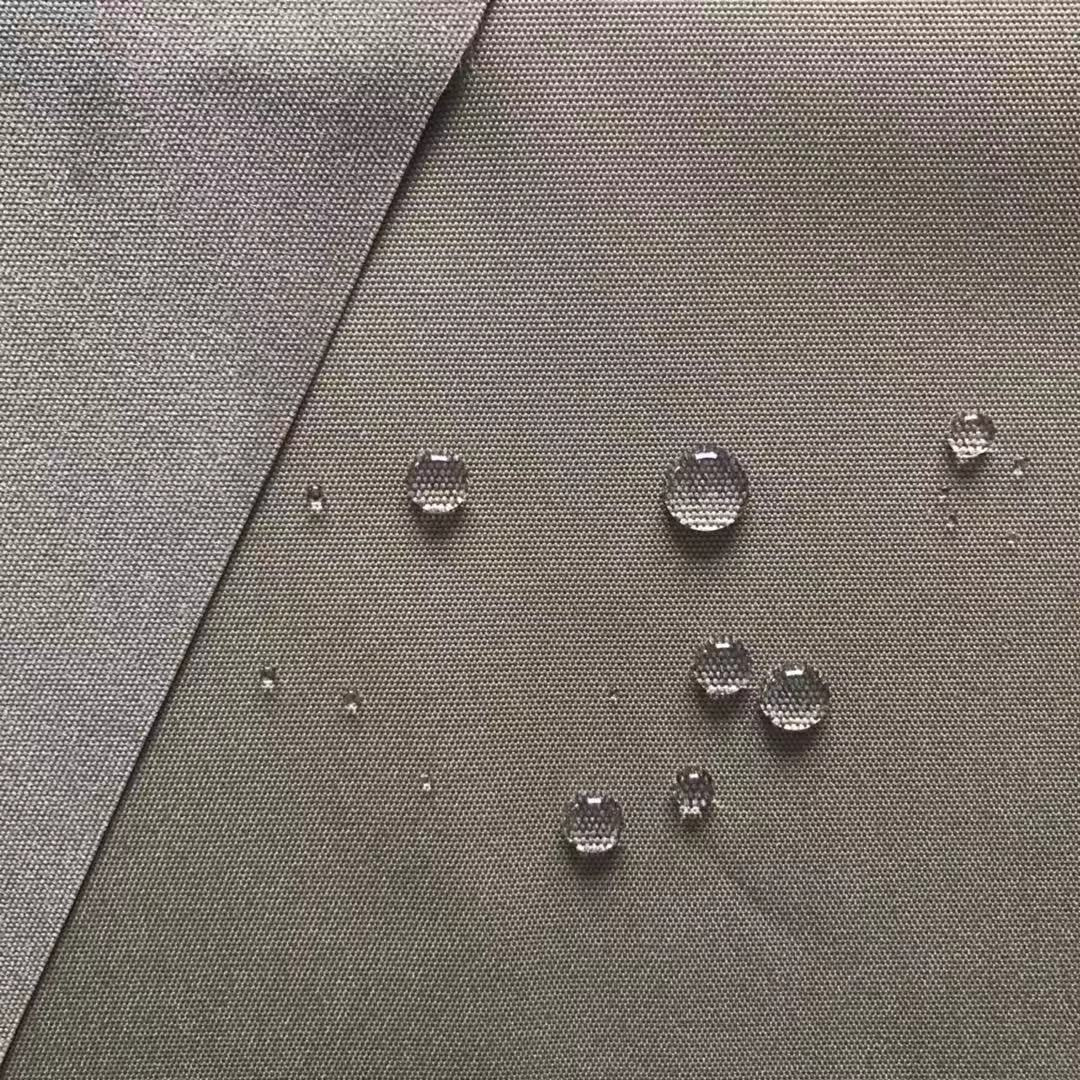
Most consumers misunderstand waterproof ratings. Hydrostatic head (HH) measures the pressure (in mm) a fabric can withstand before allowing water to penetrate.
Realistic Backpack Rating Guidelines
• <1,500mm → water-resistant, not waterproof • 1,500–3,000mm → light rain, everyday use • 3,000–5,000mm → heavy rain / mountain use • >10,000mm → extreme wet conditions
Most hiking bags fall in the 1,500–3,000mm range unless using TPU lamination.
A real-world waterproof rating test showing how a hiking backpack performs under continuous heavy rain.
Seam Construction: The Hidden Failure Point
Even a 20,000mm fabric will leak if seams are not properly sealed.
Three Types of Seam Protection
Unsealed seams — 0 protection
PU seam tape — common in mid-range packs
Welded seams — found in high-end waterproof packs
Technical comparison: • Welded seams → withstand >5× pressure of stitched seams • PU taped seams → fail after 70–100 wash cycles • Silicone-coated surfaces → cannot hold PU tape
This is why a waterproof hiking daypack with welded TPU panels performs significantly better in long-duration storms.
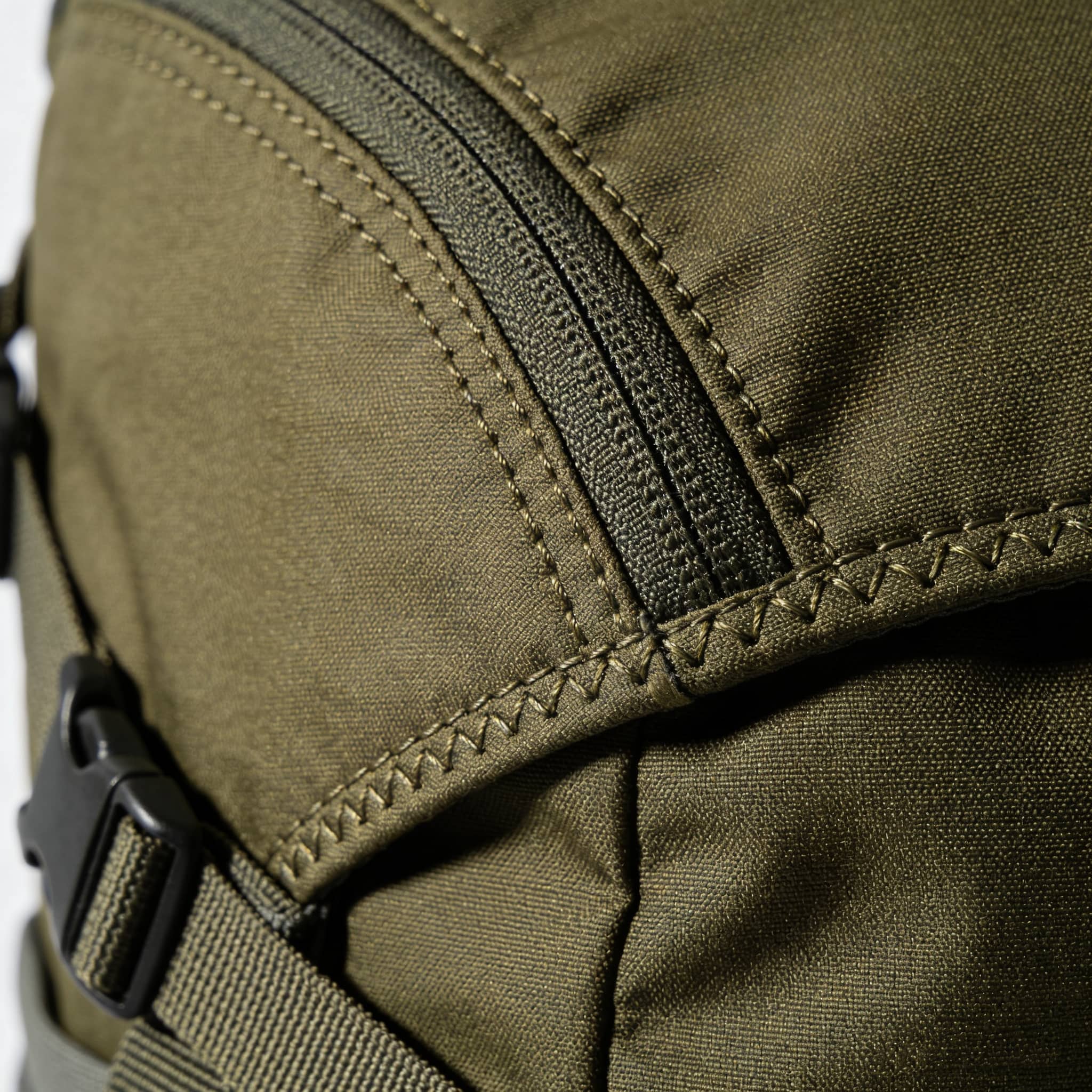
A detailed close-up of seam construction on a hiking backpack, highlighting stitching strength and hidden stress points.
Understanding Abrasion, Tear, and Tensile Strength
When you drag a pack against rock or tree bark, abrasion resistance becomes critical.
Common laboratory tests: • Martindale Abrasion Test — measures cycles before wear • Elmendorf Tear Test — tear propagation resistance • Tensile Strength Test — load-bearing fabric capability
Typical Strength Values
420D nylon: • tensile: 250–300 N • tear: 20–30 N
600D Oxford: • tensile: 200–260 N • tear: 18–25 N
Ripstop nylon: • tensile: 300–350 N • tear: 40–70 N
Because of the reinforced grid, ripstop hiking backpack designs frequently survive punctures that would destroy ordinary Oxford polyester.
Material Behavior Under Real Outdoor Conditions
Different climates push backpack materials to their limits.
Snow & Alpine Conditions
• TPU lamination maintains flexibility at –20°C • nylon absorbs moisture but dries fast • silicone coatings resist freezing
Tropical Humidity
• PU coatings degrade fastest in high humidity • polyester outperforms nylon in UV resistance
Ripstop Fabric Engineering and Tear Resistance, Dr. Samuel Rogers, Global Technical Textiles Association.
Environmental Compliance in Outdoor Equipment Manufacturing, European Chemicals Agency (ECHA), PFAS Restriction Review Committee.
UV Degradation Effects on Outdoor Backpack Materials, Dr. Elena Martinez, Desert Climate Textile Laboratory, Spain.
Material Fatigue and Load-Bearing Behavior in Hiking Backpacks, Mountain Gear Performance Foundation, Canada.
Key Insights: How to Choose the Right Backpack Material for Real-World Hiking
Selecting the right backpack fabric is not just about Denier or surface coatings—it is about matching the material to terrain, climate, load weight, and durability expectations. Nylon provides superior tensile strength for rocky and long-distance routes, while polyester offers UV stability for desert or tropical environments. Ripstop structure prevents catastrophic tearing, making it essential for technical and alpine backpacks.
Weather protection depends on a system rather than a single coating. PU coatings provide affordable waterproofing for casual hikers, but TPU laminations deliver higher hydrostatic pressure tolerance, long-term stability, and PFAS-free compliance demanded by global regulations. Silicone-treated fabrics enhance tear strength and moisture shedding, making them ideal for ultralight and wet-climate packs.
From a sourcing and manufacturing perspective, fabric consistency, weave density, seam construction, and batch testing matter as much as the material itself. The rise of sustainability standards—such as the EU PFAS ban, REACH textile directives, and global restrictions on harmful coatings—is reshaping the future of outdoor gear production.
In practice, hikers should evaluate material based on use case: lightweight nylon for fastpacking, ripstop nylon for technical terrain, TPU-laminated fabrics for extreme waterproofing, and Oxford polyester for cost-effective durability. Understanding how these materials behave over time empowers buyers to make well-informed decisions and ensures their backpack performs reliably in diverse environments.