Vaeluaina
This guide provides a practical evaluation framework to help buyers assess a gym bag supplier before placing bulk orders. Instead of focusing on price or samples alone, it explains how buyers can evaluate manufacturing capability, material selection, quality control systems, lead time reliability, customization handling, and long-term scalability. The checklist is designed for buyers sourcing durable gym bags and waterproof zipper sports bag designs, helping reduce production risk, avoid post-sample failures, and support more reliable supplier shortlisting decisions.
Folasaga
Why Most Gym Bag Orders Fail Before Production Even Starts
Filifilia le Mea Tonu fa'atau ato ta'aloga is not just a sourcing task—it is a risk-management decision. Many buyers believe problems begin during production or shipping. In reality, most gym bag failures are already “locked in” before mass production even starts, usually at the supplier evaluation stage.
The most common issues are not dramatic factory disasters. They are quiet problems: inconsistent materials, weak stitching, unreliable waterproof components, misunderstood MOQs, and production schedules that collapse under pressure. These issues often remain invisible during the sample stage, only to surface when hundreds or thousands of units are already in progress.
This guide is designed as a practical evaluation framework. Instead of promoting any specific factory, it gives buyers a structured way to assess whether a fa'atau ato ta'aloga is capable of delivering consistent quality, stable timelines, and scalable production—especially for ato ta'aloga umi programs and designs that include waterproof zipper sports bag requirements.
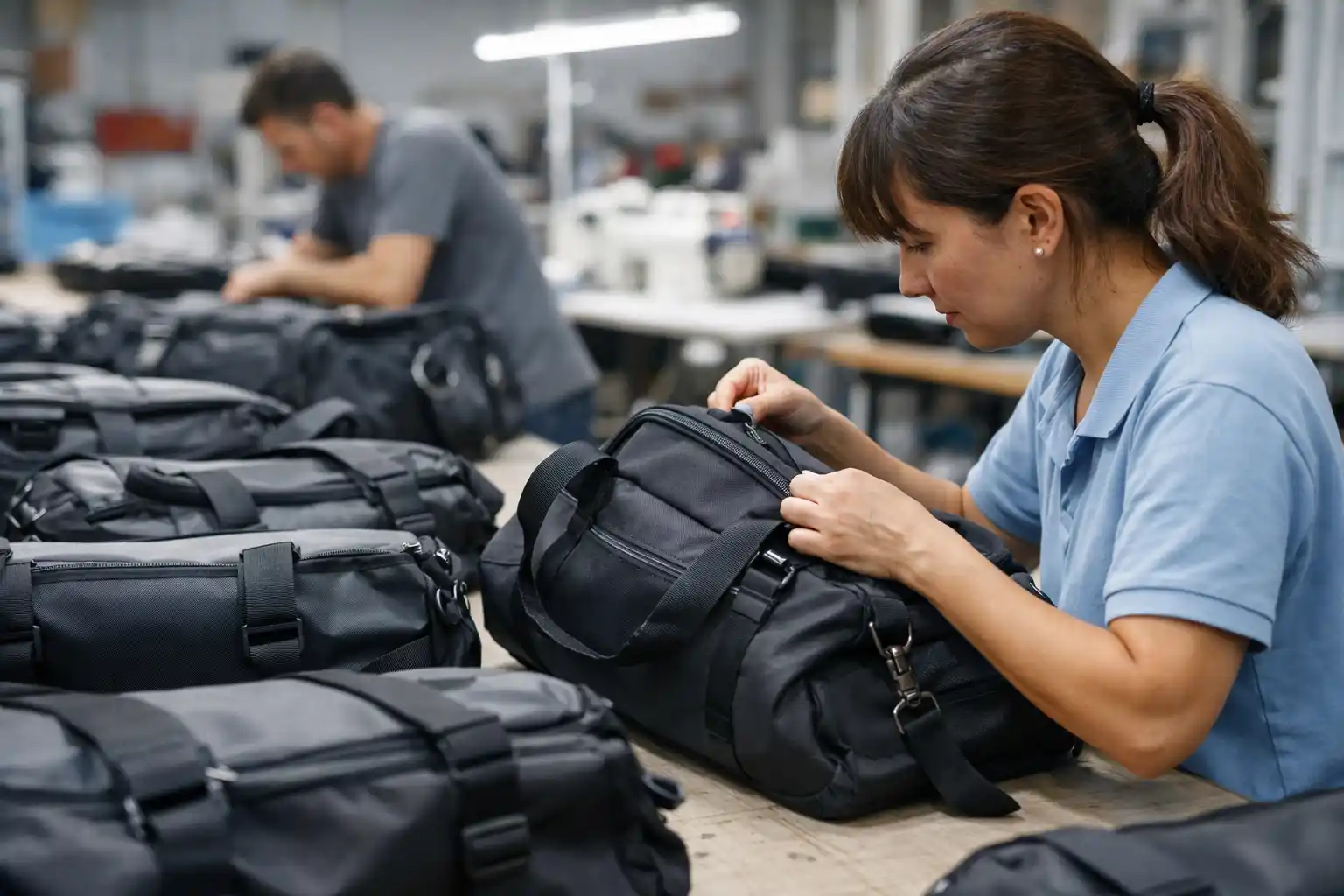
How to Use This Gym Bag Supplier Evaluation Checklist
This article is not meant to be read once and forgotten. It is designed to be reused, shared internally, and applied repeatedly during supplier shortlisting and negotiation.
Who This Checklist Is For
This evaluation framework is written for buyers who source gym bags at scale, including private-label brands, wholesale buyers, and e-commerce sellers preparing for repeat orders. It is especially relevant for buyers who plan to move beyond small test orders and need a supplier capable of long-term execution.
What This Checklist Helps You Avoid
A structured evaluation helps buyers avoid quality drift between samples and bulk orders, unexpected cost increases caused by hidden production limits, and delivery delays triggered by unrealistic lead-time promises. More importantly, it helps buyers identify whether a fa'atau ato ta'aloga understands real-world usage conditions, not just showroom presentation.
Question 1: Are You a Gym Bag Manufacturer or a Trading Company
This is the foundation of every supplier evaluation. Before discussing price, materials, or timelines, buyers need to understand who is actually responsible for production.
Why This Question Matters More Than Price
A genuine fa'atau ato ta'aloga with in-house manufacturing control can adjust processes, manage quality issues in real time, and scale production when demand increases. A trading company may offer competitive pricing at the sample stage but often lacks direct control once production begins.
The difference becomes critical when problems arise. Manufacturers can correct stitching density, reinforce load-bearing zones, or adjust zipper installation methods. Trading companies typically rely on third-party factories, adding delays and miscommunication.
What a Real Gym Bag Supplier Should Be Able to Show
A legitimate manufacturing supplier should be able to explain its production flow clearly—from fabric cutting and panel assembly to final inspection. Buyers should expect detailed explanations of how different gym bag styles are handled, especially heavier ato ta'aloga umi designs with reinforced compartments.
Clear answers indicate process ownership. Vague descriptions often signal outsourced production.
Red Flags Buyers Often Miss
Some suppliers describe themselves as manufacturers but avoid factory-level questions. Others present impressive samples without explaining how those samples are reproduced consistently at scale. These gaps usually translate into unstable bulk production.
Question 2: What Materials Are You Using for Durable Gym Bags
Materials define the lifespan of a gym bag more than any other factor. Buyers evaluating a fa'atau ato ta'aloga must go beyond surface fabric descriptions.
Fabric Types Explained in Practical Terms
Common materials such as polyester, nylon, and Oxford fabric vary widely in performance depending on yarn density, coating, and finishing. A ato ta'aloga umi is not defined by material name alone, but by how that material performs under repeated load, abrasion, and moisture exposure.
Suppliers should be able to explain why a specific fabric is chosen for a particular bag design, not just list it in a specification sheet.
Stitch Density and Reinforcement Zones
Durability depends on construction details. High-stress areas such as shoulder strap anchors, base panels, and zipper ends require reinforcement. Buyers should ask how stitch density is controlled and whether bar-tack reinforcement is applied consistently.
Weak reinforcement is one of the most common causes of early gym bag failure.
How Buyers Can Verify Durability Without Lab Testing
Not every buyer has access to laboratory testing. A capable fa'atau ato ta'aloga should be able to demonstrate durability through internal stress tests, weight simulations, or historical performance data from similar models.
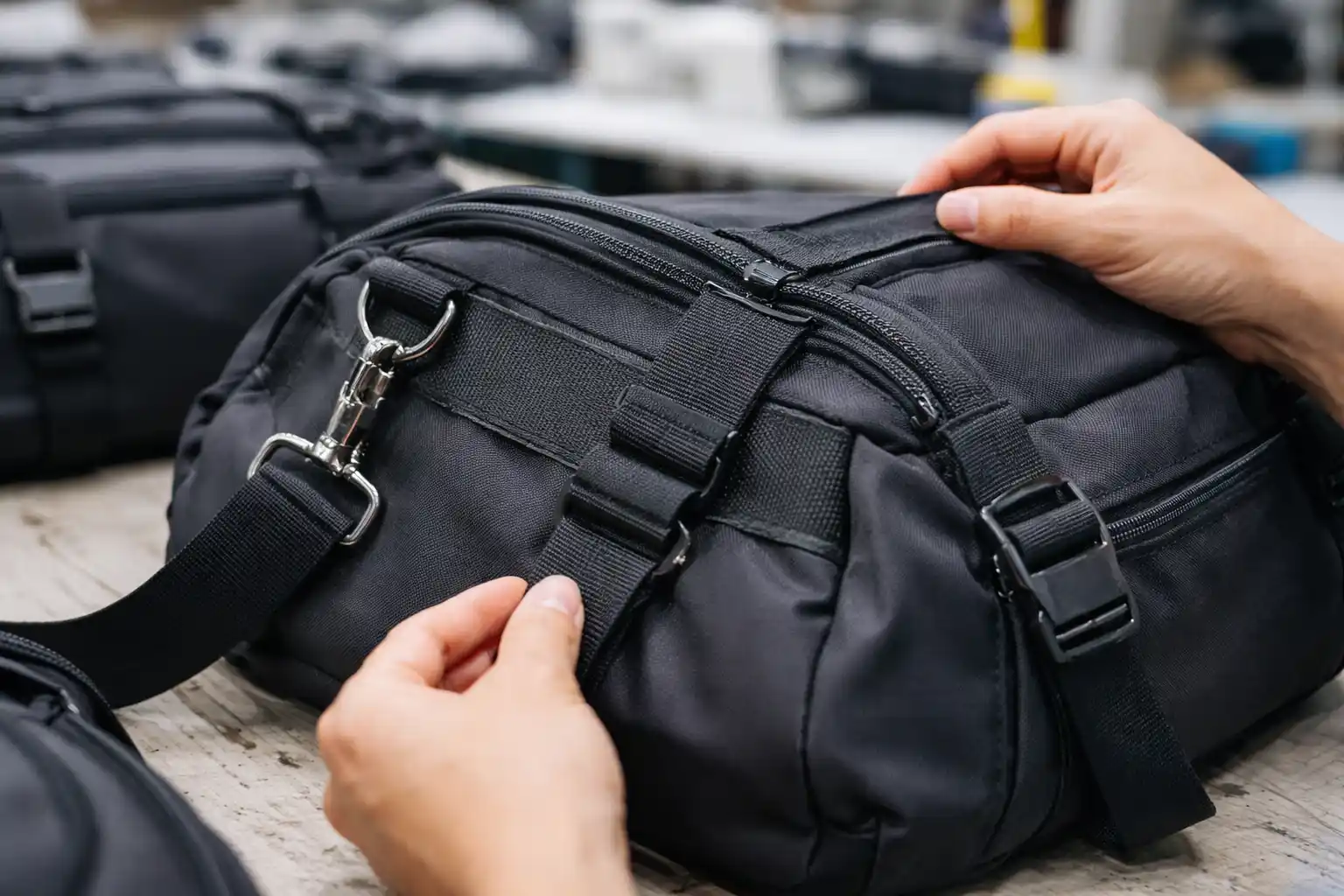
Question 3: How Do You Handle Waterproof Zippers and Moisture Protection
Many gym bags are marketed as water-resistant or waterproof, but moisture protection is often incomplete or poorly executed.
Zipper Types Used in Sports Bags
Moni waterproof zipper sports bag requires more than a coated zipper. Zipper structure, installation angle, and seam sealing all affect water resistance. Buyers should ask which zipper types are used and where they are appropriate.
Seams, Linings, and Water Entry Points
Even the best zipper fails if seams and lining junctions allow water ingress. Suppliers should explain how internal linings are attached and whether seam sealing or folded construction is used in moisture-sensitive areas.
Common Waterproof Claims That Mislead Buyers
Many suppliers label bags as waterproof based on fabric coating alone. Without integrated design logic, moisture resistance remains partial. Buyers should treat vague waterproof claims as a signal to ask deeper technical questions.
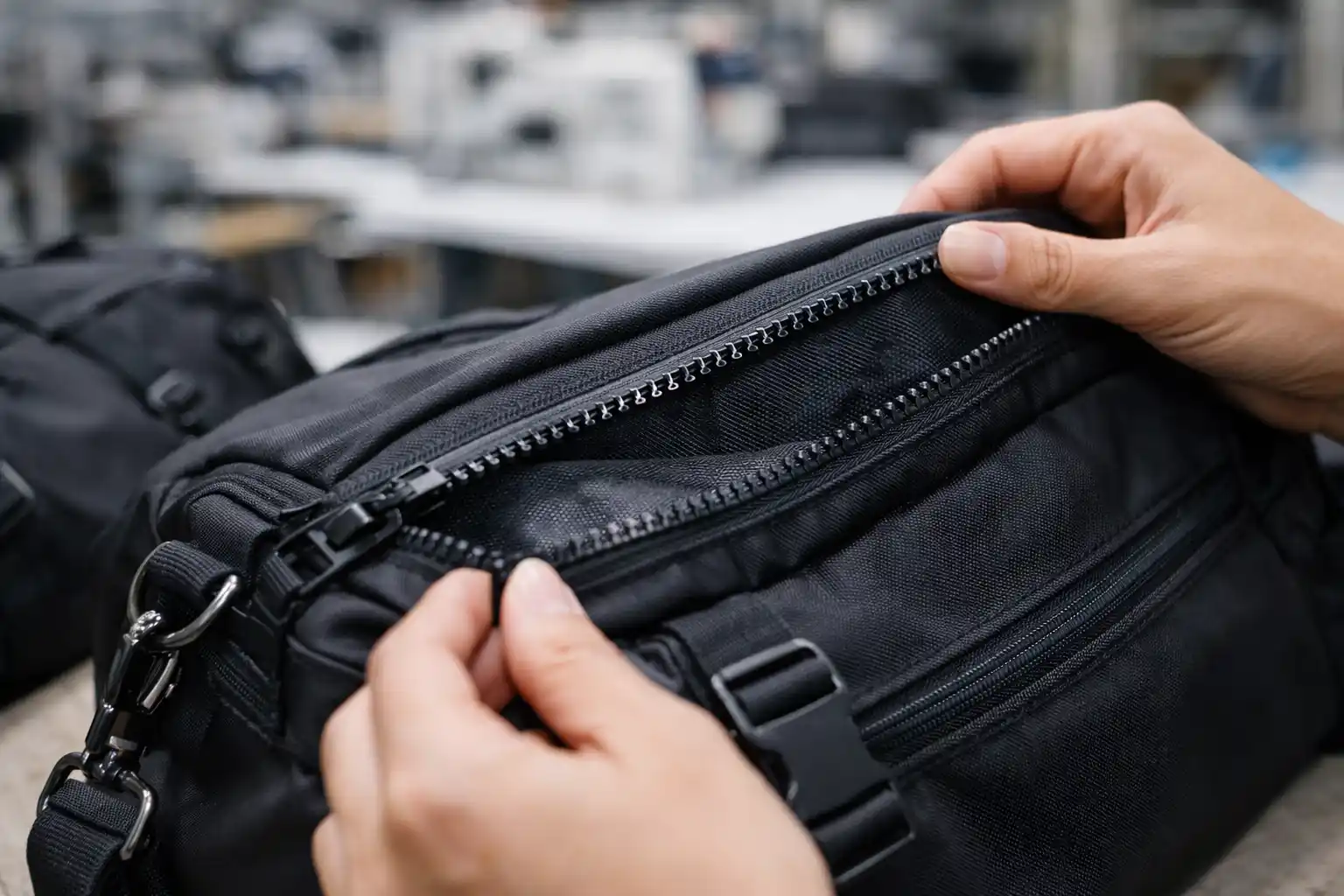
Question 4: What Is Your MOQ and Is It Real or Flexible
MOQ discussions reveal how a fa'atau ato ta'aloga actually operates behind the scenes.
MOQ by Style, Color, and Logo
Some suppliers quote a low MOQ initially but later introduce separate minimums for colors, logo methods, or packaging. Buyers should request a full breakdown of MOQ conditions before approving samples.
Hidden MOQs That Appear After Sampling
A common issue occurs when a supplier accepts a small sample order but requires higher quantities for bulk production. This gap often surfaces only after design approval, when switching suppliers becomes costly.
How MOQ Impacts Cost and Lead Time
Lower MOQs often increase per-unit cost and extend lead times. A transparent fa'atau ato ta'aloga should explain these trade-offs clearly, helping buyers plan realistic order quantities.
Question 5: Can You Show Production Samples, Not Just Sales Samples
Samples can be deceptive if buyers do not understand how they were produced.
Sales Samples Versus Pre-Production Samples
Sales samples are often hand-finished or produced under special conditions. Pre-production samples, by contrast, reflect actual line conditions. Buyers should always request samples made using real production workflows.
Differences That Commonly Appear
Buyers frequently notice changes in stitching consistency, material thickness, and logo alignment between sales samples and bulk orders. These differences indicate gaps in process control.
What Buyers Should Approve Before Mass Production
Every critical detail—fabric batch, zipper type, reinforcement method—should be confirmed before bulk production begins. This step protects both buyer and fa'atau ato ta'aloga from disputes later.
Question 6: How Do You Control Quality During Mass Production
Quality control is where the difference between a capable fa'atau ato ta'aloga and a risky one becomes obvious. Most production problems do not result from bad intent, but from weak process discipline.
In-Line Quality Control Versus Final Inspection
Final inspection alone cannot prevent systemic defects. Reliable suppliers implement in-line quality checks at key production stages, including fabric cutting, panel stitching, zipper installation, and final assembly.
Mo ato ta'aloga umi models, in-line checks are especially important at load-bearing points such as strap anchors and base seams. If defects are detected only at the final stage, correction often becomes impossible without delaying shipment.
Common Failure Points in Gym Bag Production
Typical failure points include uneven stitch tension, misaligned zippers, and inconsistent reinforcement placement. In waterproof zipper sports bag designs, incorrect zipper installation angle is a frequent cause of leakage complaints.
Suppliers who can identify these risks proactively demonstrate real production experience.
What Buyers Should Request in Writing
Buyers should request a clear quality control plan outlining inspection stages, defect tolerance levels, and corrective procedures. Written confirmation reduces misunderstandings and provides a reference point if disputes arise.
Question 7: What Is Your Real Lead Time Under Pressure
Quoted lead times often reflect ideal conditions, not real-world constraints.
Sample Lead Time Versus Bulk Production Lead Time
Sample timelines are usually shorter because they bypass full production scheduling. Buyers should ask how bulk lead times change when multiple orders run simultaneously.
O se faatuatuaina fa'atau ato ta'aloga can explain capacity limits and how orders are prioritized.
Peak Season Capacity Risks
Peak seasons expose weak planning. Suppliers who overbook production lines often miss deadlines or compromise quality. Buyers should ask how peak demand is managed and whether production slots are reserved after order confirmation.
How Buyers Can Stress-Test Lead Time Claims
One effective method is to ask how the supplier handled recent rush orders or unexpected delays. Concrete examples provide better insight than optimistic promises.
Question 8: How Do You Handle Custom Logos and Private Label Orders
Customization complexity is frequently underestimated.
Logo Application Methods and Their Limitations
Common logo methods include heat transfer, embroidery, and rubber patches. Each method has size, placement, and durability constraints. For ato ta'aloga umi products, logo attachment must withstand repeated handling and washing.
Suppliers should explain which methods are suitable for each bag style rather than offering a single default option.
Logo Placement Tolerances
Misaligned logos are a leading cause of rejection in private-label orders. Buyers should ask about placement tolerance standards and approval procedures before bulk production.
Why Logo Issues Often Appear Late
Logo problems often emerge during scale-up when multiple operators are involved. Clear reference samples and visual guidelines reduce this risk significantly.
Question 9: What Packaging Options Do You Offer and How Do They Affect Cost
Packaging decisions impact logistics efficiency, product protection, and compliance.
Standard Versus Retail-Ready Packaging
Standard packaging prioritizes cost efficiency, while retail-ready packaging focuses on presentation. Buyers should understand the cost and lead-time implications of each option when working with a fa'atau ato ta'aloga.
Carton Optimization and Shipping Impact
Improper carton sizing increases shipping costs and damage risk. Experienced suppliers optimize carton dimensions based on bag structure rather than using generic box sizes.
Labeling and Documentation Risks
Incorrect labeling can trigger customs delays. Buyers should confirm who is responsible for label accuracy and document preparation.
Question 10: What Certifications or Compliance Can You Support
Compliance requirements vary by market, but ignorance is not an excuse.
Common Compliance Requirements Explained Simply
Requirements such as chemical safety regulations and material restrictions apply differently depending on destination market. A professional fa'atau ato ta'aloga understands when certifications are mandatory and when they are optional.
When Compliance Is Truly Required
Not every order requires full certification. Buyers should ask suppliers to clarify which documents are necessary for their specific market and product type.
Warning Signs of Unreliable Documentation
Suppliers who provide certificates without explanation or refuse to discuss testing scope may be relying on outdated or irrelevant documents.
Question 11: What Happens If There Is a Quality Dispute
Dispute handling reveals a supplier’s long-term mindset.
Realistic Outcomes in Quality Claims
Refunds, rework, and discounts are all possible outcomes, but each has limitations. Buyers should ask how disputes have been handled in previous cases rather than accepting vague assurances.
How Reliable Suppliers Respond to Issues
A responsible fa'atau ato ta'aloga focuses on root-cause analysis and prevention, not blame avoidance. This approach protects both parties over time.
Clauses Buyers Should Clarify in Advance
Dispute resolution terms should be discussed before placing orders. Clear expectations reduce tension when problems occur.
Question 12: Can You Support Long-Term Scaling, Not Just One Order
Short-term success does not guarantee long-term reliability.
Signals of Scalable Production Capacity
Indicators of scalability include standardized processes, trained backup operators, and stable material sourcing. These factors matter more than factory size alone.
Design Support and Continuous Improvement
Suppliers who provide feedback on design feasibility and cost optimization add value beyond basic manufacturing. This collaboration is critical for evolving ato ta'aloga umi product lines.
When Buyers Should Reevaluate Suppliers
Consistent delays, repeated quality issues, or resistance to process transparency are signs that buyers should reassess the partnership.
A Reality Check: Why Most Gym Bag Supplier Problems Appear After Sample Approval
Many buyers assume risk decreases after sample approval. In practice, risk often increases. Sample approval confirms design intent, not production stability.
The transition from sample to mass production introduces new variables: multiple operators, larger material batches, tighter schedules, and higher pressure. Weak systems fail under these conditions.
This is why evaluating a fa'atau ato ta'aloga based on process discipline, not just sample appearance, is essential—especially for complex designs such as waterproof zipper Taaloga taga faʻataʻitaʻiga.
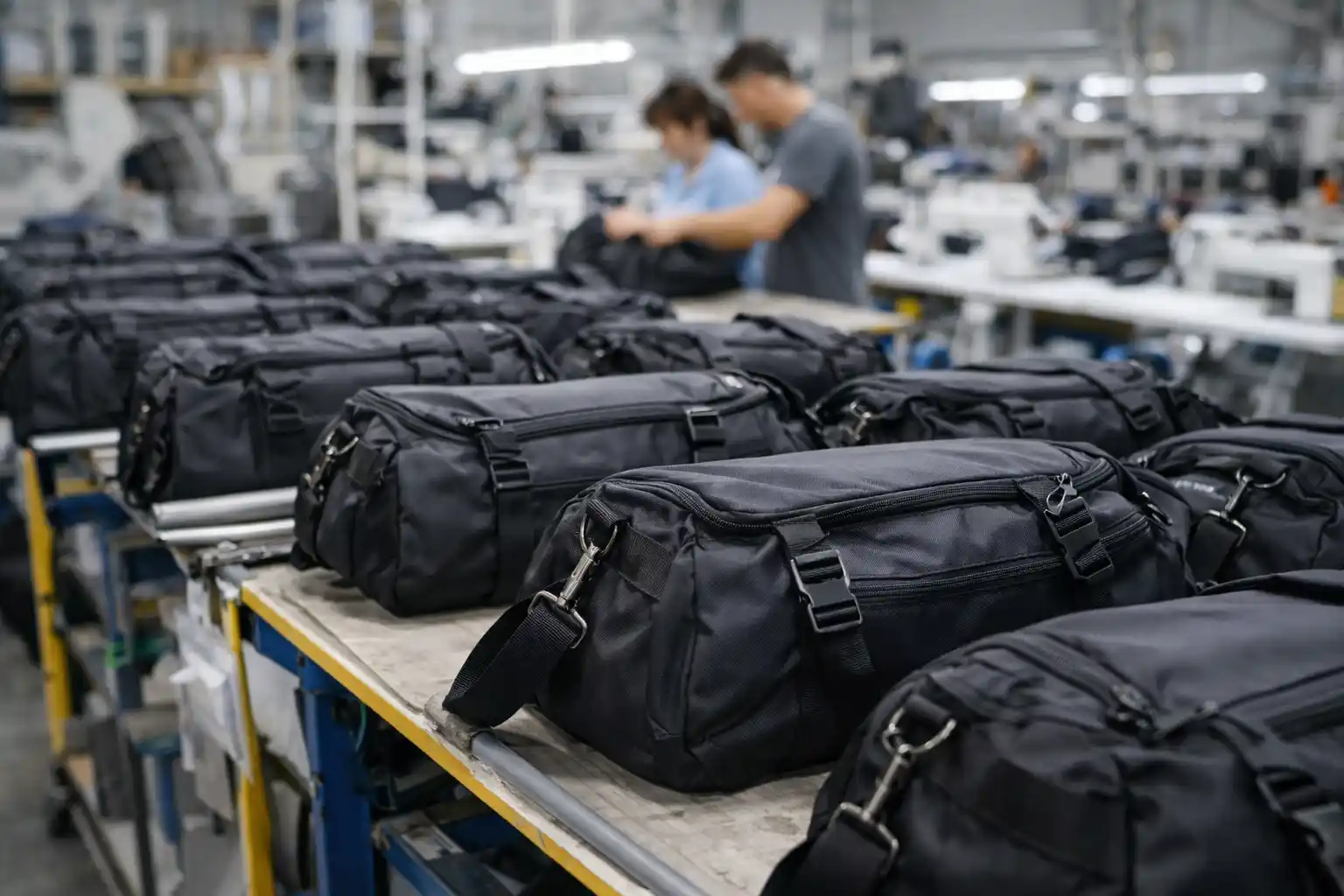
Supplier Scoring Table: Gym Bag Supplier Evaluation Template
A structured scoring system helps buyers compare suppliers objectively.
How to Score Each Supplier
Buyers can score each question on a scale from 1 to 5 based on clarity, evidence, and responsiveness. Scores should reflect demonstrated capability, not promises.
How Buyers Use the Final Score
The final score should guide shortlisting decisions rather than dictate them. A slightly higher-cost supplier with a stronger process score often delivers better long-term results.
Common Mistakes Buyers Make When Choosing a Gym Bag Supplier
Buyers frequently overemphasize unit price while underestimating execution risk. Others rely too heavily on photos and samples without understanding production realities.
Ignoring process transparency is another common mistake. Suppliers unwilling to explain how work is done rarely perform better under pressure.
Final Buying Advice: How to Shortlist the Right Gym Bag Supplier
A good fa'atau ato ta'aloga is not perfect, but predictable. Consistency, transparency, and problem-solving ability matter more than optimistic promises.
Excellent suppliers communicate limits clearly, explain trade-offs honestly, and improve with each order. Buyers who prioritize these traits build more resilient supply chains and avoid costly surprises.
Used correctly, this evaluation framework helps buyers move from guesswork to structured decision-making—turning supplier selection into a repeatable, low-risk process.
FAQ
1. How can I verify whether a gym bag supplier is reliable before placing a bulk order?
O se faatuatuaina fa'atau ato ta'aloga can usually be verified by looking beyond samples and pricing. Buyers should assess whether the supplier can clearly explain its production process, quality control checkpoints, and capacity limits. Reliable suppliers are transparent about materials, stitching standards, and lead times, and they can provide consistent answers when asked the same question by different team members. If a supplier avoids operational details or changes answers frequently, this often signals risk before bulk production even begins.
2. What makes a gym bag truly durable for long-term use?
A ato ta'aloga umi is defined by construction quality rather than fabric name alone. Key factors include stitch density in load-bearing areas, reinforcement at strap anchors, and base panel strength. Material coatings, lining attachment methods, and zipper installation all affect long-term performance. Buyers should evaluate how these elements work together instead of relying on generic durability claims.
3. Are waterproof zipper sports bags completely waterproof in real use?
Sili waterproof zipper sports bag designs are water-resistant rather than fully waterproof. While coated zippers help reduce water entry, moisture can still penetrate through seams, lining junctions, or zipper ends if not properly designed. Buyers should ask suppliers how water protection is handled as a system, including zipper structure, seam construction, and internal lining design, rather than relying on a single waterproof component.
4. Why do quality issues often appear after sample approval?
Quality issues often emerge after sample approval because mass production introduces new variables. Multiple operators, larger material batches, tighter schedules, and higher output pressure all increase the chance of inconsistency. Sample approval confirms design intent, but it does not guarantee production stability. This is why evaluating a fa'atau ato ta'aloga’s process control is as important as approving the sample itself.
5. What should buyers do if a gym bag supplier fails to meet quality expectations?
When quality expectations are not met, buyers should first identify whether the issue is isolated or systemic. Clear documentation, including approved samples and written specifications, helps resolve disputes more effectively. Professional suppliers focus on root-cause analysis and corrective action rather than short-term fixes. Buyers who clarify dispute-handling expectations before ordering are better positioned to protect their interests if problems occur.
Supplier Evaluation Insights for Buyers
Choosing a gym bag supplier is not a single decision, but a sequence of judgments about process stability, execution capability,
and risk control. Samples confirm design intent, but supplier systems determine whether that intent can be delivered consistently
during mass production.
From a buyer’s perspective, the most reliable suppliers are those who can clearly explain how materials are selected,
how durability is engineered into load-bearing areas, and how waterproof zipper sports bag designs are protected beyond surface-level claims.
These explanations signal operational ownership rather than sales positioning.
Production risk typically increases after sample approval, not before. As order volume grows, variables such as operator consistency,
material batch variation, and scheduling pressure begin to affect outcomes. This is why evaluating quality control logic,
real lead time behavior, and dispute-handling mechanisms is critical when sourcing durable gym bag products.
Buyers comparing multiple suppliers benefit from structured evaluation rather than intuition.
Scoring suppliers across manufacturing transparency, customization control, packaging logic, compliance awareness,
and long-term scaling capability allows for more objective shortlisting decisions, even when pricing differences appear attractive.
Ultimately, a strong supplier relationship is built on predictability.
Suppliers who communicate limits clearly, explain trade-offs honestly, and improve processes over time
are better suited for long-term cooperation than those relying on optimistic promises or visually impressive samples alone.