Vaeluaina
Ergonomic school bags are designed to support children’s posture and reduce unnecessary strain on the spine during daily school routines. By improving weight distribution, stabilizing movement, and supporting natural body alignment, ergonomic school bags help children carry their school materials more comfortably during key growth years. This guide explains how backpack design affects spinal health, what ergonomic features matter most, and how parents can make informed choices that support long-term spine development rather than short-term convenience.
Introduction: Why Spine Health Matters When Choosing a School Bag
When parents choose a school bag for their children, visual style and storage space often receive the most attention, while long-term physical health is discussed far less frequently. However, the years spent carrying a school bag coincide with some of the most critical stages of spinal growth and postural development. During this period, daily habits—especially those involving weight distribution and body alignment—can quietly influence how a child’s spine adapts over time.
O le mea lea ergonomic school bags become more than a trend or premium option. A school bag that supports proper posture, balances weight correctly, and adapts to a child’s changing body plays a role not only in comfort, but also in helping reduce unnecessary strain on the spine. Understanding how backpack design affects posture allows parents to move beyond appearance-based decisions and focus on choices that support long-term well-being rather than short-term convenience.
What Does “Ergonomic” Mean in School Bag Design
Understanding Ergonomics in Children’s Daily Carrying
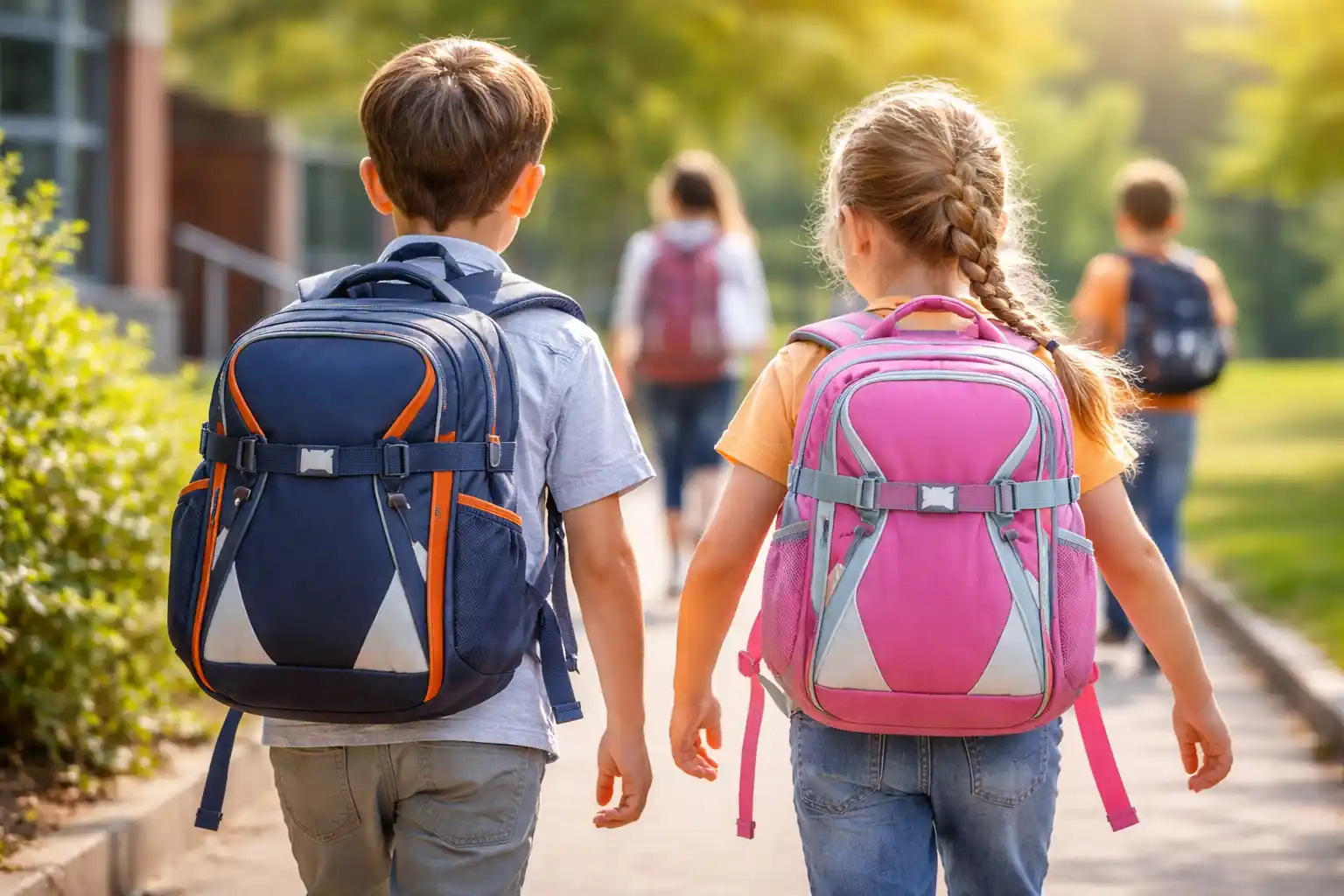
Ergonomics refers to the design of products that fit the human body’s natural movement and structure. In the context of school bags, ergonomics focuses on how weight is carried, how pressure is distributed across the body, and how the bag interacts with the spine, shoulders, and hips during movement.
For children, ergonomics is especially important because their bodies are still developing. Unlike adults, children’s muscles, bones, and joints are more adaptable—and more vulnerable to repetitive stress. Ergonomic school bags are designed to work with the body rather than against it, helping children maintain a more natural posture while walking, standing, or climbing stairs during their daily routines.
Why Ergonomics Matters More for Growing Children
A child’s spine is not simply a smaller version of an adult spine. It is actively growing, changing shape, and learning to support the body efficiently. When poorly designed school bags are used consistently, children may compensate by leaning forward, lifting one shoulder higher than the other, or tightening back muscles to manage uneven loads.
Over time, these compensations can become habitual. This is why school bags that protect the spine are designed to minimize the need for adjustment by the body itself. Ergonomic design aims to reduce unnecessary stress during growth rather than correcting problems after they appear.
How School Bags Affect a Child’s Spine and Posture
The Relationship Between Backpack Weight and Spine Health
The weight of a school bag is often the first concern parents mention, and for good reason. Carrying excessive weight places compressive forces on the spine and increases muscle tension in the shoulders and lower back. When weight exceeds what a child can comfortably manage, posture naturally shifts to compensate.
However, weight alone does not tell the full story. Two school bags with the same total weight can affect a child very differently depending on how that weight is distributed. School bag weight and spine health are closely connected, but distribution, balance, and fit often matter as much as the number on a scale.
How Poorly Designed School Bags Influence Posture
A poorly designed school bag often pulls backward or downward unevenly, forcing the child to lean forward or tilt the torso. Narrow shoulder straps can concentrate pressure on a small area, while loose-fitting bags allow contents to swing with movement, further disrupting balance.
Over time, these daily adjustments may influence posture habits. Children may develop rounded shoulders, forward head posture, or lower back tension simply as a response to how their school bag interacts with their body. This highlights why ergonomic backpack for kids designs focus on stability as much as capacity.
Common Spine and Posture Problems Linked to School Bags
Shoulder Strain and Uneven Load Distribution
One of the most visible signs of poor school bag ergonomics is uneven shoulder height while walking. This often occurs when shoulder straps are not adjustable or when the bag encourages carrying more weight on one side.
Persistent shoulder strain can lead children to shift weight subconsciously, reinforcing imbalanced posture patterns. Kids backpack posture support features such as padded straps and balanced load distribution help reduce this tendency.
Forward Leaning and Lower Back Stress
When a school bag sits too low or pulls backward, children may lean forward to counterbalance the load. This forward lean increases pressure on the lower spine and may cause muscle fatigue over time.
Lower back stress is not always immediately noticeable, which is why parents may underestimate its impact. Over months or years, however, repeated strain can contribute to discomfort and poor posture habits.
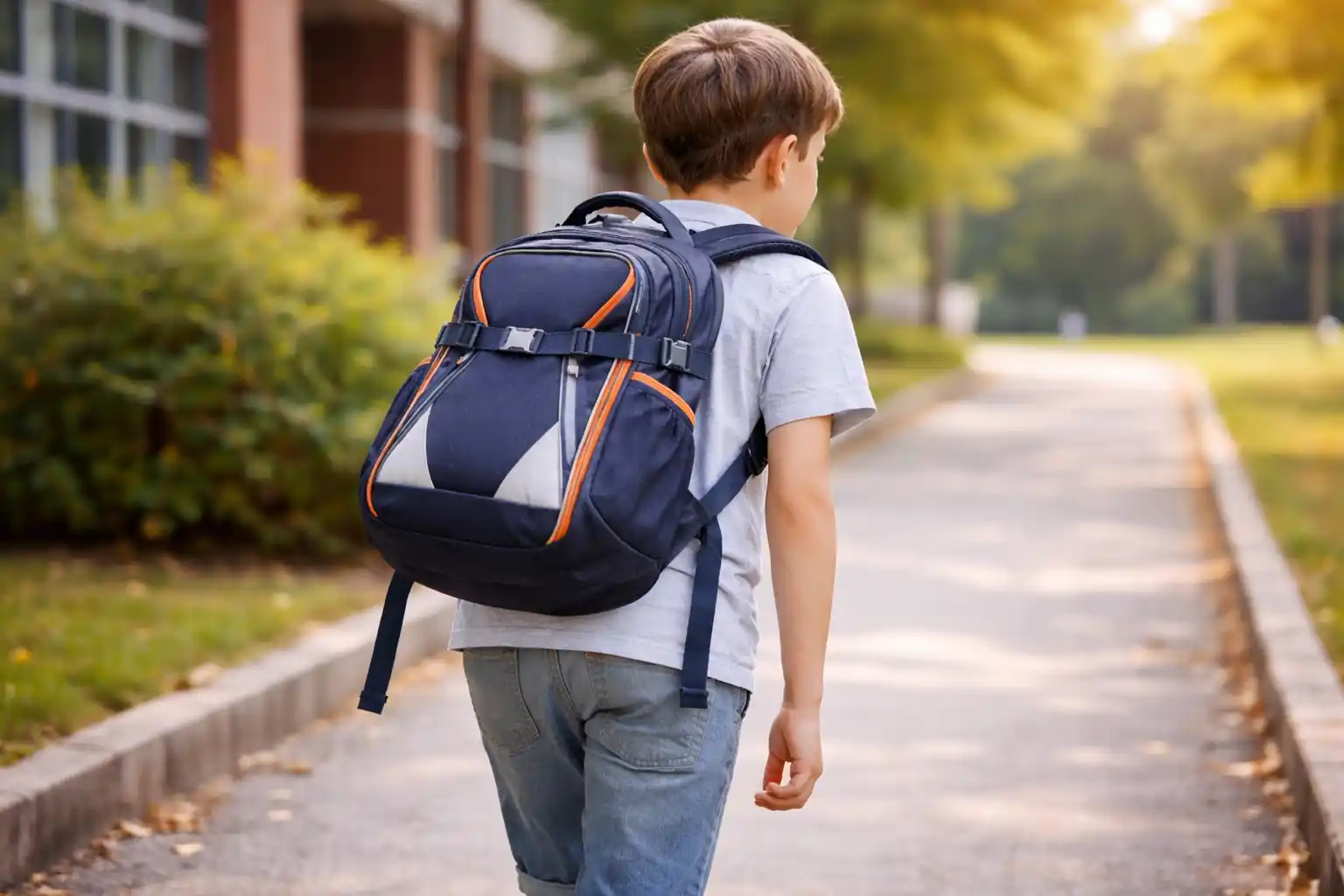
Long-Term Posture Habits Formed in Childhood
Posture habits are often established early and reinforced through repetition. A school bag carried five days a week becomes part of a child’s daily movement pattern. If that pattern encourages imbalance or strain, the effects may persist even when the bag is not being worn.
O le mea lea how backpack design affects posture in children is an important consideration, especially during primary school years when foundational habits are still forming.
Key Ergonomic Features That Protect the Spine
Proper Weight Distribution Across the Back
One of the core principles of ergonomic design is even weight distribution. Ergonomic school bags are structured to keep heavier items close to the back, reducing leverage that pulls the body out of alignment.
By spreading weight across a larger surface area, pressure on any single muscle group is reduced. This design approach supports more natural movement and helps maintain spinal alignment during walking.
Padded and Adjustable Shoulder Straps
Shoulder straps play a critical role in comfort and posture. Wide, padded straps help distribute pressure evenly across the shoulders, while adjustability allows the bag to fit the child’s body rather than forcing the body to adapt to the bag.
Properly adjusted straps help keep the school bag positioned high enough on the back to avoid excessive pulling on the lower spine.
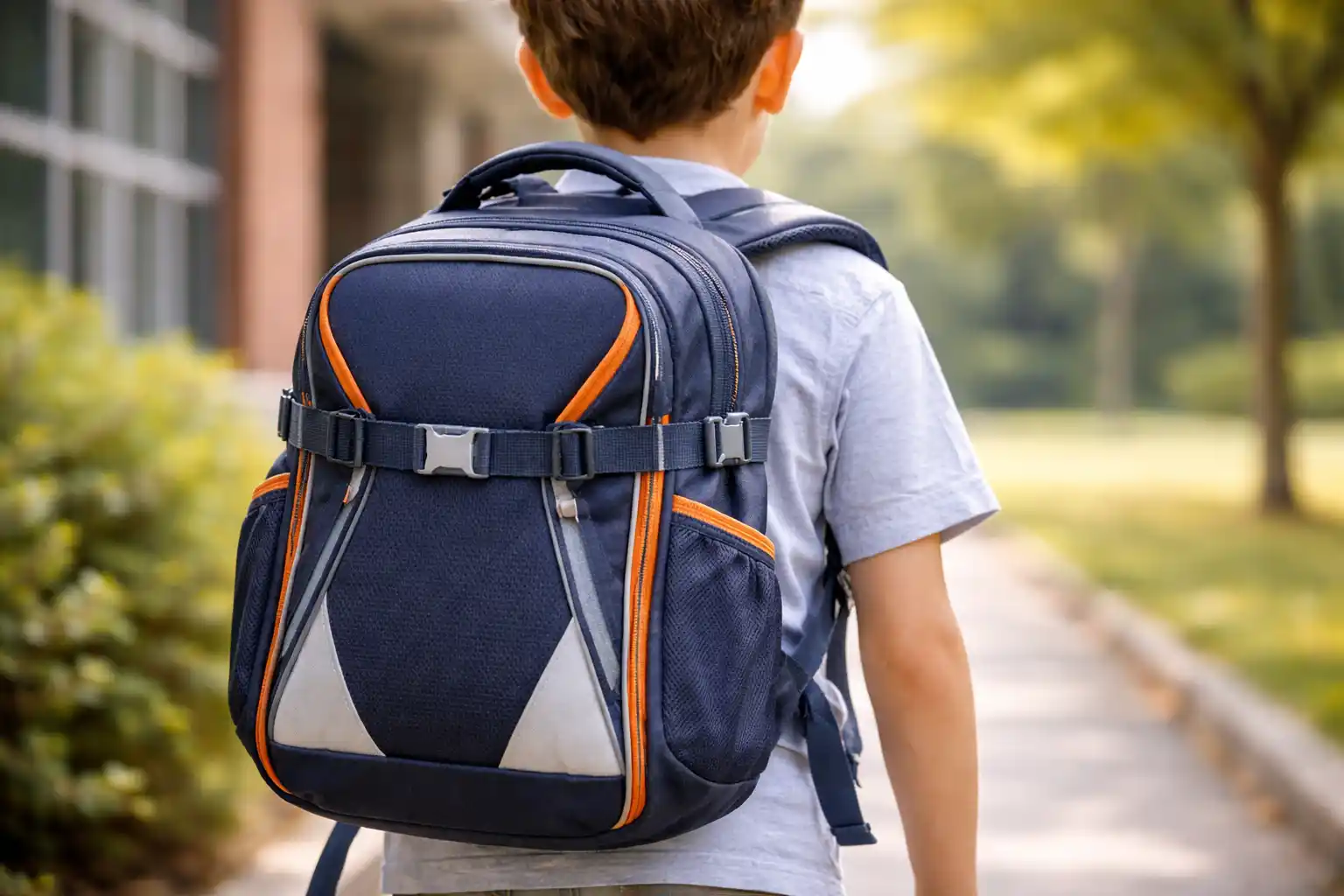
Supportive Back Panels and Structure
A supportive pito i tua provides stability and helps the bag maintain its shape against the body. This structure prevents contents from shifting and reduces pressure points along the spine.
Some ergonomic designs include contoured panels that follow the natural curve of the back, enhancing comfort without restricting movement.
Chest Straps and Waist Belts for Stability
Additional straps, such as chest straps or waist belts, help stabilize the school bag during movement. By preventing excessive swinging, these features reduce the need for constant muscular adjustment.
While not always necessary for lighter loads, these elements can be especially helpful for children who carry heavier materials or walk longer distances.
How to Choose the Right Ergonomic School Bag for Your Child
Matching the School Bag Size to the Child’s Body
Choosing the correct size is one of the most overlooked aspects when selecting ergonomic school bags. A bag that is too large may encourage overloading and improper weight distribution, while a bag that is too small can concentrate weight in a way that strains the shoulders and spine. Ideally, the school bag should fit proportionally to the child’s torso, resting comfortably against the back without extending significantly below the waistline.
When the bag aligns with the child’s body size, it allows ergonomic features—such as back panels and straps—to function as intended. This alignment supports natural posture and reduces the likelihood of compensatory movements that place stress on the spine.
Recommended Carry Weight for School Children
Weight guidelines are often discussed, but they are rarely applied consistently. While recommendations vary, many health professionals suggest that a school bag should not exceed a certain percentage of a child’s body weight. More importantly, how that weight is carried matters just as much as how much it weighs.
A well-designed ergonomic school bag can help manage daily loads more effectively by keeping heavier items close to the back and distributing weight evenly. This approach supports school bag weight and spine health without requiring children to consciously adjust their posture throughout the day.
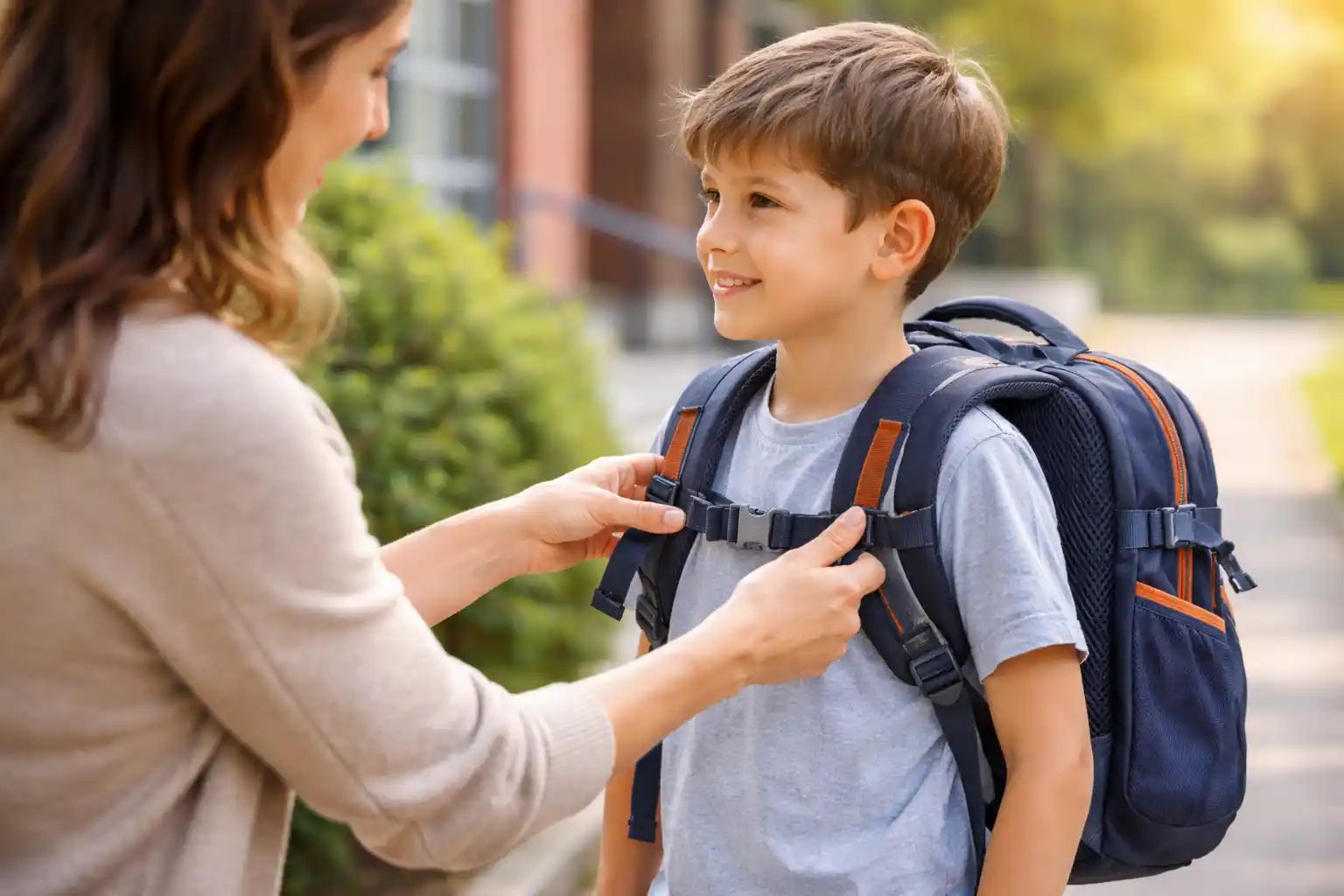
Adjusting an Ergonomic School Bag Correctly
Even the best ergonomic design cannot perform effectively if the bag is not adjusted properly. Shoulder straps should be tightened so that the bag sits snugly against the upper back rather than hanging low. Chest straps, if present, should be positioned comfortably to prevent shoulder straps from sliding outward.
Teaching children how to adjust their school bags correctly encourages independence while reinforcing healthy habits. Proper adjustment helps ensure that ergonomic backpack for kids designs deliver consistent posture support during daily use.
Ergonomic School Bags vs Regular School Bags
Design Differences That Impact Spine Protection
At a glance, ergonomic and regular school bags may appear similar. The key differences lie in structure, internal organization, and how the bag interacts with the body. Regular school bags often prioritize storage space and visual appeal, while ergonomic designs focus on balance, support, and movement.
Features such as contoured back panels, adjustable straps, and internal compartments positioned for weight balance distinguish school bags that protect the spine from basic designs. These elements work together to reduce unnecessary strain rather than simply carrying items from place to place.
Why Appearance Should Not Override Ergonomics
Children may be drawn to school bags based on color or popular designs, but appearance alone does not indicate how the bag will affect posture. While visual appeal matters for daily use, it should not come at the expense of spinal support.
Parents who prioritize ergonomic function alongside design help ensure that children do not sacrifice comfort and health for short-term style preferences. Over time, this balance supports both usability and well-being.
When Ergonomic School Bags Matter the Most
Primary School Years and Spine Development
Primary school years represent a critical window for spinal development. During this stage, children experience rapid growth, and posture habits are still forming. Carrying a poorly designed school bag during these years may contribute to habits that persist into adolescence.
O le mea lea are ergonomic school bags necessary for kids is a question many parents begin asking early. While no single product guarantees perfect posture, ergonomic designs reduce daily stress on the spine during an important developmental phase.
Heavy School Loads and Long Commutes
Children who carry multiple textbooks, sports equipment, or electronic devices face heavier daily loads. For those with longer commutes—whether walking, cycling, or using public transport—carrying time increases the importance of ergonomic support.
In these scenarios, features that stabilize weight and reduce muscle fatigue become especially valuable, helping children maintain better posture throughout the journey.
After-School Activities and Extended Carry Time
After-school activities often extend the amount of time a school bag is worn. Whether traveling to extracurricular programs or carrying additional items, extended use magnifies the effects of poor design.
Ergonomic school bags help manage these extended periods by supporting posture consistently rather than only during short trips.
Common Myths About Ergonomic School Bags
“Ergonomic School Bags Are Only for Heavy Loads”
One common misconception is that ergonomic design is only necessary when carrying heavy items. In reality, even moderate loads carried daily can influence posture over time if they are poorly distributed.
Ergonomic features support natural movement regardless of weight, making them relevant for a wide range of daily school routines.
“Children Will Adapt to Any Backpack”
Children are adaptable, but adaptation often involves compensation rather than comfort. Leaning forward, tightening muscles, or shifting weight may allow a child to carry a bag, but these adjustments can place unnecessary strain on the spine.
Understanding how ergonomic school bags protect children’s spine helps parents recognize that adaptation is not always a sign of suitability.
“Posture Problems Are Not Related to School Bags”
Posture is influenced by many factors, including sitting habits, physical activity, and screen use. However, school bags are a daily variable that directly affects how children move and stand.
Ignoring the role of school bags overlooks an opportunity to reduce one controllable source of strain.
Are Ergonomic School Bags Recommended by Health Professionals
General Pediatric and Posture Guidelines
Health professionals often emphasize minimizing repetitive strain during growth. While recommendations may not focus on specific products, principles such as balanced load, proper fit, and posture awareness align closely with ergonomic school bag design.
These guidelines support the idea that daily habits—including how children carry school materials—contribute to overall musculoskeletal health.
What Ergonomics and Child Health Experts Emphasize
Experts in ergonomics highlight the importance of designing products that support natural movement rather than forcing the body to compensate. In the context of school bags, this means reducing uneven pressure, stabilizing loads, and supporting spinal alignment during everyday activities.
Such principles reinforce the value of spine support school bag designs as part of a broader approach to child health.
How Ergonomic Design Works Together with Safety and Durability
Ergonomics and Reflective Safety Features
Ergonomic design does not exist in isolation. Features such as reflective elements enhance safety during commutes, while ergonomic structure ensures that added features do not compromise comfort or balance.
When safety and ergonomics work together, school bags support both visibility and posture without requiring trade-offs.
Ergonomics and Durable Daily Use
Durability complements ergonomic design by ensuring that supportive features maintain their structure over time. A school bag that loses shape or padding quickly may no longer provide effective support.
Combining ergonomic design with durable construction helps ensure consistent performance throughout the school year and beyond.
Final Thoughts: Supporting Healthy Spine Development Through Better School Bag Choices
Choosing a school bag is a decision that extends beyond convenience or appearance. The way a bag interacts with a child’s body day after day can influence posture habits and spinal comfort during critical years of growth.
By understanding ergonomic school bags, recognizing how design affects posture, and considering real-world usage scenarios, parents can make informed choices that support long-term well-being. While no school bag replaces healthy movement and good habits, ergonomic design plays a meaningful role in reducing unnecessary strain and supporting a more balanced daily routine.
FAQ
1. Are ergonomic school bags really necessary for children?
Ergonomic school bags are not a requirement, but they play an important role in reducing daily strain on a child’s spine during key growth years. Children carry school bags almost every weekday, and poorly designed bags may encourage forward leaning, uneven shoulder loading, or muscle tension. Ergonomic school bags help distribute weight more evenly, support natural posture, and reduce the need for constant physical compensation, making them especially helpful for long-term comfort and spinal support.
2. How do ergonomic school bags help protect a child’s spine?
Ergonomic school bags are designed to work with the body rather than against it by keeping weight close to the back, stabilizing movement, and reducing pressure on specific muscle groups. Features such as padded shoulder straps, supportive back panels, and proper weight distribution help minimize excessive stress on the spine. Over time, this reduces repetitive strain and supports healthier posture habits during daily school routines.
3. How heavy should a school bag be for a child?
While weight guidelines vary, the key factor is not only how heavy a school bag is but how the weight is carried. Even moderate loads can place stress on the spine if they are poorly distributed or carried too low on the back. Ergonomic school bags help manage daily loads more effectively by balancing weight across the back and shoulders, which supports spine health even when school materials increase.
4. What are the signs that a school bag is bad for a child’s posture?
Common signs include leaning forward while walking, uneven shoulder height, frequent complaints of shoulder or lower back discomfort, and difficulty maintaining balance when carrying the bag. These signs may indicate that the school bag does not fit properly or lacks ergonomic support. Adjusting the bag or choosing an ergonomic design can help reduce these posture-related issues.
5. At what age should children start using ergonomic school bags?
Ergonomic school bags are particularly beneficial during primary school years, when children experience rapid growth and posture habits are still forming. This is often when school loads increase and children begin carrying bags independently for longer periods. Using an ergonomic school bag during these years helps support proper posture and reduces unnecessary strain during an important stage of spinal development.
Mau faasino
-
Backpack Safety and Children’s Health
Author: American Academy of Pediatrics
Institution: American Academy of Pediatrics (AAP)
Source: Pediatric Health & Safety Guidelines
-
Backpacks and Back Pain in School Children
Tusitala: Karen Jacobs
Institution: Boston University, Department of Occupational Therapy
Source: Journal of Occupational Therapy
-
The Impact of Backpack Design on Children’s Posture
Author: Neha Rai, PhD
Institution: National Institute of Ergonomics
Source: Ergonomics Research Review
-
Schoolbag Weight and Musculoskeletal Health in Children
Author: David Dockrell
Institution: University College Dublin
Punavai: Applied Ergonomics Journal
-
Postural Effects of School Backpack Use in Children
Author: S. Hong, MD
Institution: Korean Society of Spine Surgery
Source: Spine Health Research Publication
-
Children’s Spine Development and Load Carriage
Author: Michael Schwellnus
Institution: University of Pretoria
Source: Sports Medicine Review
-
Ergonomic Principles in Backpack Design
Author: International Ergonomics Association
Institution: International Ergonomics Association (IEA)
Source: Ergonomics Design Guidelines
-
Preventing Musculoskeletal Strain in School-Aged Children
Author: World Health Organization
Institution: World Health Organization (WHO)
Source: Child Musculoskeletal Health Brief
Key Ergonomic Insights on School Bags and Spine Protection
Why ergonomic school bags matter for spinal health: During childhood, the spine is still developing and adapting to daily movement patterns, which makes repeated load carrying an important factor in posture formation. Ergonomic school bags reduce unnecessary strain by supporting balanced weight distribution and minimizing compensatory movements such as forward leaning or uneven shoulder loading during daily commutes.
How ergonomic design supports posture during daily use: Ergonomic school bags are structured to keep weight close to the back, stabilize the load during movement, and reduce pressure on specific muscle groups. Features such as padded shoulder straps, supportive back panels, and adjustable fit help children maintain a more natural posture without requiring conscious correction throughout the day.
What determines whether a school bag truly protects the spine: Spine protection is influenced not only by bag weight but also by fit, structure, and how consistently the bag maintains its position on the body. School bags that sit too low, shift during walking, or concentrate pressure in limited areas may increase strain even when overall weight appears manageable.
When ergonomic school bags become most important: Ergonomic support becomes especially relevant during primary school years, periods of rapid growth, heavier school loads, and longer daily carrying times. In these situations, repeated exposure to poor load distribution can influence posture habits more significantly than occasional short-term discomfort.
Key considerations for parents choosing ergonomic school bags: Selecting an ergonomic school bag involves balancing spinal support, proper fit, durability, and real-world daily use rather than focusing solely on appearance or capacity. Parents who evaluate school bags based on how they interact with a child’s body over time are better positioned to support healthy posture development and long-term comfort.