
Long-distance hikers often assume that a waterproof hiking bag is simply “any backpack that resists rain.” Unfortunately, this misconception leads to soaked clothing, damaged electronics and unnecessary risks during multi-day hikes. Waterproofing is not a single feature—it is a system, combining material science, seam engineering, testing standards and environmental regulations that have evolved rapidly in the last five years.
This article explains the engineering principles, real-world performance factors, and regulatory changes that now define the next generation of hiking bags waterproof designs. Whether you are comparing a PU-coated daypack with a TPU-laminated expedition pack, or choosing the best waterproof hiking bag for long-term reliability, you will learn exactly which specifications matter—and which marketing phrases you can ignore.
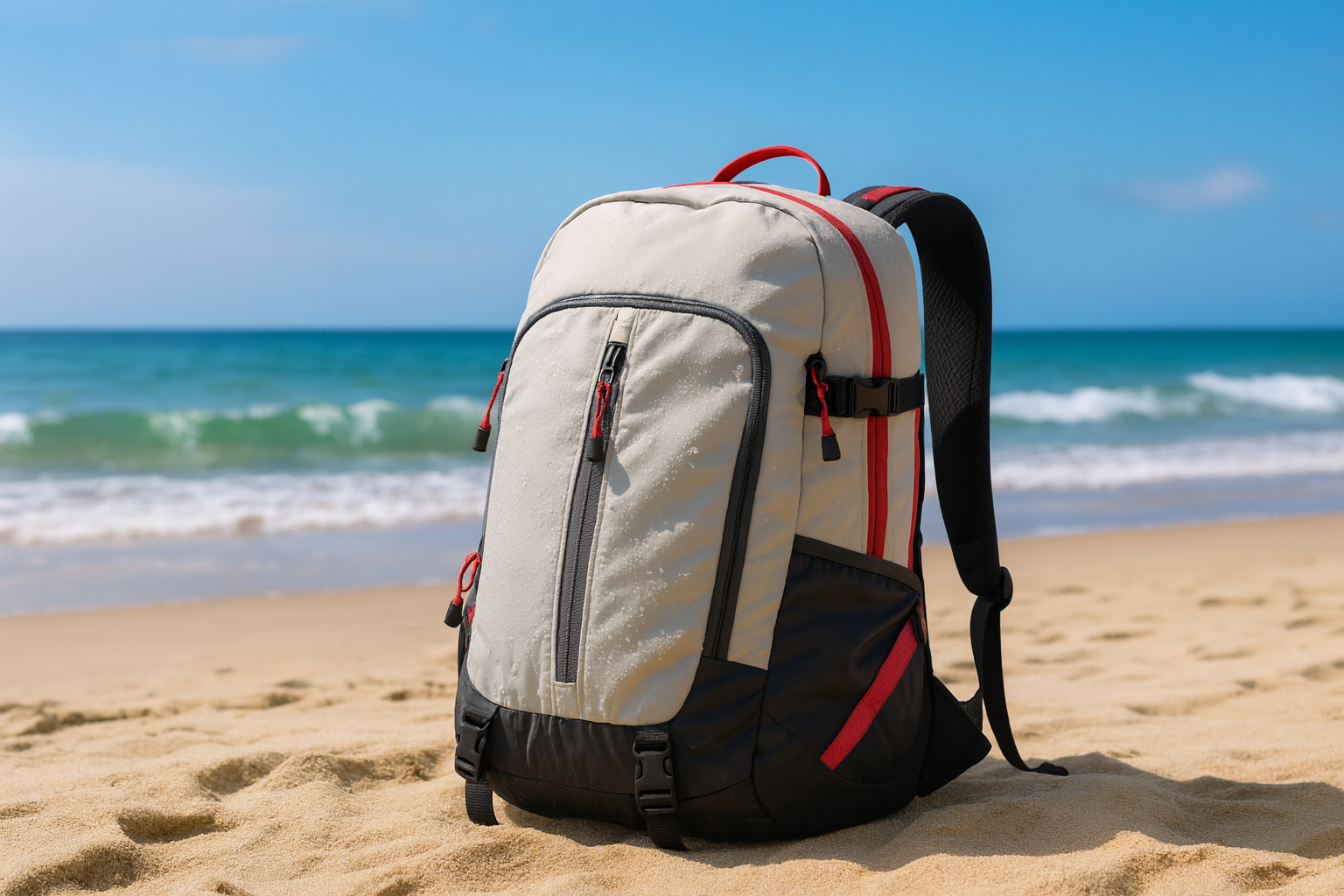
Shunwei 30L waterproof hiking bag displayed on a sunny beach to highlight real outdoor durability.
Why Waterproofing in Hiking Backpacks Is Frequently Misunderstood
Ask any new hiker, “What makes a backpack waterproof?”
Most will answer: “Material with a coating.”
That is only 20% of the truth.
A truly waterproof hiking bag relies on:
• Base fabric + coating durability
• Hydrostatic head (water column) rating
• Seam construction method
• Zipper waterproof rating
• Design geometry that prevents pooling
• Test standards: ISO 811 / EN 343 / JIS L 1092
• PFAS-free chemical compliance after 2023
If any one of these fails, the pack is merely “water-resistant,” not waterproof.
For example:
A nylon pack with a 2000mm PU coating will repel drizzle, but seam needle holes can still leak under pressure, meaning the user mistakenly believes they purchased a waterproof hiking bag when—in real conditions—it is not waterproof at all.
Understanding Waterproof Ratings: What ISO 811 and EN 343 Actually Mean
Most brands proudly advertise “3000mm waterproof!” without explaining what the number represents.
Hydrostatic Head (HH): The Industry’s Core Waterproof Metric
This measures pressure before water penetrates fabric. Higher = better.
Typical ranges:
| Backpack Type | Hydrostatic Head Rating | Real Meaning |
|---|---|---|
| Standard hiking backpack | 600–1500 mm | Light rain only |
| PU-coated packs | 1500–3000 mm | Moderate / steady rain |
| TPU-laminated technical packs | 5000–10,000 mm | Heavy rain, river spray |
| Dry bags | 10,000+ mm | Waterproof under brief submersion |
ISO 811, JIS L 1092, and EN 343 define test conditions, but real-world durability drops 40–60% after abrasion or UV exposure. This is why the best waterproof hiking backpack is not only about high initial numbers—it is about maintaining waterproofing after months of scraping against rocks and tree roots.
Waterproof Materials: PU vs TPU vs PVC—What Hikers Must Know
PU Coating (Polyurethane)
The most common and economical solution for waterproof hiking bags.
Advantages: lightweight, flexible.
Weaknesses: hydrolysis (breakdown from moisture), decreased waterproofing after 1–2 seasons.
TPU Lamination (Thermoplastic Polyurethane)
Premium option used in mountaineering packs.
Advantages:
• Higher HH rating
• FAR more resistant to abrasion
• Bonds better to nylon
• Works well with heat-welded seams
• Environmentally safer than PVC
Disadvantages: higher price.
If you want a best waterproof hiking bag for rain, TPU is the gold standard.
PVC Coating
Waterproof but heavy, environmentally restricted, banned in some EU outdoor categories.
Fabric Weight vs Waterproofing
Heavier does not equal more waterproof.
Engineering tests show:
• 420D TPU fabric outperforms 600D PU fabric in water resistance by 2–3×.
• Coating quality matters more than denier count.
Seam Construction: The Most Critical (and Most Ignored) Waterproof Factor
Most water enters not through fabric—but through seams.
1. Traditional Stitching
Needles create 5–8 holes per centimeter. Even if taped, long-term failure occurs.
2. Seam Taping
Improves waterproofing but breaks down with washing, heat and flex.
3. High-Frequency Welded Seams (Best)
Used in professional waterproof hiking bag designs.
Advantages:
• Zero needle holes
• Uniform waterproof bonding
• Long-term durability
If a brand describes its product as “waterproof” but uses stitched seams with no tape, it is not waterproof—period.
Waterproof Zippers: SBS, YKK and Pressure Ratings
Zippers are the second-largest failure point.
Premium waterproof packs use:
• YKK AquaGuard
• TIZIP airtight zippers
• Pressure-rated rain zippers
Budget “waterproof” backpacks often use normal coil zippers with rubber flaps. These only protect against light rain and should not be considered part of a hiking bags waterproof design.
Can You Trust “Waterproof Ratings” from Marketing Labels?
Most brands rely on simplified terms:
• “Rain-proof”
• “Weather-proof”
• “Water-repellent”
• “Storm-ready”
None of these correspond to ANSI, ISO or EN standards.
Only hydrostatic head + seam technology + design engineering can define the casual travel hiking bag for real-world use.
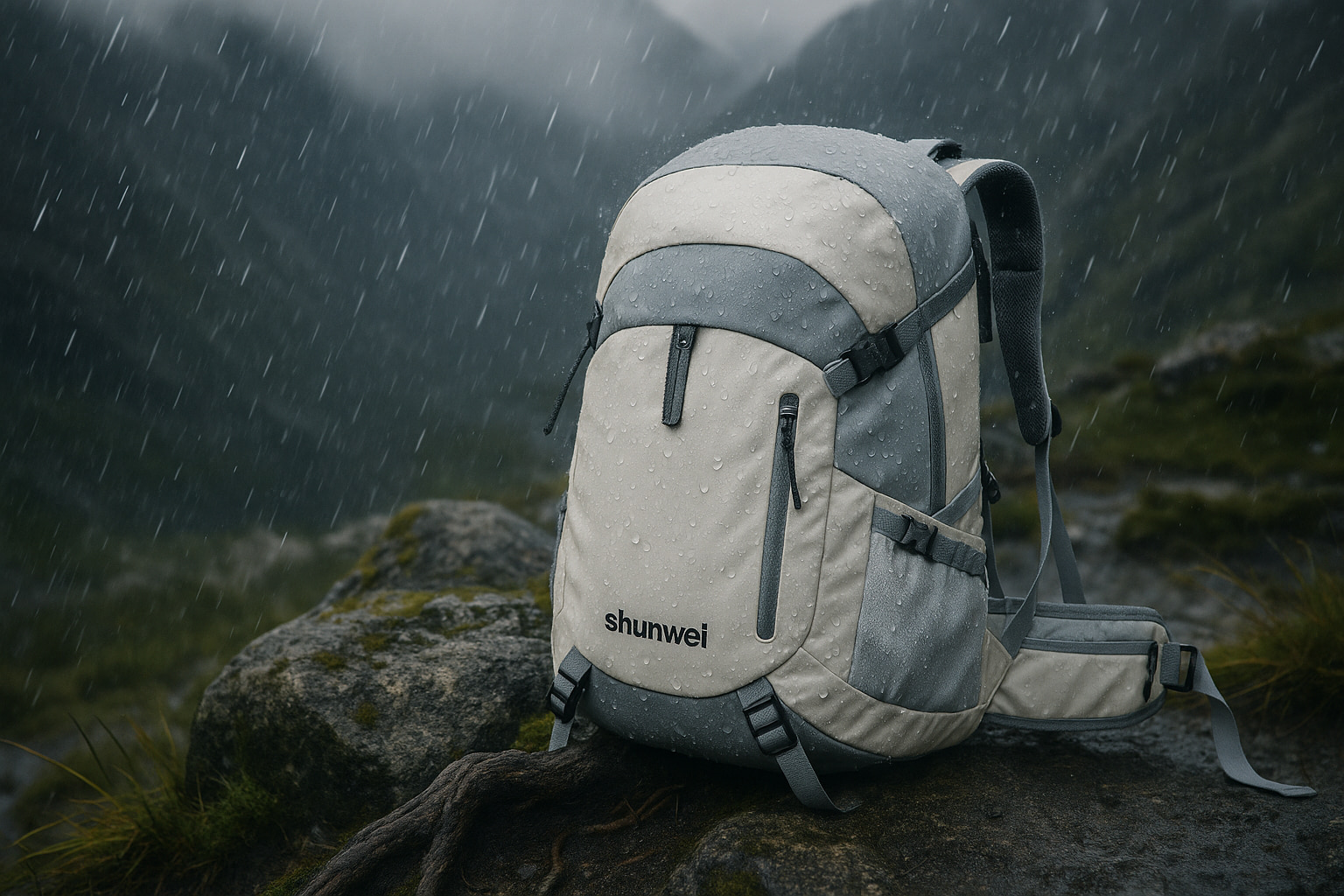
A waterproof hiking bag in heavy mountain rain, demonstrating how marketing waterproof ratings often differ from real-life performance.
Industry Regulations Affecting Waterproof Backpacks in 2024–2025
Since 2023, PFAS restrictions in the EU and several U.S. states prohibit many legacy waterproofing chemicals.
This has led to:
• PFAS-free TPU adoption
• New eco-coatings replacing DWR finishes
• Updated test standards for outdoor gear
For exporters, compliance with EN 343 and REACH is increasingly required for bulk purchase contracts above 500 units. A modern waterproof hiking bag must balance performance with regulatory compliance.