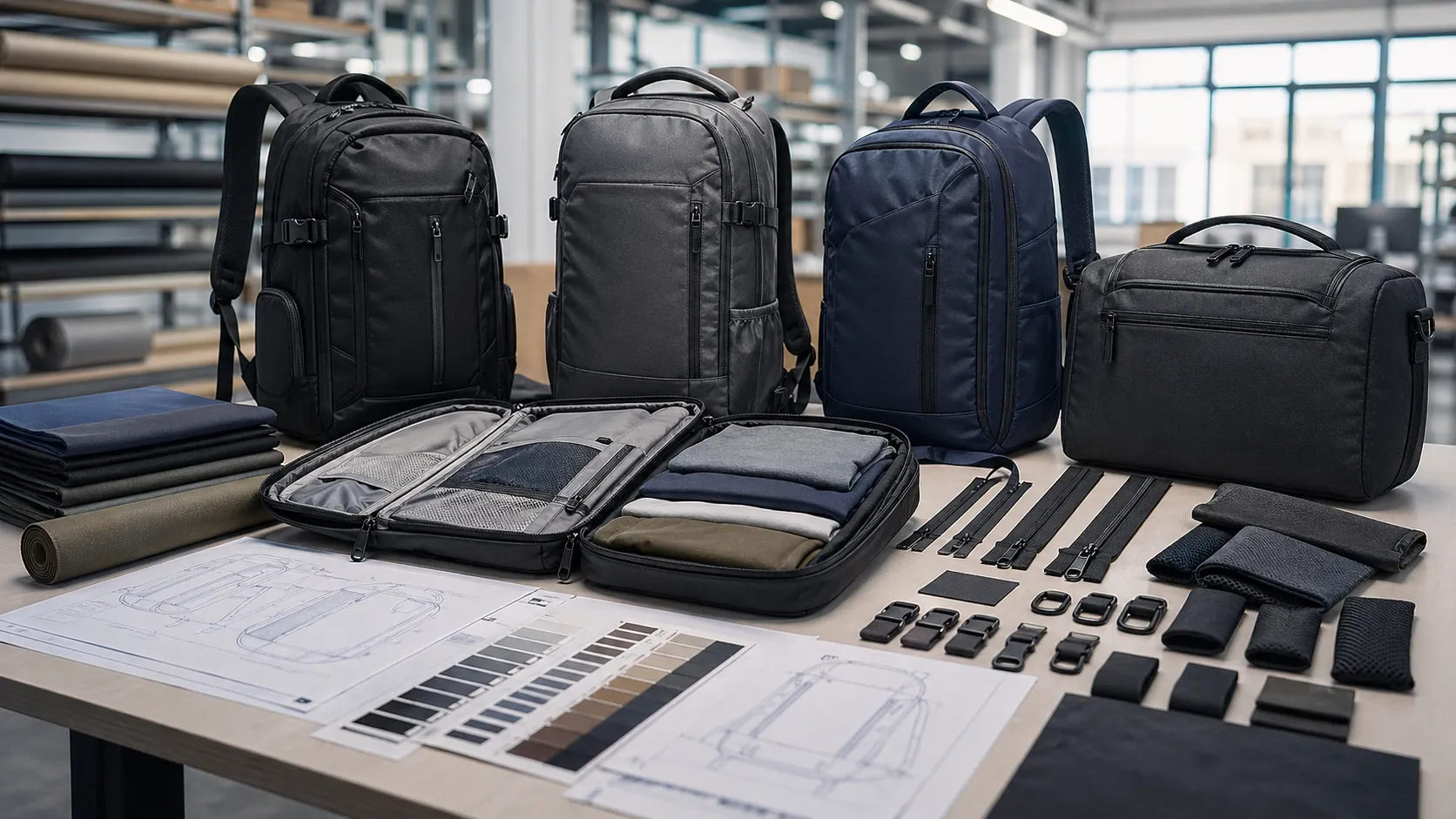
Quick Summary: This travel backpack manufacturing guide helps brands, importers, and private label buyers understand how to choose the right travel backpack manufacturer by evaluating capacity, compartments, materials, OEM details, and quality control. Instead of focusing only on backpack size, it explains how custom travel backpack development should connect real travel scenarios, user comfort, fabric durability, sample approval, and bulk production planning.
Introduction: Why Travel Backpack Manufacturing Is More Than Choosing a Size
For many buyers, the first question sounds simple: “What size travel backpack should we develop?” But in real manufacturing, size is only the opening chapter. A successful travel backpack is not just a container with shoulder straps. It is a mobile storage system, a comfort product, a brand item, and a quality promise carried on a customer’s back.
For travel gear brands, Amazon sellers, retail buyers, promotional product companies, and importers, choosing the right travel backpack manufacturer can directly affect product reviews, return rates, brand reputation, and repeat orders. A 40L backpack with poor stitching may fail faster than a 30L backpack made with stronger fabric. A travel backpack with too many pockets may look impressive in product photos but feel confusing in daily use. A waterproof claim without suitable coating and zipper protection may create customer complaints after the first rainy trip.
That is why travel backpack manufacturing must be planned from multiple angles: capacity, compartments, materials, comfort, hardware, branding, packaging, sampling, and bulk production control. Buyers who only focus on price or appearance often discover problems too late, usually after mass production has already started. At that stage, correcting pattern design, changing fabric, or improving reinforcement points becomes slower, more expensive, and more painful. Yes, the backpack industry has its own version of “measure twice, cut once.” Except here, if you measure badly, you may cut 5,000 pieces of fabric badly.
This guide is written for B2B buyers who want to build a better custom travel backpack product line. It explains how to evaluate capacity, plan compartments, select materials, confirm OEM details, avoid common mistakes, and work with a travel backpack manufacturer more effectively before placing a bulk order.
What Makes a Travel Backpack Different from a Regular Backpack?
A travel backpack may look similar to a school backpack, laptop backpack, or hiking backpack, but the design logic is different. Travel users move through airports, train stations, hotels, buses, city streets, hostels, business trips, weekend trips, and outdoor routes. They need quick access, organized storage, comfort under load, and reliable durability.
For brands and importers, this means a travel backpack should be developed around real travel behavior, not just a nice-looking shape.
Travel Backpacks Are Designed Around Movement
A regular daily backpack may only need to carry a laptop, books, lunch, and small accessories. Atravel backpack must handle clothing, electronics, toiletries, documents, chargers, shoes, jackets, and sometimes outdoor gear. More importantly, users may carry it for several hours, lift it into overhead compartments, place it on dirty floors, pull it through security checks, and open it repeatedly during a trip.
This changes the manufacturing requirements. Shoulder straps need stronger load-bearing support. Handles need reinforced stitching. Main compartments need easier access. Fabric needs better abrasion resistance. Zippers must remain smooth even when the bag is full. Back panels should reduce pressure during long wear.
For buyers, this means the product should be tested as a travel item, not simply approved from a product photo.
Travel Backpacks Need Better Access and Organization
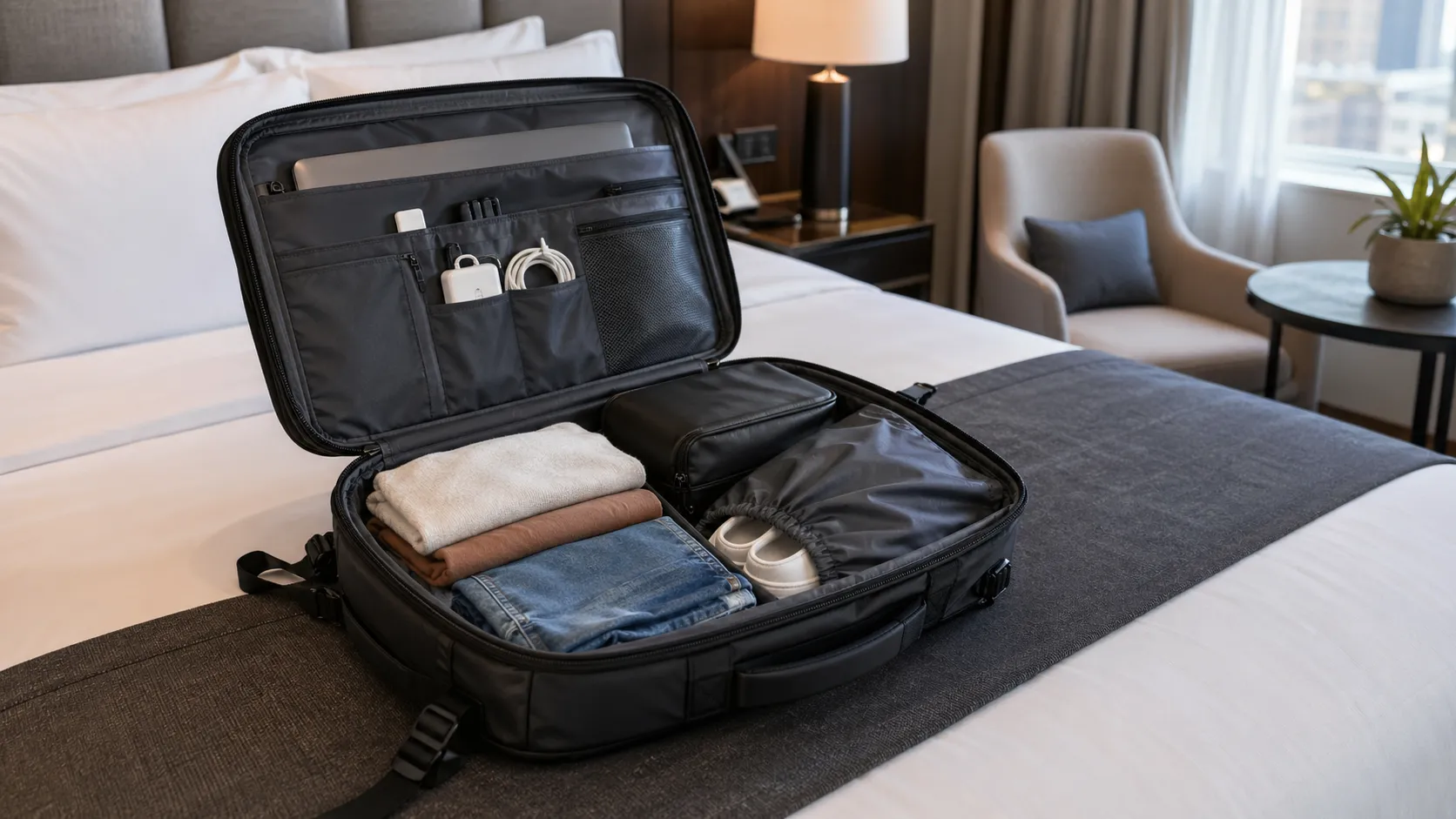
Travel users do not want to dig through a deep black hole every time they need a charger, passport, jacket, or laptop. This is why many travel backpacks use front-opening designs, U-shaped openings, clamshell structures, laptop compartments, quick-access pockets, wet pockets, shoe compartments, and luggage sleeves.
However, organization must be balanced. Too few compartments make the product feel basic. Too many compartments increase sewing complexity, cost, weight, and user confusion. A good OEM travel backpack should make organization feel natural, not like a puzzle designed by someone who hates tired travelers.
Travel Backpacks Must Balance Capacity and Comfort
Capacity is important, but bigger is not always better. A 50L travel backpack may look attractive for long trips, but without a proper back panel, hip belt, sternum strap, and reinforced structure, it may become uncomfortable when fully loaded. A 30L travel backpack may be ideal for city trips, but if the laptop compartment, luggage sleeve, and quick-access pockets are missing, it may lose appeal in the commuter travel market.
This is where a professional travel backpack supplier should help buyers match product structure with market positioning. Capacity must work together with comfort, materials, and compartment design.
Capacity Planning: 30L, 40L, 50L and Product Line Strategy
Capacity is one of the first decisions in travel backpack development. But for brands, the right question is not simply “Which size is popular?” The better question is: “Which capacity fits our target customer, travel scenario, selling channel, and product positioning?”
A travel backpack product line may include different sizes for different markets. For example, a 30L model may fit urban travelers and weekend trips, a 40L model may serve as the main carry-on travel backpack, and a 50L model may target outdoor travelers or gear-heavy users.
30L Travel Backpack: Urban Travel and Weekend Trips
A 30L travel backpack is often suitable for short trips, city travel, weekend use, airline personal item needs, and light packers. It can also work well for customers who want one bag for commuting and occasional travel.
For brands, the 30L size is attractive because it can be positioned as lightweight, practical, and easy to carry. It is especially suitable for business travelers, students, urban commuters, digital nomads, and weekend travelers.
Recommended features for a 30L travel backpack include a padded laptop sleeve, front quick-access pocket, hidden back pocket, luggage sleeve, breathable shoulder straps, and a clean silhouette. The design should avoid unnecessary bulk. A compact travel backpack should look organized and efficient, not overloaded with too many external attachments.
The main risk is under-capacity. If the product is promoted for long trips but only offers limited internal space, customers may feel disappointed. For B2B buyers, this can lead to weak reviews, poor repeat purchase, and unclear market positioning.
A 30L travel backpack is best when marketed honestly as a short-trip, city-travel, or carry-on companion.
40L Travel Backpack: The Most Balanced Commercial Size
A 40L travel backpack is often the most commercially balanced size for many travel brands. It can usually support multi-day travel while still remaining manageable for carry-on-style use, depending on the final dimensions and airline rules. For buyers building a main product line, 35L to 45L is often the most flexible development range.
This capacity can support clothing, shoes, toiletries, a laptop, chargers, and travel accessories. It works well for business trips, 4 to 7-day travel, weekend-plus trips, and general vacation use.
From a manufacturing perspective, a 40L travel backpack needs better structural planning than a small daily backpack. If the main compartment is too soft, the bag may bulge when packed. If the back panel is weak, carrying comfort drops. If the compression system is missing, the backpack may look messy when not fully loaded.
Recommended features include compression straps, a structured back panel, separate laptop compartment, clamshell opening, internal mesh pocket, reinforced top and side handles, and durable zippers. For a private label travel backpack, this size is often a strong base model because it gives enough room for brand differentiation through fabric, color, patch design, pullers, lining, and compartment layout.
The main risk is overpacking. A poorly structured 40L backpack can become uncomfortable if users fill every corner. For this reason, buyers should confirm strap padding, load-bearing seams, zipper quality, and back panel support during sample review.
50L Travel Backpack: Outdoor Travel and Gear-Heavy Users
A 50L travel backpack is designed for users who need more storage. It may fit outdoor travel, winter trips, photography gear, long-distance travel, volunteer trips, and backpacking-style journeys. However, this capacity requires more serious attention to comfort and load support.
A 50L travel backpack cannot rely on the same construction as a small city backpack. When fully loaded, the stress on shoulder straps, side seams, handles, zippers, and fabric panels increases significantly. If these points are not reinforced, the product may fail under real use.
Recommended design elements include stronger fabric, reinforced bar-tack stitching, a padded back panel, hip belt, sternum strap, compression system, durable buckles, and stronger bottom material. If the product targets outdoor or adventure travel, ripstop fabric, water-resistant coating, and abrasion-resistant base panels may be suitable.
The main risk is oversizing. Some customers may expect carry-on compatibility, but a 50L backpack can easily exceed airline limits depending on dimensions and packing style. For buyers, the product listing and marketing should clearly define the intended use.
If your customers are gear-heavy travelers, choose 45L to 50L with stronger support. If your customers are airline travelers, be careful with dimensions and avoid promising universal carry-on compatibility.
Capacity Decision Table
Capacity
Best Market Fit
Main Buyer Risk
Manufacturing Recommendation
30L
Urban travel, weekend trips, commuter travel
Too small for winter or long trips
Use lightweight fabric, laptop sleeve, luggage sleeve, and clean structure
35L–40L
Carry-on travel, retail bestseller, 4–7 day trips
Poor structure may cause bulging and discomfort
Add compression straps, structured back panel, organized compartments, and strong zippers
45L–50L
Outdoor travel, winter travel, gear-heavy users
May become too heavy or oversized
Use reinforced stitching, stronger fabric, hip belt, sternum strap, and durable handles
Compartment Design: The Hidden Factor That Affects User Experience
For many travel backpack buyers, compartment design is where the product succeeds or fails. Capacity tells users how much the backpack can hold. Compartments decide whether the backpack is actually pleasant to use.
A 40L backpack with poor organization may feel less useful than a 35L backpack with smart storage. For B2B buyers, compartment planning should be discussed early with the backpack factory, because every pocket affects pattern making, sewing time, material usage, cost, weight, and production consistency.
Main Compartment
The main compartment is the center of the travel backpack. It may use a top-loading structure, front-opening structure, U-shaped zipper, or clamshell opening.
For travel backpacks, a clamshell or wide-opening structure is often preferred because it allows users to pack clothing more like a suitcase. This improves visibility and access. However, the zipper route must be carefully designed. Long zippers create better access, but they also require better zipper quality and sewing accuracy.
If the main compartment is too deep without internal organization, users may struggle to find items. If the opening is too narrow, packing becomes inconvenient. If the lining is too thin, the inside may tear easily under repeated use.
A good main compartment should feel spacious, accessible, and durable.
Laptop Compartment
A laptop compartment is essential for many modern travel backpacks, especially for business travel, commuter travel, student travel, and digital nomad markets. But not all laptop compartments are equal.
Buyers should confirm laptop size compatibility, padding thickness, bottom protection, closure method, and access position. A suspended laptop sleeve is often better than a sleeve that sits directly on the bottom of the bag, because it reduces impact when the backpack is placed on the floor.
For a custom travel backpack, the laptop compartment should match the target market. A business travel backpack may need a more professional laptop structure. A casual weekend backpack may only need a basic padded sleeve. A premium model may include tablet storage, cable pockets, and an independent zipper opening.
The mistake many buyers make is simply asking for “a laptop pocket” without defining protection level. That is too vague for production.
Shoe Compartment
A shoe compartment can be valuable for travel backpacks, gym travel bags, sports travel backpacks, and weekend bags. It allows users to separate shoes from clothing and electronics.
However, shoe compartments must be designed carefully. If the compartment takes too much internal space, users may complain that the main storage area feels smaller. If there is no ventilation or washable lining, odor and hygiene issues may occur. If the zipper is positioned poorly, the compartment may be difficult to access when the bag is full.
For OEM development, buyers should define shoe size range, compartment position, lining material, ventilation needs, and whether the shoe compartment is a core feature or optional feature.
Wet Pocket
A wet pocket is useful for swimwear, towels, toiletries, rain gear, and damp clothing. It is especially suitable for travel backpacks targeting beach trips, sports travel, outdoor travel, or family travel.
The wet pocket should use water-resistant lining material such as TPU-style lining or coated fabric. Buyers should remember that a wet pocket does not automatically make the whole backpack waterproof. This distinction matters because overclaiming waterproof performance can create customer complaints.
A wet pocket is a strong feature when used correctly. It gives the product a practical travel advantage without changing the entire backpack structure too much.
Anti-Theft Pocket
Anti-theft pockets are popular in urban travel backpacks. These may include hidden rear pockets, side zipper pockets, back-panel pockets, or secure internal pockets for passports, wallets, and phones.
For manufacturing, the design should be practical and not overcomplicated. A hidden back pocket is often more useful than a dramatic “anti-theft” structure that increases cost but does not improve daily use. Buyers should also avoid making exaggerated claims. It is better to describe the function as a hidden pocket, secure pocket, or rear-access pocket.
For private label brands, anti-theft pocket placement can become a useful selling point, especially for city travelers and airport users.
Luggage Sleeve
A luggage sleeve is one of the most important features for travel backpacks used in airports. It allows the backpack to slide over suitcase handles, reducing shoulder fatigue during long walks through terminals.
From a manufacturing perspective, the sleeve must be positioned correctly and stitched strongly. If the sleeve is too loose, the backpack may wobble. If it is too tight, it may not fit common suitcase handles. If the stitching is weak, the sleeve may tear under repeated use.
For travel-focused products, a luggage sleeve is not a decorative detail. It is a practical feature that can influence customer satisfaction.
Material Selection: Fabric, Coating, Lining and Hardware
Materials determine how the travel backpack looks, feels, performs, and survives repeated use. A professional travel backpack manufacturer should help buyers compare materials based on product positioning, target price range, durability needs, water resistance, and brand image.
The right material is not always the most expensive one. It is the one that fits the product’s market promise.
Polyester
Polyester is widely used in travel backpack manufacturing because it is cost-effective, color-stable, and suitable for large-scale production. It works well for mainstream travel backpacks, promotional travel bags, school travel bags, and retail product lines.
Common polyester fabrics may vary by denier, weave, coating, and finishing. Buyers should not only ask for “polyester.” They should confirm fabric weight, surface texture, coating, colorfastness, and hand feel.
Polyester is suitable when the brand needs stable production, good color options, and competitive pricing. The main risk is choosing fabric that is too thin or weak for the intended capacity. A 50L travel backpack requires more durable material than a lightweight 25L city travel bag.
Nylon
Nylonis often used for higher-end travel backpacks because it offers good strength and a lighter feel in many constructions. It is suitable for premium travel backpacks, lightweight outdoor travel backpacks, and performance-focused designs.
Nylon can help brands create a more technical and durable product image. However, it may increase material cost compared with common polyester. Buyers should use nylon when it supports the product positioning, not just because it sounds premium.
For outdoor travel, lightweight travel, or higher-end private label lines, nylon can be a strong option.
Oxford Fabric
Oxford fabric is commonly used for structured backpacks, business travel bags, and durable daily travel products. It has a woven texture and often provides a stronger visual structure.
Oxford fabric can make a travel backpack feel more solid and commercial. It is suitable for buyers who want a durable appearance and a slightly more formal style. However, depending on specification, Oxford fabric can feel heavier than some lightweight nylon or polyester options.
This makes it suitable for structured travel backpacks, laptop travel backpacks, and promotional travel bags where durability and shape matter.
Ripstop Fabric
Ripstop fabric uses reinforced yarn patterns designed to reduce tear spread. It is commonly associated with outdoor, lightweight, and performance products.
For a travel backpack aimed at outdoor users, adventure travelers, or premium lightweight customers, ripstop fabric can create a strong selling point. It also gives the product a technical appearance.
However, buyers should confirm the actual fabric specification rather than relying only on the word “ripstop.” Not every ripstop fabric has the same strength, coating, or abrasion resistance.
PU Coating vs TPU Coating
Water resistance is one of the most misunderstood parts of backpack manufacturing. Many buyers request “waterproof fabric,” but in most cases they actually need water-resistant performance.
TPU-style materials or linings can provide stronger water-resistant performance in specific areas, such as wet pockets or waterproof compartments. However, using stronger materials everywhere may increase cost and change the hand feel.
The better approach is to use the right protection in the right place. For example, use standard coated fabric for the main body, stronger lining for wet pockets, and better zipper protection if the product is positioned as a water-resistant travel backpack.
Lining Material
The lining is often ignored by inexperienced buyers, but users see and touch it every time they open the backpack. Thin lining may tear, wrinkle, or make the product feel cheap. Better lining improves perceived value and durability.
For laptop compartments, lining should work with padding. For wet pockets, lining should resist moisture. For premium products, lining color can also support brand identity.
Zippers, Buckles and Pullers
Zippers are one of the most common failure points in backpacks. A beautiful travel backpack with a weak zipper is like a luxury hotel with a broken door handle. Customers notice immediately, and they do not forgive easily.
Buckles, adjusters, D-rings, and strap hardware should also match the backpack’s load capacity. A lightweight buckle may be acceptable for a small daypack but unsuitable for a large travel backpack.
Material Decision Table
Material or Component
Best Use
Buyer Risk
Recommended Choice
Polyester
Mainstream travel backpacks and bulk production
Weak fabric may tear early if specification is too low
Choose proper denier, coating, and colorfastness
Nylon
Premium lightweight travel backpacks
Higher material cost
Use for higher-end or outdoor-focused product lines
Oxford fabric
Structured travel backpacks and business travel bags
May feel heavier depending on specification
Use when durability and shape are important
Ripstop fabric
Outdoor travel and lightweight performance bags
Not all ripstop fabrics perform equally
Confirm real fabric specification and coating
PU coating
Daily water-resistant travel backpacks
Not fully waterproof
Suitable for mainstream travel products
TPU-style lining
Wet pockets and stronger moisture protection
Higher cost if overused
Use in functional zones where needed
Quality zipper
Main compartment and laptop access
Cheap zipper failure causes complaints
Match zipper grade with capacity and product positioning
OEM and ODM Details Buyers Must Confirm Before Sampling
OEM and ODM development is where a travel backpack becomes a brand product instead of a generic bag. For buyers, this stage must be handled carefully because unclear instructions can lead to wrong samples, delayed revisions, and production mistakes.
A professional backpack factory should help buyers clarify design requirements before sample making.
OEM vs ODM: Which Model Should Buyers Choose?
OEM means the buyer provides a design concept, drawings, reference sample, tech pack, or detailed requirements, and the manufacturer develops the product accordingly. This is suitable for brands that need a unique structure, exclusive pattern, specific material combination, or special market positioning.
ODM means the manufacturer already has existing models or base designs, and the buyer customizes color, logo, materials, packaging, or small details. This is suitable for buyers who want faster market testing, lower development complexity, or a quicker launch.
If you already have product drawings, choose OEM. If you need a ready base model with brand customization, choose ODM. If you are testing the market, start with ODM and improve the product after feedback. If you are building a long-term brand collection, OEM may offer stronger differentiation.
Logo Customization
Logo customization is one of the most common requests in private label travel backpack production. Common options include screen printing, heat transfer printing, embroidery, woven labels, rubber patches, leather patches, metal badges, and custom zipper pullers.
Each method has different visual effects, durability, cost, and production requirements. For example, embroidery feels durable and premium but may not suit every fabric or logo detail. Rubber patches can work well for outdoor or sports styles. Woven labels are clean and suitable for retail branding. Metal badges can look premium but must be tested for weight, attachment strength, and corrosion resistance.
Buyers should provide logo files, Pantone colors, size requirements, placement instructions, and reference photos if available.
Color Customization
Color affects brand identity and market appeal. Buyers can customize main fabric color, lining color, zipper tape, zipper puller, webbing, buckles, logo patch, and stitching thread.
However, color customization should be managed carefully. Custom-dyed fabric may require higher MOQ and longer lead time. Stock fabric colors may be faster and more cost-effective. Pantone matching should be confirmed by lab dip or fabric swatch before mass production.
For travel backpacks, practical colors such as black, grey, navy, olive, beige, and dark green are often commercially stable. More distinctive colors may work for lifestyle brands but should be tested against target market demand.
Compartment Customization
Custom compartments can make a travel backpack more competitive, but every added compartment should have a reason. Buyers may request laptop sleeves, tablet pockets, shoe compartments, wet pockets, passport pockets, mesh organizers, bottle pockets, power bank pockets, cable channels, hidden pockets, and luggage sleeves.
The key question is not “Can we add this?” The real question is “Will the target customer use this enough to justify the extra cost and weight?”
A travel backpack for business users may need laptop protection and a clean exterior. A backpack for outdoor travelers may need compression straps and better load support. A backpack for gym-travel users may need a shoe compartment and wet pocket. A backpack for airline travel may need a luggage sleeve and quick-access document pocket.
Packaging Customization
Packaging may seem minor, but it affects warehouse efficiency, retail presentation, and customer experience. Common options include polybags, hangtags, barcode labels, carton marks, instruction cards, silica gel, recycled packaging, and retail-ready packaging.
For bulk orders, carton size, unit quantity, gross weight, barcode label, shipping mark, and packing method should be confirmed before production. Poor packaging instructions can create problems for warehouses, distributors, and e-commerce fulfillment centers.
Sample Requirements
Before sample development, buyers should prepare as much information as possible:
Sample Detail
What Buyers Should Confirm
Target capacity
30L, 40L, 50L, or custom range
User scenario
City travel, business travel, outdoor travel, gym travel, weekend trips
Clear sample requirements reduce misunderstanding and save time. A vague request like “make a good travel backpack” is not enough. That is not a product brief. That is a wish whispered into the wind.
Manufacturing Process: From Concept to Bulk Production
A travel backpack may look simple from the outside, but manufacturing involves many controlled steps. A small change in fabric thickness, zipper length, pocket position, or strap construction can affect production time, cost, comfort, and durability. For B2B buyers, understanding the manufacturing process helps reduce delays and avoid sample approval mistakes.
A professional travel backpack manufacturer should not only sew the product. The manufacturer should help translate buyer requirements into a workable production plan.
Step 1: Requirement Analysis
The first step is to define the product clearly. Buyers should explain the target market, intended user, preferred capacity, travel scenario, target selling channel, material direction, branding needs, and estimated order quantity.
A backpack for airline travelers is different from a backpack for outdoor travelers. A backpack for students who travel on weekends is different from a backpack for digital nomads carrying a laptop, camera, power bank, cables, and clothing. Without a clear user scenario, the design may become too generic.
At this stage, the buyer and the backpack factory should confirm questions such as:
Who will use the backpack? How many days of travel should it support? Will users carry laptops or electronics? Should the design focus on city travel, outdoor travel, business travel, or mixed use? Is the product positioned as entry-level, mid-range, or premium? Does the buyer need OEM customization or ODM base model development?
A clear requirement brief helps prevent wasted sampling time.
Step 2: Material and Accessory Selection
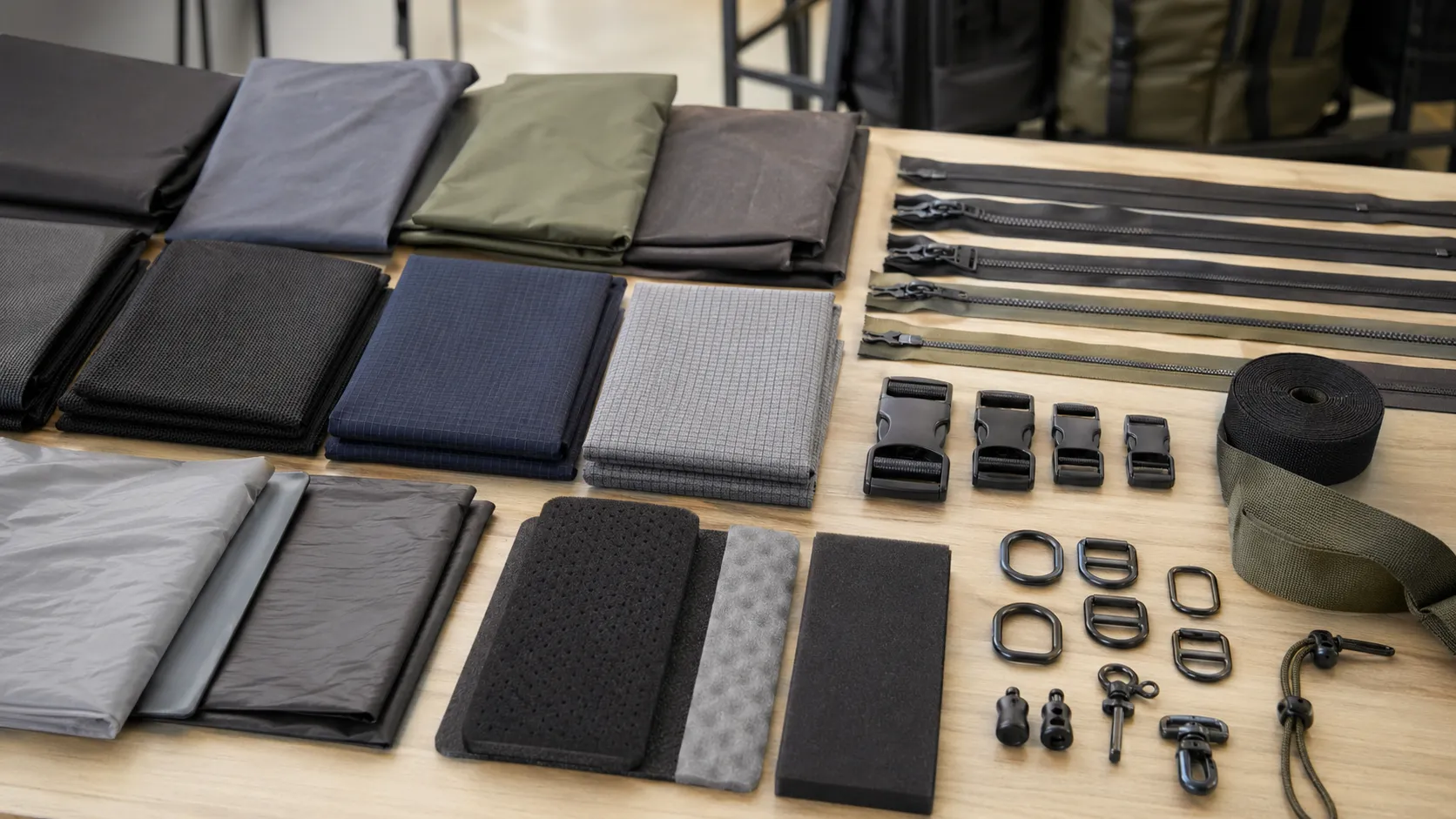
After the product direction is confirmed, the next step is choosing fabric, lining, zipper, buckle, webbing, foam, mesh, thread, logo method, and packaging materials.
This step should not be rushed. Material decisions affect cost, hand feel, product weight, water resistance, durability, and perceived quality. For example, a lightweight nylon may suit a premium compact travel backpack, while Oxford fabric may suit a more structured business travel model. A travel backpack with a wet pocket may require stronger lining in that area, while a laptop backpack requires good padding and internal protection.
Buyers should request material swatches before final sample approval. Photos alone are not enough because fabric texture, thickness, coating, and stiffness are difficult to judge from images.
Step 3: Pattern Making and Structure Development
Pattern making turns the product idea into actual production pieces. This includes the shape of the main body, panels, pockets, straps, bottom construction, zipper route, compartment layout, and reinforcement points.
This is a critical stage because structure determines how the backpack carries weight and how easy it is to produce. A design that looks attractive in a drawing may become difficult to sew in bulk production. A complicated pocket structure may increase labor time. A poorly placed zipper may create tension when the bag is fully packed.
A good OEM travel backpack should balance design creativity with manufacturing feasibility. Buyers should listen carefully when the manufacturer suggests structural adjustments, especially if the suggestion improves strength, reduces sewing difficulty, or improves user experience.
Step 4: Sample Development
The first sample allows the buyer to evaluate the real product. At this stage, buyers should check more than appearance. They should test capacity, compartment access, zipper movement, strap comfort, handle strength, logo position, fabric feel, lining quality, and packing performance.
Common sample issues include wrong pocket size, weak structure, incorrect logo position, zipper stiffness, uncomfortable shoulder straps, fabric color mismatch, or poor internal organization. These are normal during development, but they must be corrected before bulk production.
A sample should not be approved only because it “looks close enough.” In manufacturing, “close enough” can become expensive very quickly.
Step 5: Sample Revision and Pre-Production Confirmation
After feedback, the manufacturer revises the sample. Sometimes one sample is enough. For more complex custom travel backpack designs, two or three rounds may be needed.
Before mass production, buyers should confirm a final pre-production sample. This sample should represent the approved fabric, color, structure, logo, lining, hardware, packaging, and workmanship standard.
The pre-production sample becomes the reference for bulk inspection. If this step is skipped, disputes may happen later because both sides may have different expectations.
Step 6: Bulk Cutting, Sewing and Assembly
Once production begins, materials are prepared and cut according to approved patterns. Sewing teams assemble panels, pockets, straps, lining, zippers, handles, and hardware.
For travel backpacks, reinforcement is especially important in high-stress areas such as shoulder straps, handles, side seams, bottom panels, luggage sleeves, compression straps, and zipper ends. Bar-tack stitching is often used to strengthen load-bearing points.
Production consistency matters. A single good sample does not guarantee a good bulk order unless the factory controls cutting, sewing, inspection, and packing properly.
Step 7: Final Inspection and Packing
Final inspection should check appearance, dimensions, stitching, zippers, compartments, logo, accessories, color, packing, carton labels, and quantity. For branded products, logo placement and packaging accuracy are especially important.
A travel backpack may pass a visual check but still fail practical use if the zipper catches, the laptop compartment is too tight, or the luggage sleeve is weak. That is why inspection should include both appearance and function.
Quality Control Checklist for Travel Backpack Orders
Quality control should be built into the development process, not added only at the end. Buyers who only inspect after production may discover issues too late. A better approach is to define quality standards before sampling and confirm them again before bulk production.
QC Point
What to Check
Why It Matters
Fabric quality
Color, coating, thickness, hand feel, defects
Affects durability, appearance, and brand perception
Travel backpacks often carry heavier loads than daily backpacks. Shoulder straps, top handles, side handles, bottom seams, and compression straps should be inspected carefully. These points receive repeated stress during real use.
If a shoulder strap fails, the customer does not see it as a small defect. They see it as a product failure. For brands, that can mean bad reviews, returns, refund requests, and loss of trust.
Zipper Quality Should Match Product Positioning
Zippers are among the most frequently used components on a travel backpack. The main compartment zipper, laptop zipper, front pocket zipper, and hidden pocket zipper should open smoothly and stay aligned.
A low-grade zipper may reduce unit cost slightly, but it can create much higher after-sales costs. For premium or mid-range travel backpacks, buyers should select zipper quality carefully. A zipper is small, but when it fails, the whole bag becomes useless. Tiny part, big drama.
Logo and Packaging Must Be Treated as Quality Items
Some buyers focus heavily on bag construction but ignore logo and packaging details. This is risky. For private label travel backpack orders, logo quality directly affects brand perception. A crooked patch, faded print, poor embroidery, or incorrect hangtag can make the product look cheap.
Packaging also matters for e-commerce and retail distribution. Wrong barcode labels or carton marks may create warehouse problems. Buyers should confirm all packaging details before mass packing.
Common Mistakes Buyers Make When Developing Travel Backpacks
Many travel backpack problems are preventable. They happen because buyers approve unclear designs, choose materials too quickly, focus only on unit price, or skip practical testing.
Mistake 1: Choosing Capacity Before Defining the User Scenario
Many buyers start by saying, “We want a 40L travel backpack.” That is not wrong, but it is incomplete. A 40L backpack for business travel should not be designed the same way as a 40L backpack for outdoor travel.
If the user scenario is unclear, the final product may have the wrong compartments, wrong fabric, wrong appearance, and wrong comfort system.
Consequence: The backpack may look acceptable but fail to connect with a specific market.
Better approach: Define the user first, then choose capacity.
Mistake 2: Adding Too Many Compartments
More pockets do not always mean better design. Too many compartments can increase weight, cost, sewing complexity, and user confusion. It may also reduce usable main storage space.
Consequence: The product becomes expensive to make but not necessarily better to use.
Better approach: Add compartments based on real user behavior. A laptop sleeve, wet pocket, shoe compartment, hidden pocket, and luggage sleeve can all be useful, but not every product needs all of them.
Mistake 3: Saving Cost on Zippers and Buckles
Some buyers reduce cost by choosing cheaper zippers, buckles, or adjusters. This may seem smart during quotation comparison, but it can hurt product reliability.
Consequence: Broken zippers and weak buckles can lead to complaints, returns, and poor customer reviews.
Better approach: Match hardware quality to backpack capacity and target market. A large travel backpack needs stronger components than a small promotional bag.
Mistake 4: Ignoring Back Panel Comfort
A travel backpack may look good in product photos, but users judge it when they carry it. If the back panel is too soft, too flat, too hot, or poorly padded, the backpack may feel uncomfortable during travel.
Consequence: Customers may stop using the backpack even if the fabric and compartments are acceptable.
Better approach: Check shoulder straps, breathable mesh, padding thickness, sternum strap, and back panel shape during sample review.
Mistake 5: Approving Samples Without Load Testing
A sample may look perfect when empty. The real test begins when it is packed with clothing, laptop, shoes, water bottle, charger, and travel accessories.
Consequence: Seams may stretch, zippers may become tight, the shape may collapse, and straps may feel uncomfortable.
Better approach: Pack the sample with realistic weight before approval. Test lifting, wearing, opening, closing, and carrying.
Mistake 6: Using Generic Branding
Private label buyers sometimes only add a logo to a common backpack and expect strong market differentiation. But the travel backpack market is competitive. A logo alone may not be enough.
Consequence: The product may look like many similar items online.
Better approach: Differentiate through compartment logic, fabric texture, zipper pullers, lining color, logo patch, comfort structure, and product story.
If X → Choose Y: Travel Backpack Manufacturing Decision Guide
This section helps buyers make faster decisions before sample development.
Buyer Situation
Recommended Choice
If your customers are city travelers
Choose 25L–35L with laptop sleeve, hidden pocket, and luggage sleeve
If your customers take 4–7 day trips
Choose 35L–45L with clamshell opening and compression straps
If your customers carry outdoor gear
Choose 45L–50L with stronger fabric, hip belt, and sternum strap
If you sell to business travelers
Choose clean styling, laptop protection, luggage sleeve, and organized pockets
If you target gym and travel users
Choose shoe compartment, wet pocket, and easy-clean lining
If you want fast market testing
Choose ODM base model with logo, color, and packaging customization
If you want a unique brand collection
Choose OEM development with custom pattern, structure, and material
If you sell premium travel gear
Choose nylon or ripstop fabric, better zippers, refined lining, and stronger hardware
Choose simpler structure, stable fabric, clear logo placement, and efficient packaging
How to Evaluate a Travel Backpack Manufacturer
Choosing the right manufacturer is not only about comparing quotations. A cheaper quotation may become expensive if the sample is wrong, the fabric is weak, the stitching fails, or the factory cannot control bulk production.
A reliable travel backpack manufacturer should understand design, materials, sampling, customization, production, inspection, and communication.
Check Product Category Experience
A factory that mainly produces small promotional bags may not be the best choice for complex travel backpacks. Buyers should confirm whether the manufacturer has experience with travel backpacks, hiking bags, laptop backpacks, duffel bags, sports bags, and functional bags.
Category experience matters because different bags require different structures. Travel backpacks need stronger load support, better organization, more complex compartments, and higher durability than simple tote bags or drawstring bags.
Review Sampling Capability
Sampling capability is one of the best ways to judge a manufacturer. A good factory should help refine design details, recommend suitable materials, identify possible production risks, and revise samples efficiently.
Buyers should observe how the manufacturer communicates during sample development. Do they ask useful questions? Do they understand target users? Do they explain material options? Do they warn about risky structures? Do they provide clear feedback?
If the answer is yes, the manufacturer is more likely to support long-term product development.
Confirm Material Sourcing Ability
Travel backpacks may require different fabrics, coatings, linings, zippers, buckles, mesh, foam, and packaging materials. A capable backpack factory should offer practical material options based on buyer positioning.
A manufacturer with better sourcing ability can help buyers balance durability, cost, appearance, lead time, and brand value.
Check OEM and ODM Flexibility
Some buyers need custom product development. Others need faster ODM customization. A good manufacturer should support both models where possible.
For OEM, the factory should help develop custom patterns, structures, compartments, materials, and branding. For ODM, the factory should provide suitable base models that can be customized with logo, color, packaging, and minor adjustments.
The best choice depends on the buyer’s timeline, budget, brand maturity, and differentiation needs.
Evaluate Communication and Documentation
Good communication reduces manufacturing mistakes. Buyers should look for clear quotation details, sample confirmation documents, material records, color references, packing instructions, and production updates.
Poor communication is a hidden cost. A small misunderstanding about zipper color, logo size, or pocket position can create a large problem during production.
Ask About Quality Control Process
Before placing a bulk order, buyers should understand how the manufacturer controls quality. This includes incoming material inspection, in-process inspection, final inspection, packing inspection, and pre-shipment checks.
A factory that can explain its QC process clearly is usually safer than one that only says “quality is good.” In B2B sourcing, “good quality” without details is like saying “trust me” in a dark alley. Maybe okay. Maybe not. Better ask for the flashlight.
Recommendation: Build the Product Around Use Case, Not Just Capacity
The strongest travel backpack products are built around use case. Capacity matters, but it should not lead the entire design. A successful travel backpack starts with the customer’s journey.
Ask these questions before development:
Who is the end user? Where will they travel? How long will they travel? What will they carry? Will they need laptop protection? Will they use the backpack with a suitcase? Will they need water-resistant features? Will the product be sold online, in retail stores, or through promotional channels? Is the brand competing on price, functionality, durability, or premium design?
After these answers are clear, capacity, compartments, materials, hardware, and OEM details become easier to define.
For example, a city travel backpack may need 30L capacity, laptop storage, hidden pockets, and a luggage sleeve. A long-trip backpack may need 45L capacity, compression straps, stronger fabric, and better back support. A gym-travel hybrid may need a shoe compartment, wet pocket, and easy-clean lining.
In short, do not develop a backpack by asking only “How many liters?” Develop it by asking “What problem should this backpack solve for the traveler?”
That question leads to better products, clearer marketing, and fewer bulk order mistakes.
Soft CTA: Preparing Your Travel Backpack Project for OEM Development
If you are planning a private label or OEM travel backpack line, prepare your product requirements before contacting a manufacturer. A clear brief helps the factory recommend better materials, estimate costs more accurately, and develop samples faster.
Useful details include target capacity, travel scenario, reference styles, preferred fabric, compartment requirements, logo method, color direction, packaging needs, estimated order quantity, and target launch timeline.
Shunwei Bag can support travel backpack development for brands, importers, retailers, and private label buyers who need customized capacity, compartments, materials, logo details, and bulk production planning. Instead of starting with a vague product idea, buyers can prepare a practical design direction first and then work with the manufacturer to turn it into a production-ready sample.
FAQ
What is the best capacity for a custom travel backpack?
The best capacity depends on the target travel scenario. A 30L travel backpack works well for city travel, weekend trips, and light packing. A 35L–40L backpack is suitable for general travel and carry-on-style product lines. A 45L–50L backpack is better for outdoor travel, winter trips, and gear-heavy users. Buyers should choose capacity based on user needs, not only market trends.
What materials are commonly used for travel backpack manufacturing?
Common materials include polyester, nylon, Oxford fabric, ripstop fabric, coated fabric, mesh, foam padding, and lining materials. Polyester is common for mainstream travel backpacks. Nylon is often used for premium lightweight models. Oxford fabric works well for structured bags. Ripstop fabric is suitable for outdoor and performance-focused travel backpacks.
Can I customize compartments in an OEM travel backpack?
Yes. Buyers can customize laptop compartments, shoe compartments, wet pockets, hidden pockets, bottle pockets, mesh organizers, luggage sleeves, anti-theft pockets, and internal storage layouts. However, every compartment should match the target user scenario because too many compartments can increase cost, weight, and production complexity.
What is the difference between OEM and ODM travel backpacks?
OEM travel backpacks are developed based on the buyer’s own design, drawings, sample, or detailed requirements. ODM travel backpacks use the manufacturer’s existing base model with customization options such as logo, color, fabric, packaging, and minor structural changes. OEM is better for unique brand products, while ODM is better for faster market testing.
What should buyers check before approving a backpack sample?
Buyers should check fabric quality, stitching, zipper smoothness, compartment layout, laptop protection, shoulder strap comfort, back panel support, logo placement, color accuracy, hardware strength, capacity, and packaging details. The sample should also be tested with realistic weight before approval.
How long does travel backpack sampling usually take?
Sampling time depends on design complexity, material availability, logo method, and revision requirements. A simple ODM sample may be faster, while a fully custom OEM travel backpack may require more time for pattern development, material sourcing, logo testing, and sample adjustment. Buyers should prepare clear requirements to reduce delays.
What MOQ should I expect for private label travel backpacks?
MOQ depends on the manufacturer, fabric availability, customization level, color requirements, logo method, and packaging needs. Stock fabric and existing ODM models usually support more flexible production planning, while custom fabric colors, special hardware, and exclusive structures may require higher MOQ.
How do I choose a reliable travel backpack manufacturer?
Choose a manufacturer with relevant backpack production experience, strong sampling ability, material sourcing options, OEM and ODM flexibility, clear communication, and reliable quality control. Buyers should not compare only unit price. They should also evaluate durability, sample accuracy, production consistency, and after-sales risk.
Conclusion: A Better Travel Backpack Starts Before Production
A successful travel backpack is not created by capacity alone. It is the result of smart product planning, practical compartment design, suitable materials, reliable hardware, strong stitching, clear branding, and controlled manufacturing.
For brands and importers, the biggest risk is not simply choosing the wrong size. The bigger risk is developing a product that does not match the target user. A 30L backpack can fail if it lacks useful compartments. A 40L backpack can fail if it has poor structure. A 50L backpack can fail if it lacks load support. Even a good-looking backpack can fail if the zipper, stitching, or packaging disappoints customers.
The better approach is to start with the traveler’s real use case, then build the product around that scenario. If your customer is a city traveler, keep the bag compact, organized, and easy to carry. If your customer is a long-trip traveler, improve structure and comfort. If your customer is a premium travel gear buyer, invest in better materials, hardware, and design details. If your customer is testing a new market, start with an ODM model and customize branding first.
A professional travel backpack manufacturer should help buyers connect product ideas with production reality. Capacity, compartments, materials, OEM details, sampling, and quality control must work together. When they do, the result is not just another backpack. It becomes a product that buyers can confidently sell, travelers can comfortably use, and brands can build repeat orders around.
References
“How to Choose a Backpack: Sizing & Fit Guide” Author: REI Expert Advice Editorial Team Institution: REI Co-op Source: REI Expert Advice
“How to Choose Daypacks” Author: REI Expert Advice Editorial Team Institution: REI Co-op Source: REI Expert Advice
“How Much Should Your Pack Weigh?” Author: REI Expert Advice Editorial Team Institution: REI Co-op Source: REI Expert Advice
“Standard Test Method for Air Permeability of Textile Fabrics” Author: ASTM International Committee D13 on Textiles Institution: ASTM International Source: ASTM D737
“Passenger Baggage Rules” Author: International Air Transport Association Institution: IATA Source: IATA Passenger Baggage Rules
“What Can I Bring?” Author: Transportation Security Administration Institution: U.S. Department of Homeland Security Source: TSA Travel Security Screening Guide
“OEKO-TEX® STANDARD 100: Tested for Harmful Substances” Author: OEKO-TEX Association Institution: OEKO-TEX Source: OEKO-TEX Certification Resources
“Textile Exchange Materials Market Report” Author: Textile Exchange Research Team Institution: Textile Exchange Source: Textile Exchange Materials Market Report
What makes a travel backpack manufacturer different from a regular backpack supplier?
A travel backpack manufacturer must understand more than basic sewing and bag assembly. Travel backpacks require better capacity planning, stronger load-bearing construction, organized compartments, reliable zippers, comfortable shoulder support, and practical OEM customization. For brands and importers, the right manufacturer should help translate market demand into a production-ready backpack that performs well during real travel use, not just looks good in a product photo.
Why should buyers evaluate capacity before confirming a custom travel backpack design?
Capacity affects the entire product structure. A 30L travel backpack usually fits city travel, weekend trips, and commuter use, while a 35L–40L model is often better for carry-on-style travel and multi-day trips. A 45L–50L backpack may suit outdoor travel or gear-heavy users, but it also requires stronger stitching, better back support, and careful size positioning. If buyers choose capacity without defining the user scenario, the final product may feel too small, too bulky, or poorly matched to the target market.
How do compartments influence user experience and product value?
Compartments are not decoration. A laptop sleeve, shoe compartment, wet pocket, hidden pocket, mesh organizer, luggage sleeve, and quick-access pocket can all improve usability when they match real travel behavior. However, adding too many compartments can increase weight, cost, sewing complexity, and confusion. A strong OEM travel backpack should organize clothing, electronics, toiletries, shoes, and travel accessories in a way that feels natural to the user.
Why do materials, zippers, buckles, and padding matter in bulk travel backpack production?
Materials determine durability, comfort, appearance, and long-term customer satisfaction. Polyester, nylon, Oxford fabric, ripstop fabric, PU coating, TPU-style lining, mesh, foam padding, zippers, buckles, and webbing should be selected according to the backpack’s target capacity and market positioning. A low-grade zipper or weak shoulder strap may reduce cost at first, but it can lead to complaints, returns, and damaged brand trust after the product reaches customers.
Option insight: When should buyers choose OEM travel backpack development?
OEM development is suitable when the buyer needs a unique structure, exclusive pattern, specific fabric combination, custom compartment layout, or stronger brand differentiation. If the buyer already has drawings, a reference sample, a tech pack, or a clear product concept, OEM allows deeper customization. This option is better for brands planning a long-term product line rather than testing a simple market idea.
Option insight: When is ODM travel backpack customization a better choice?
ODM is usually better when buyers want faster market testing, lower development complexity, or a quicker launch. The manufacturer provides an existing base model, and the buyer customizes logo, color, fabric, lining, packaging, zipper pullers, and selected details. ODM can be a practical first step for private label travel backpack buyers who want to validate market demand before investing in a fully custom design.
Consideration insight: What should buyers confirm before approving a backpack sample?
Sample approval should include more than appearance. Buyers should check actual capacity, laptop protection, zipper smoothness, shoulder strap comfort, back panel support, compartment access, stitching reinforcement, logo placement, fabric hand feel, lining quality, color accuracy, and packing method. The sample should also be tested with realistic travel weight. A backpack that looks fine when empty may reveal problems once it is packed with clothing, shoes, electronics, and daily travel accessories.
Market insight: Why are travel backpack buyers paying more attention to product structure?
Modern travelers expect backpacks to support multiple roles: carry-on bag, laptop bag, weekend bag, gym-travel bag, and daily commuter bag. This pushes brands to develop travel backpacks with clearer organization, better comfort, stronger materials, and more practical details. For manufacturers, this means product development must move beyond basic capacity and focus on how the backpack performs across real travel scenarios.
Compliance and trust insight: Why should claims be carefully controlled?
Buyers should avoid vague or exaggerated claims such as fully waterproof, anti-theft, airline approved, or heavy-duty unless the product design and testing support those claims. More accurate wording, such as water-resistant fabric, hidden security pocket, carry-on-style dimensions, or reinforced load-bearing points, helps reduce customer misunderstanding and protects brand credibility. Clear product claims are especially important for international buyers, online sellers, and private label brands.
Final recommendation:
A successful custom travel backpack should be developed around the user’s travel scenario first, then matched with the right capacity, compartment logic, fabric, hardware, comfort structure, logo method, packaging, and QC process. If buyers want fewer production mistakes and stronger market performance, they should work with a travel backpack manufacturer that understands both OEM development and practical travel use.