Quick Summary:
The evolution of hiking backpacks from 1980 to 2025 reflects a shift from pure load capacity toward biomechanical efficiency, material optimization, and precision fit. Over four decades, backpack design progressed from heavy external frames to internally supported, lightweight systems that prioritize load control, fatigue reduction, and real-world movement efficiency. Understanding this evolution helps modern hikers avoid specification-driven mistakes and focus on what truly improves comfort, stability, and long-distance performance.
Introduction: How Hiking Backpacks Quietly Changed the Way We Hike
In the early days of recreational hiking, backpacks were treated as simple containers. The primary expectation was capacity and durability, not comfort or efficiency. Over the past four decades, however, hiking backpacks have evolved into highly engineered load-carrying systems that directly influence endurance, safety, and movement efficiency.
This evolution did not happen because hikers demanded lighter gear alone. It emerged from a deeper understanding of human biomechanics, long-duration fatigue, material science, and changing hiking behaviors. From heavy external-frame packs of the 1980s to today’s precision-fit, lightweight, and sustainability-driven designs, backpack development mirrors how hiking itself has changed.
Hiking Backpacks in the 1980s: Built for Carrying Capacity Above All Else
Materials and Construction in the 1980s
In the 1980s, hiking backpackswere primarily built around durability and load capacity. Most packs relied on thick canvas or early generations of heavy-duty nylon, often exceeding 1000D in fabric density. These materials were abrasion-resistant but absorbed moisture easily and added significant weight.
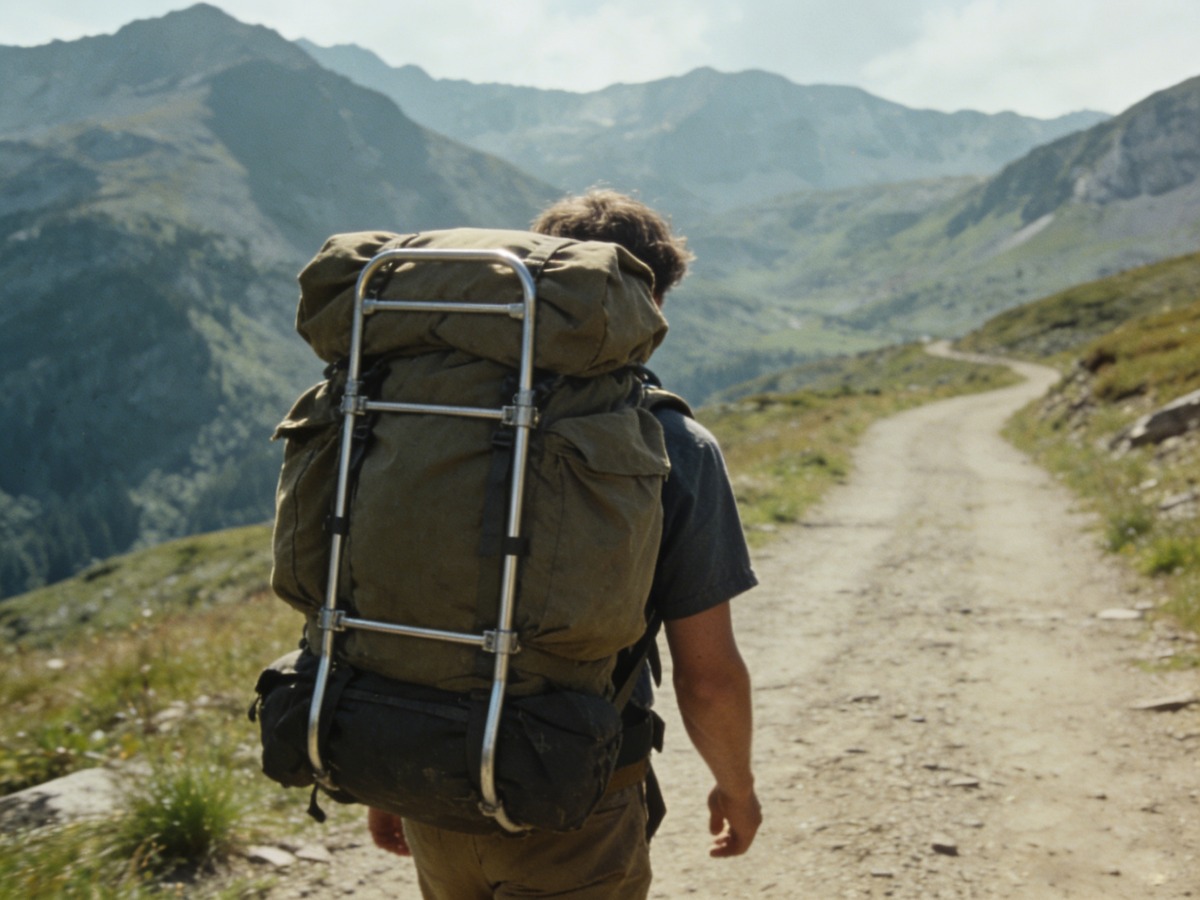
Empty backpack weights commonly ranged between 3.5 and 5.0 kg. Aluminum external frames were standard, designed to keep heavy loads away from the body while maximizing airflow. However, this separation created a rear-shifted center of gravity that compromised balance on uneven terrain.
Load Carrying Experience and Limitations
Backpack load distribution in this era favored shoulder-bearing. More than 65% of carried weight often rested on the shoulders, with minimal hip engagement. For loads between 18 and 25 kg, fatigue accumulated rapidly, especially during descents or technical terrain.
Despite these limitations, such packs were widely used for multi-day hikes and expeditions. Comfort was secondary to the ability to carry large volumes of gear, reflecting hiking styles that prioritized self-sufficiency over efficiency.
External frame hiking backpacks in the 1980s prioritized load capacity over balance and ergonomic comfort.
The 1990s: The Shift from External Frames to Internal Frame Systems
Why Internal Frames Gained Popularity
By the early 1990s, hiking terrain diversified. Trails became narrower, routes steeper, and off-trail movement more common. External frames struggled in these environments, prompting a shift toward internal frame designs that kept the load closer to the body.
Internal frames used aluminum stays or plastic frame sheets integrated inside the pack body. This allowed better control of load movement and improved balance during lateral motion.
Performance Comparison and Early Ergonomic Gains
Compared to external frames, early internal-frame backpacks improved stability significantly. At carrying weights of 15–20 kg, hikers experienced reduced sway and improved posture alignment. Although ventilation suffered, energy efficiency improved due to better load control.
This decade marked the beginning of ergonomic thinking in backpack design, even though precise fit adjustment was still limited.
Early 2000s: Load Distribution and Ergonomics Become Measurable
The Rise of Load Transfer Science
In the early 2000s, backpack designers began quantifying load transfer. Studies showed that transferring approximately 70% of load to the hips significantly reduced shoulder fatigue and energy expenditure over long distances.
Hip belts became wider, padded, and anatomically shaped. Shoulder straps evolved to guide load rather than support it entirely. This period introduced the concept of dynamic load balance rather than static carrying.
Back Panel and Material Improvements
Back panels adopted EVA foam structures combined with early ventilation channels. Although airflow remained limited, moisture management improved. Fabric choices shifted toward 420D–600D nylon, balancing durability with reduced weight.
Empty backpack weights dropped to approximately 2.0–2.5 kg, marking a substantial improvement over previous decades.
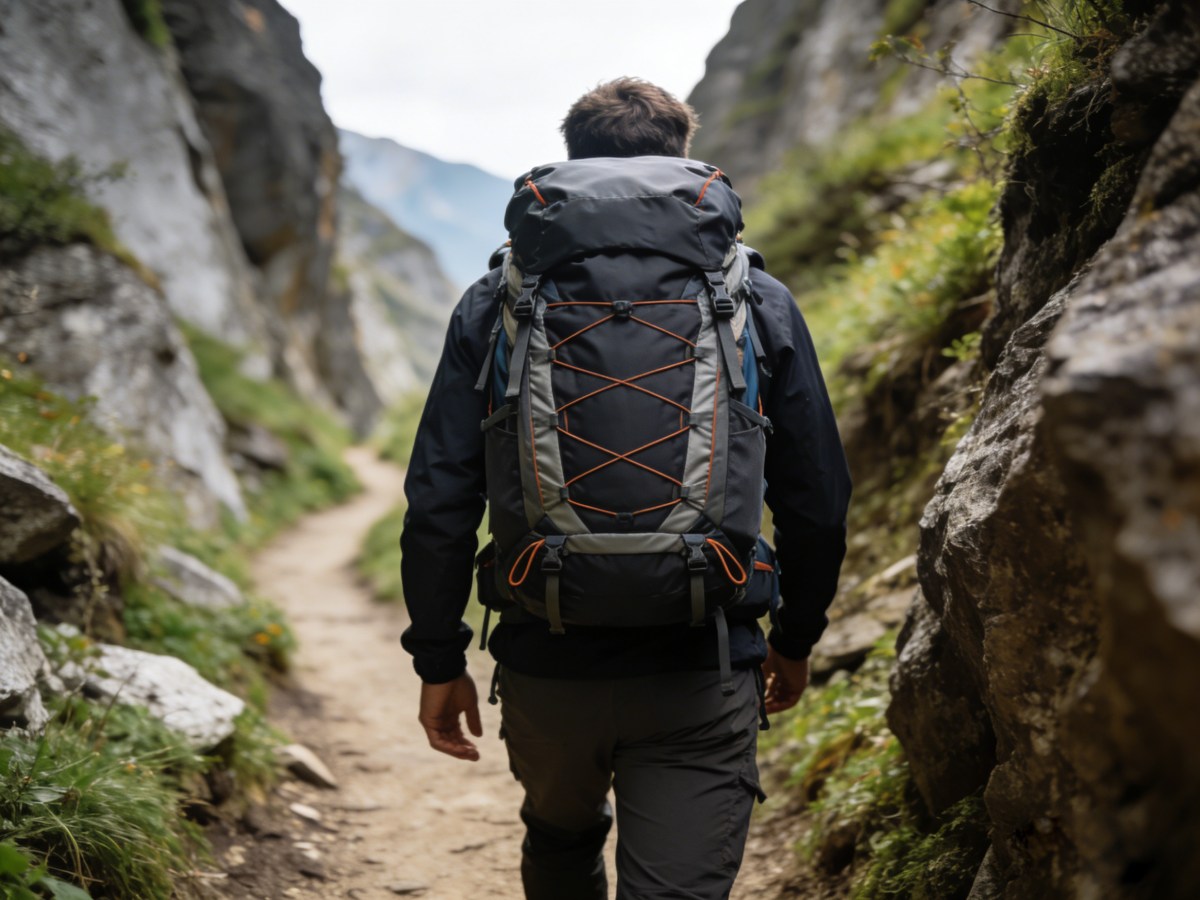
Internal frame backpack systems improved balance by keeping the load closer to the hiker’s center of gravity.
2006–2015: Ergonomics, Ventilation, and Material Innovation
Advanced Back Panel Systems
This era saw the introduction of suspended mesh panels and structured air channels. These systems increased airflow by up to 40% compared to flat foam backs, reducing sweat accumulation and heat stress during warm-weather hikes.
Material Science Breakthroughs
Fabric density decreased further, with 210D nylon becoming common in non-load-bearing zones. Reinforced panels remained in high-abrasion areas, allowing packs to maintain durability while reducing total weight.
Average empty pack weights for 40–50L hiking backpacks dropped to 1.2–1.8 kg without sacrificing load stability.
Improved User Fit
Adjustable torso lengths and pre-curved frames became mainstream. These changes reduced posture compensation and allowed packs to adapt to a wider range of body shapes.
2016–2020: The Ultralight Movement and Its Trade-Offs
The Push Toward Minimalism
Driven by long-distance thru-hiking, ultralight philosophy emphasized extreme weight reduction. Some backpacks dropped below 1.0 kg, eliminating frames or reducing structural support.
Real-World Performance Concerns
While ultralight packs improved speed and reduced energy expenditure on smooth trails, they introduced limitations. Load stability declined above 10–12 kg, and durability suffered under abrasive conditions.
This period highlighted an important lesson: weight reduction alone does not guarantee efficiency. Load control and fit remain critical.
2021–2025: Hybrid Design, Sustainability, and Precision Fit
Environmental regulations and consumer awareness pushed manufacturers toward recycled nylon and reduced chemical treatments. Material traceability and durability standards gained importance, especially in European and North American markets.
Precision Fit and Modular Design
Modern backpacks feature multi-zone adjustment systems, allowing fine-tuning of torso length, hip belt angle, and load lifter tension. Modular attachment systems enable customization without compromising balance.
Modern hiking backpacks emphasize precision fit, balanced load transfer, and long-distance comfort.
Design Failures and Lessons Learned Across Four Decades
While outdoorhiking backpacks have steadily improved, progress has not been linear. Many designs that initially appeared innovative were later abandoned after real-world use exposed their limitations. Understanding these failures is essential to understanding why modern backpacks look and function the way they do today.
External Frame Limitations in Complex Terrain
The decline of external frames in recreational hiking was not driven by weight alone. In forested terrain, narrow switchbacks, and rocky ascents, external frames frequently snagged on branches or shifted unpredictably. This lateral instability increased fall risk and required constant posture correction.
Moreover, the rear-shifted center of gravity amplified downhill impact forces. Hikers descending steep terrain experienced increased knee strain due to backward load pull, even when total carried weight remained unchanged. These biomechanical drawbacks, rather than fashion trends, ultimately pushed the industry toward internal frame dominance.
Early Ventilation Systems That Increased Fatigue
The first generation of ventilated back panels in the late 1990s and early 2000s aimed to reduce sweat buildup. However, many early designs created excessive distance between the pack and the body. This gap compromised load control and increased leverage forces acting on the shoulders.
Field testing revealed that although airflow improved marginally, energy expenditure increased due to reduced load stability. In some cases, hikers reported higher perceived exertion despite improved ventilation. These findings reshaped ventilation design philosophy, prioritizing controlled airflow without sacrificing structural integrity.
Ultralight Designs That Failed Under Real Loads
The ultralight movement introduced important weight-saving principles, but not all designs translated well beyond ideal conditions. Frameless packs under 1.0 kg often performed well below 8–9 kg loads but degraded rapidly beyond that threshold.
Users carrying 12 kg or more experienced pack collapse, uneven load distribution, and accelerated material wear. These failures highlighted a critical lesson: weight reduction must align with realistic use scenarios. Modern hybrid designs reflect this lesson by selectively reinforcing load-bearing zones while keeping overall weight low.
How Changing Hiking Behavior Drove Backpack Evolution
Shifts in Daily Distance and Pace
In the 1980s, multi-day hikes often averaged 10–15 km per day due to heavy loads and limited ergonomic support. By the 2010s, improved backpack efficiency enabled many hikers to comfortably reach 20–25 km per day under similar terrain conditions.
This increase was not solely due to lighter gear. Better load distribution reduced micro-adjustments and posture compensation, allowing hikers to maintain consistent pacing over longer durations. Backpacks evolved to support movement efficiency rather than merely carrying capacity.
Reduced Load Expectations and Smarter Packing
Average carried weight for multi-day hikes gradually declined from over 20 kg in the 1980s to approximately 10–14 kg by the early 2020s. Backpack evolution both enabled and reinforced this trend. As packs became more stable and ergonomic, hikers became more conscious of unnecessary load.
This behavioral feedback loop accelerated demand for precision-fit systems and modular storage rather than oversized compartments.
Material Evolution Beyond Denier Numbers
Why Denier Alone Became an Incomplete Metric
For decades, fabric denier served as a shorthand for durability. However, by the late 2000s, manufacturers recognized that weave structure, fiber quality, and coating technology played equally important roles.
Modern 210D fabrics can outperform earlier 420D materials in tear resistance due to improved yarn construction and ripstop integration. As a result, weight reduction no longer implies fragility when materials are engineered holistically.
Moisture Management and Coating Trade-Offs
Water resistance evolved from heavy polyurethane coatings to lighter treatments that balance moisture protection and breathability. Excessively stiff coatings used in early designs cracked over time, especially under UV exposure.
Contemporary backpacks use layered protection strategies, combining fabric resistance, seam design, and pack geometry to manage moisture without excessive material stiffness.
Evolution Versus Marketing: What Truly Changed and What Did Not
Myth: Lighter Is Always Better
Weight reduction improves efficiency only when load stability is preserved. A poorly supported 9 kg load often causes more fatigue than a well-distributed 12 kg load. This reality has remained constant despite decades of innovation.
Myth: New Designs Fit Everyone
Despite advances in adjustability, no single design suits all body types. Backpack evolution expanded fit ranges but did not eliminate the need for individual adjustment. Fit remains a user-specific variable, not a solved problem.
Constant Principle: Load Control Defines Comfort
Across four decades, one principle remained unchanged: backpacks that control load movement reduce fatigue more effectively than those that merely reduce mass. Every major design shift ultimately reinforced this truth.
Regulatory and Sustainability Pressures Shaping Modern Design
Environmental Compliance and Material Sourcing
By the early 2020s, sustainability considerations began influencing material selection as strongly as performance metrics. Recycled nylons achieved comparable strength to virgin materials while reducing environmental impact.
Some markets introduced stricter chemical use guidelines, limiting certain coatings and dyes. These regulations pushed manufacturers toward cleaner production processes and longer-lasting designs.
Durability as a Sustainability Metric
Rather than promoting disposability, modern sustainability frameworks increasingly emphasize product longevity. A backpack that lasts twice as long effectively halves its environmental footprint, reinforcing the value of durable construction even in lightweight designs.
What Four Decades of Evolution Reveal About Future Backpack Design
Certainties
Load distribution will remain central to comfort and efficiency.
Precision fit systems will continue improving rather than disappearing.
Hybrid designs balancing weight and support will dominate mainstream use.
Uncertainties
The role of embedded sensors and smart adjustment remains unproven.
Extreme ultralight designs may remain niche rather than mainstream.
Regulatory changes may redefine acceptable material treatments.
Expanded Conclusion: Why Backpack Evolution Matters More Than Ever
The evolution of hiking backpacks from 1980 to 2025 reflects a gradual alignment between human biomechanics, material science, and real-world use. Each design era corrected the blind spots of the previous one, replacing assumptions with evidence.
Modern backpacks are not simply lighter or more comfortable. They are more intentional. They distribute load with greater precision, adapt to a wider range of bodies, and reflect a deeper understanding of how hikers move over time and terrain.
For modern hikers, the most valuable takeaway from four decades of evolution is not which generation was best, but why certain ideas survived while others disappeared. Understanding that history enables better decisions today—and prevents repeating yesterday’s mistakes.
FAQ
1. How heavy were hiking backpacks in the 1980s compared to today?
In the 1980s, most hiking backpacks weighed between 3.5 and 5.0 kg when empty, largely due to external aluminum frames, thick fabrics, and minimal weight optimization. By contrast, modern trekking backpacks of similar capacity typically weigh 1.2 to 2.0 kg, reflecting advances in material science, internal frame engineering, and load-distribution design rather than simple material thinning.
2. When did internal frame backpacks become mainstream, and why did they replace external frames?
Internal frame backpacks gained widespread adoption during the 1990s, primarily because they offered superior stability on narrow trails, steep ascents, and uneven terrain. By positioning the load closer to the hiker’s center of gravity, internal frames improved balance and reduced lateral sway, which external frames struggled to control in complex environments.
3. Has backpack comfort improved more from weight reduction or design improvements?
While backpack weight has decreased over time, comfort improvements have been driven more by load distribution and ergonomic design than by weight reduction alone. Modern hip belts, frame geometry, and fit systems reduce fatigue by transferring load efficiently rather than simply minimizing mass.
4. Are modern lightweight hiking backpacks less durable than older designs?
Not necessarily. Modern lightweight backpacks often use advanced fabrics with higher tear resistance per gram than older heavy materials. Durability today depends more on strategic reinforcement and realistic load limits than on fabric thickness alone, making many modern packs both lighter and sufficiently durable for intended use.
5. What defines a modern hiking backpack in 2025?
A modern hiking backpack is defined by precision fit adjustment, balanced load transfer, breathable structural design, and responsible material sourcing. Rather than focusing solely on capacity or weight, current designs prioritize movement efficiency, long-term comfort, and durability aligned with real hiking conditions.
References
Backpack Ergonomics and Load Carriage Lloyd R., Caldwell J. U.S. Army Research Institute of Environmental Medicine Military Load Carriage Research Publications
The Biomechanics of Load Carrying in Hiking and Trekking Knapik J., Reynolds K. NATO Research and Technology Organisation Human Factors and Medicine Panel Reports
Advances in Backpack Design and Human Performance Simpson K. Journal of Sports Engineering and Technology SAGE Publications
Backpack Load Distribution and Energy Expenditure Holewijn M. European Journal of Applied Physiology Springer Nature
Material Performance in Outdoor Equipment Design Ashby M. University of Cambridge Engineering Materials Selection Lectures
Ventilation, Heat Stress, and Backpack Back Panel Design Havenith G. Ergonomics Journal Taylor & Francis Group
Sustainable Materials in Technical Textile Applications Muthu S. Textile Science and Clothing Technology Springer International Publishing
Long-Term Durability and Lifecycle Assessment of Outdoor Gear Cooper T. Centre for Industrial Energy, Materials and Products University of Exeter
How Backpack Design Evolved—and What Actually Matters Today
Contextual Insight:
Over four decades, hiking backpack design has evolved in response to how hikers actually move, fatigue, and adapt over long distances rather than how much gear they carry. Each major design shift—from external frames to internal support, from heavy fabrics to engineered lightweight materials, and from fixed sizing to precision fit systems—was driven by measurable changes in stability, load transfer, and energy efficiency.Why Evolution Matters:
Many modern backpack selection mistakes occur when users compare specifications without understanding their purpose. Weight, fabric denier, and capacity are outcomes of design priorities, not goals by themselves. Historical design failures demonstrate that reducing mass without preserving load control often increases fatigue, while balanced load transfer consistently improves endurance regardless of total weight.What Has Consistently Worked:
Across all generations, backpacks that keep load close to the body, transfer weight efficiently to the hips, and limit uncontrolled movement reduce physical strain more effectively than designs focused solely on volume or minimalism. This principle remained unchanged despite advances in materials and manufacturing.Current and Future Considerations:
By 2025, backpack design increasingly reflects sustainability requirements, regulatory constraints on materials, and long-term durability expectations. Future innovation is likely to refine fit accuracy and material efficiency rather than redefine the core structure of load-carrying systems. Understanding past evolution allows hikers to evaluate new designs with clarity rather than marketing influence.