Polyester Sports Bag: Pros, Cons, and Best Use Cases
2025-12-26
Quick Summary:
A polyester sports bag is popular because it balances durability, weight, and branding flexibility, but performance depends on measurable specs, not the word “polyester.” For reliable everyday gym and travel use, buyers should focus on denier and fabric weight (GSM), coating choice (PU vs TPU), and the failure-prone parts that decide lifespan: strap anchors, webbing strength, zipper size, and reinforcement stitching. Polyester sports bags excel for commuting, gym training, and weekend travel when the BOM is controlled, ventilation is considered for wet gear, and quality checks include functional zipper testing. The key trade-offs are heat sensitivity, moisture-related odour risk, and faster “worn” appearance if abrasion protection and bottom construction are weak.
A polyester sports bag is a gym, duffel, or training bag made primarily from polyester fabric (often paired with polyester lining, foam padding, webbing straps, and synthetic zippers). Polyester is popular because it offers a strong durability-to-weight balance, holds colour well for branding, and performs reliably in daily gym and travel use.
In real sourcing, “polyester” isn’t a single quality level. Two bags can both be “polyester” and still feel completely different in stiffness, abrasion resistance, water repellency, and lifespan. The difference comes from yarn type, weave, fabric weight, coatings, and—most importantly—how the bag is constructed at stress points.
Polyester is generally easier to print, more colour-stable under UV exposure, and often more cost-efficient for everyday products. Nylon can feel smoother and may resist abrasion better at the same weight, but it may also show dye variations more easily depending on finishing. Canvas tends to feel more “lifestyle” and structured, but it can absorb water more readily unless treated, and it may be heavier.
If your goal is a dependable daily gym bag with strong branding flexibility, polyester sports bag is usually the most practical baseline material—especially when paired with the right denier, coating, webbing strength, and stitch reinforcements.
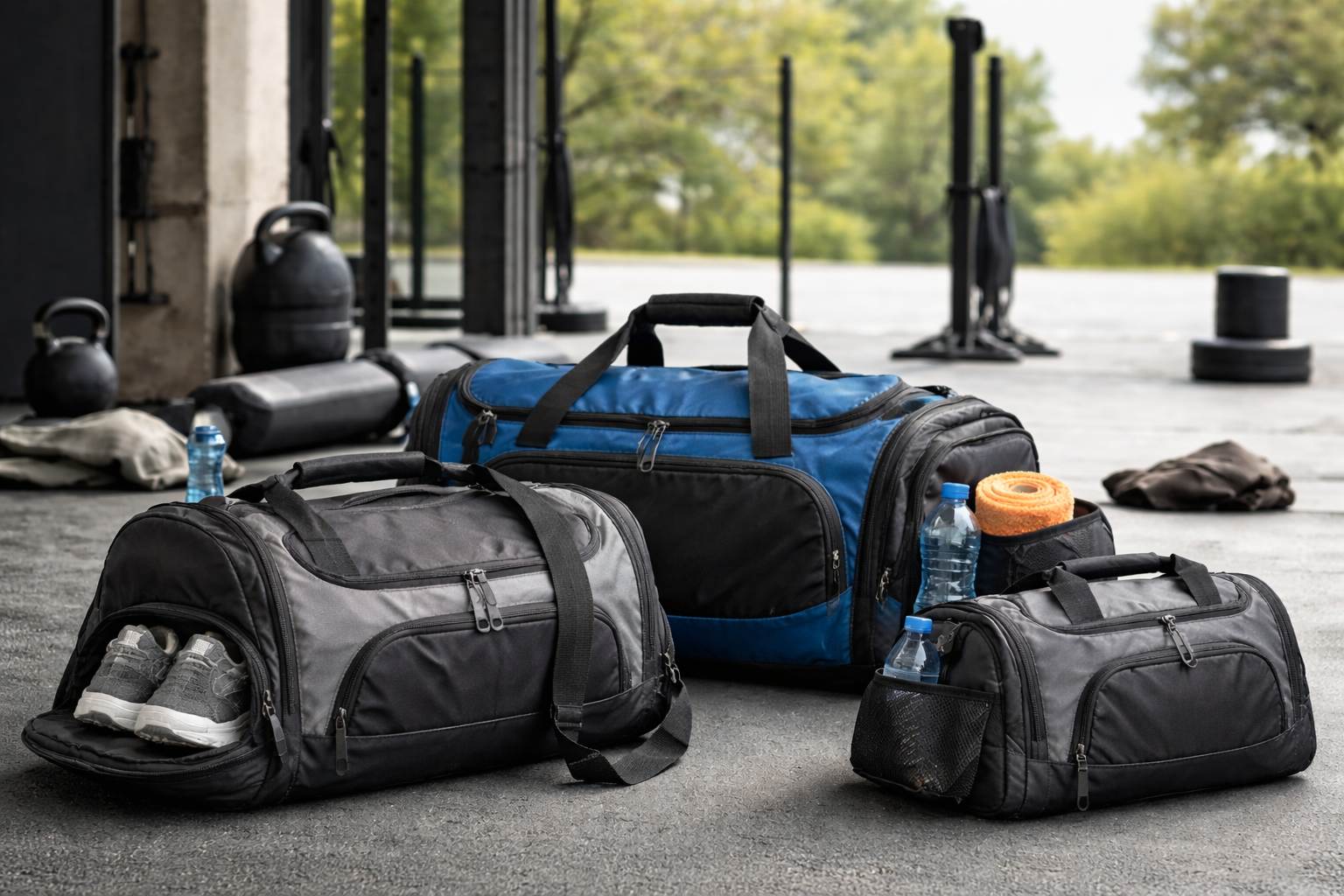
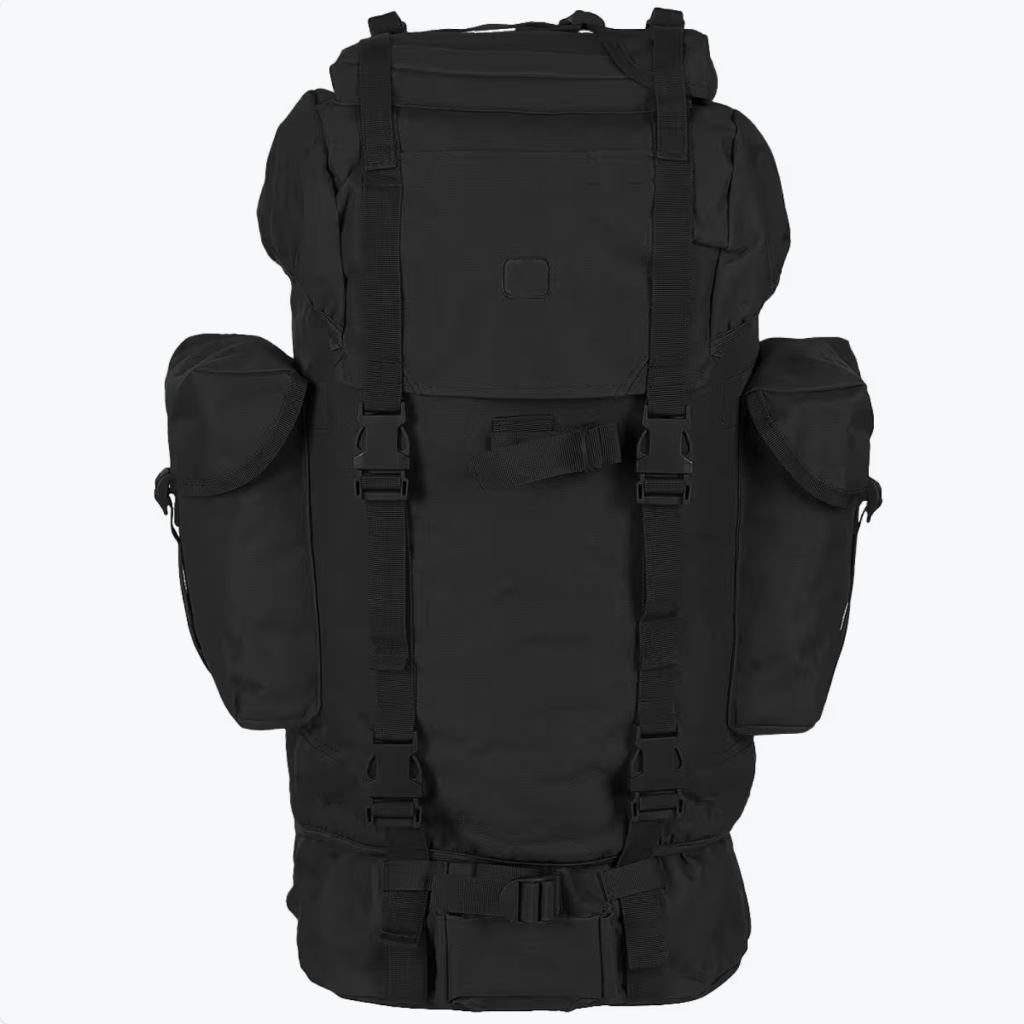
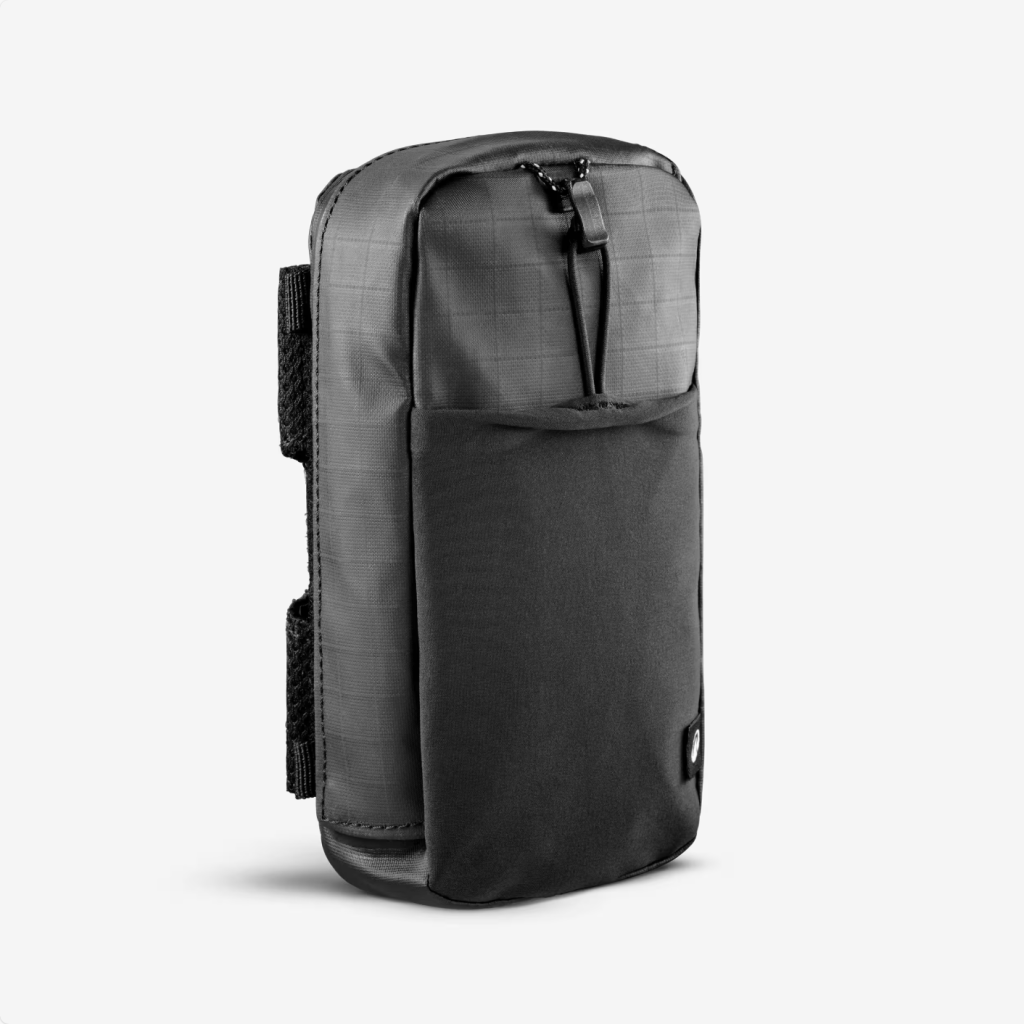
A practical polyester sports bag setup for gym training: easy access, durable build, and everyday carry comfort.
Why Polyester Is So Common in Sports Bags
The 3 Reasons Brands Choose Polyester for Everyday Gym and Travel Bags
First, polyester is stable in large-scale production. That makes it easier for a sports bag manufacturer to maintain consistent colour, texture, and supply across repeat orders.
Second, it’s branding-friendly. Polyester fabrics take printing, embroidery, and label applications well, so brand marks look clean and consistent.
Third, it’s low-maintenance. Most polyester bags handle wiping, mild washing, and frequent use without looking “tired” too quickly—assuming the fabric weight and coating are appropriate for the load.
How Weave and Finish Change the “Feel” and Durability
A plain weave may feel crisp and structured but can show scuffs faster. Twill weaves can feel softer and hide abrasion better. Ripstop (with a grid pattern) can limit tear propagation, which is useful if your users toss bags into lockers, trunks, and overhead compartments.
Finishes matter just as much. A basic PU coating adds light water resistance and structure. TPU lamination typically improves water resistance and can increase stiffness, but it may also add weight and change the hand-feel.
Material Specs That Actually Matter
If you want a polyester sports bag that performs in real use, these are the specs that reduce unpleasant surprises.
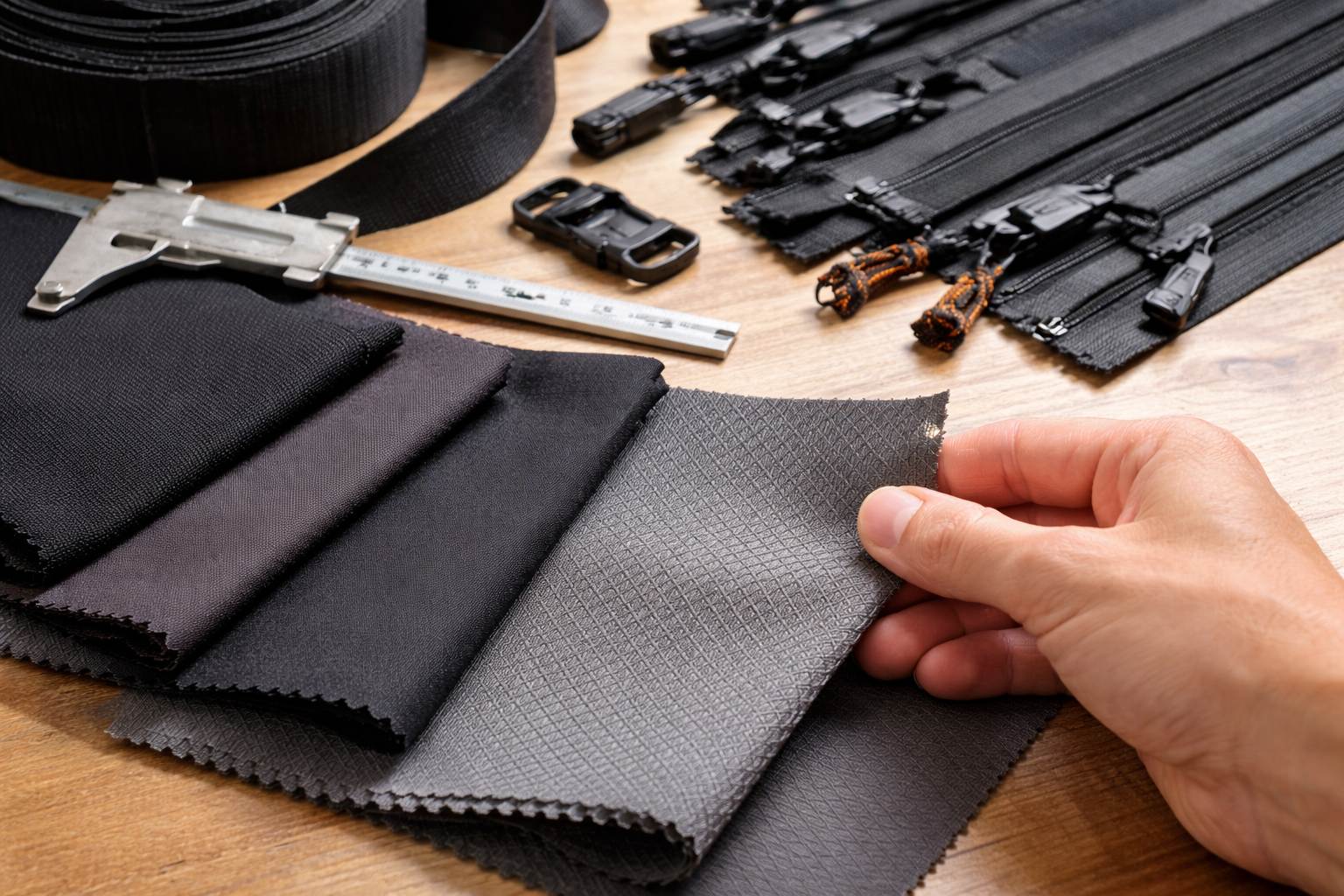
Material specs that change performance: fabric structure, coating choice and hardware selection.
Denier, GSM, and Yarn Type: How to Read Polyester Fabric Like a Buyer
Denier (D) describes yarn thickness. GSM describes fabric weight per square metre. These two numbers often tell you more than any marketing phrase.
Typical practical ranges for sports bags:
300D–450D: lighter, more flexible; good for commuters and compact gym kits
600D: common “workhorse” range for daily gym and travel
900D: heavier-duty feel; can improve abrasion tolerance but may add weight and stiffness
GSM often falls around 220–420 gsm for sports bag shells depending on weave and coating. If you’re carrying heavier gear (shoes, bottles, towels, accessories), a higher GSM or stronger weave is usually safer than simply “more pockets.”
Coatings and Water Resistance: PU vs TPU vs “Water-Repellent”
A quick reality check: “water-repellent” and “waterproof” are not the same.
PU coating: common, cost-effective, adds basic water resistance and structure
TPU lamination/film: typically higher water resistance, can be more durable against hydrolysis depending on formulation
DWR (water-repellent finish): helps water bead on the surface but can wear off; it’s not a guarantee in heavy rain
If buyers search for a waterproof gym bag, you should be clear whether you mean “resists splashes and light rain” or “handles sustained wet conditions.” For many gym users, splash resistance plus a good zipperis the practical sweet spot.
Stitching, Webbing, and Zippers: The Parts That Fail First
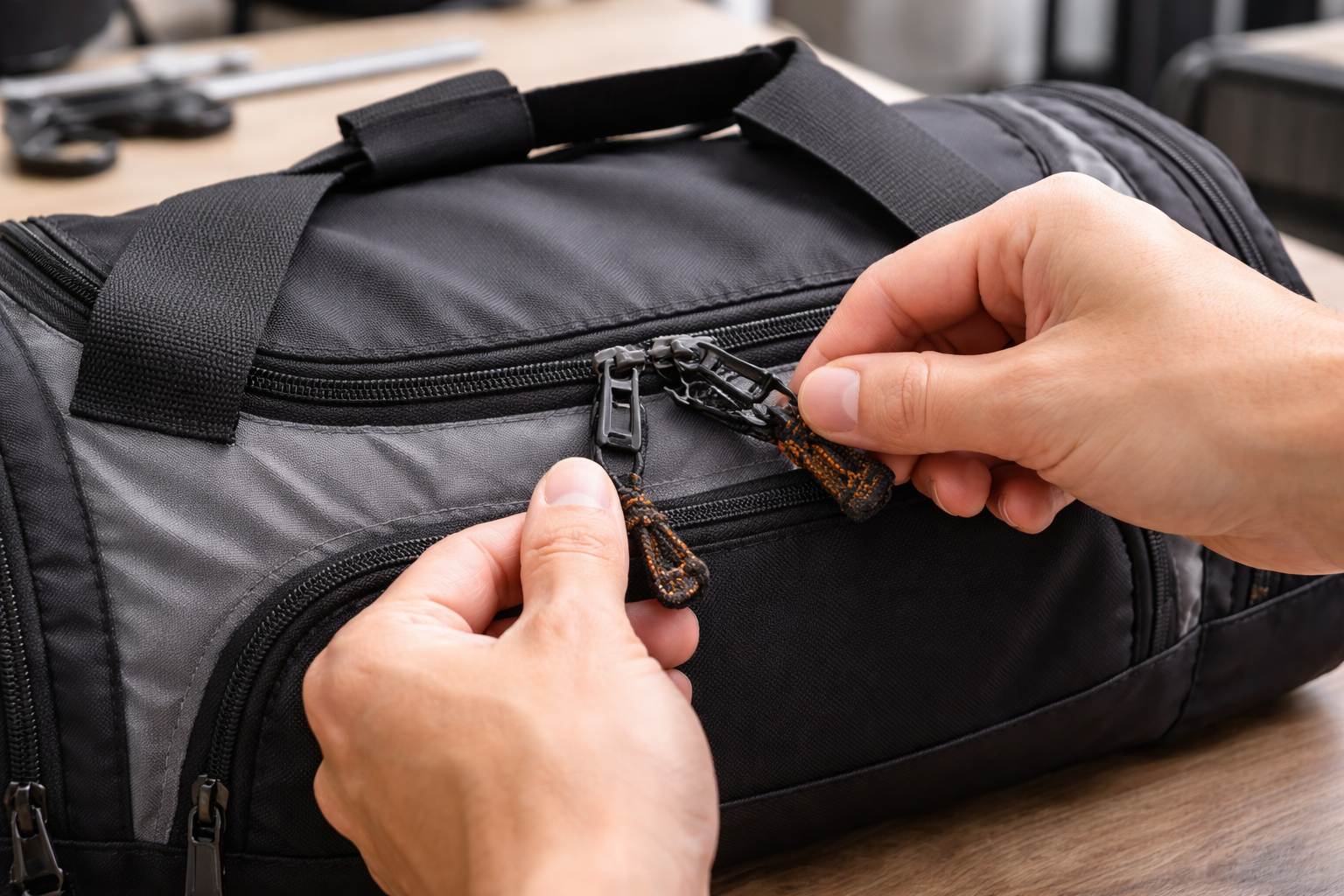
Zipper function testing is a simple way to judge long-term durability.
Most returns happen because of construction, not fabric.
Key components to specify or at least evaluate:
Thread size and seam density at load points
Bar-tack reinforcement at strap anchors
Webbing width and stiffness (especially shoulder straps)
Zipper size (#5, #8, #10) based on bag size and load
Zipper end-stops and reinforcement patches
If a gym bag supplier can’t explain how they reinforce strap anchors and zipper ends, treat that as a risk signal.
Pros of a Polyester Sports Bag
Durability-to-Weight Balance for Daily Carry
A well-built polyester sports bag can handle everyday use—gym sessions, commutes, short trips—without being too heavy. Many 35–45L duffels land around 0.8–1.3 kg depending on padding, structure, and hardware. That range is often comfortable for most users while still supporting practical durability.
Colour, Printing, and Branding Friendliness
Polyester holds dyes well and supports clean branding. That’s a major reason private labels and team buyers like polyester bags: logos stay sharp, colours remain stable, and you can maintain a consistent look across repeat runs.
Low Maintenance and Easy Cleaning
Polyester is typically wipe-friendly. Light stains can often be removed with mild soap and a soft cloth. For users, this matters more than they admit—because gym bags live in sweaty, chaotic environments.
Cons and Limitations You Should Know
Heat Sensitivity and Deformation Risk
Polyester doesn’t love high heat. Leave a bag pressed against a hot surface, or expose it to extreme heat in a confined space, and you can see warping, coating changes, or adhesive weakening (if bonded structures are used). If your customers travel in very hot climates, it’s worth designing for ventilation and avoiding overly delicate coatings.
Odour, Moisture Trapping, and Hygiene Issues
Polyester itself doesn’t “create” odour, but moisture trapped inside a bag becomes a problem fast. Users who pack sweaty clothes, wet towels, or damp shoes will notice smell issues unless there’s separation and airflow.
This is where designs like a wet dry separation gym bag or a sports backpack with shoe compartment become genuinely functional rather than gimmicky—provided the separation area has breathable panels or easy-clean lining.
Abrasion and Pilling: When Polyester Looks “Tired” Fast
Lower-grade polyester can show surface fuzzing, pilling, or scuff marks—especially on corners and bottom panels. If the bag is meant for rough handling (locker rooms, trunk sliding, travel floors), the bottom panel design matters as much as fabric denier.
A bottom reinforcement patch, tougher weave, or additional layer can turn an average bag into a durable gym bag that survives real use.
Best Use Cases by Scenario
Gym Training and Commuting: The “Everyday Workhorse” Setup
For daily gym + commute, polyester shines. The ideal setup is simple:
Main compartment for clothes/towel
A quick-access pocket for keys/wallet
Bottle sleeve or internal bottle pocket
Optional ventilated area for shoes if users train before/after work
In this scenario, 600D polyester with a basic coating is often a sweet spot. Users get a lightweight sports bag feel with enough toughness for daily wear.
Travel and Weekenders: Capacity, Pocket Layout, and Carry Comfort
For weekend travel, polyester duffels work well because they’re structured enough to pack cleanly but flexible enough to fit overhead spaces (depending on size).
Travel-friendly build features:
Wider opening zipper for easier packing
Reinforced carry handles (with wrap)
Shoulder strap with padding and strong anchor points
Interior mesh pockets for organisation
Lining that wipes clean easily
If you’re sourcing at scale, this is where choosing the right sports duffel bag factory matters—because travel users punish zippers, straps, and seams more than casual gym users do.
Team Sports and Athletes: Gear Separation and Reinforced Stress Points
Athletes carry more: shoes, tape, bottles, extra clothing layers, and sometimes equipment accessories. Polyester bags can absolutely work here, but construction must be upgraded.
Key upgrades:
Stronger webbing and reinforced anchor points
Tougher bottom panel
Larger zipper size
Compartments that separate clean and dirty items
A well-specified polyester sports bag can handle team use, but a “generic polyester bag” often fails early at straps and zippers.
Outdoor and Humid Climates: Water Resistance and Mold Prevention
In humid climates, the enemy is trapped moisture. Polyester is helpful because it doesn’t absorb water the way natural fibres can, but the bag still needs smart airflow.
Design suggestions:
Ventilation panels where shoes or wet items sit
Easy-clean interior
Avoid storing wet items long-term
Choose coatings that match real usage (splash resistance vs sustained wet exposure)
This scenario is also where buyers ask for a waterproof gym bag, and you should align expectations: true waterproofing typically requires seam sealing and waterproof zippers, which changes cost and feel. For most users, solid water resistance + good drainage/venting is the practical win.
How to Choose the Right Polyester Sports Bag
A Quick Buyer Checklist: Fabric + Hardware + Construction
If you’re selecting products for your sports bag category, this checklist helps you avoid “looks good in photos, fails in use.”
Fabric
Denier appropriate to use case (commute vs heavy travel)
Fabric weight (GSM) that supports structure
Coating choice aligned to water exposure
Hardware
Zipper size matched to opening width and load
Buckles and hooks that don’t feel brittle
Webbing thickness that holds shape under weight
Construction
Reinforcements at strap anchors and handle bases
Clean zipper end construction
Bottom panel protection
Consistent stitching tension and seam finish
A reliable sports bag manufacturer should be comfortable discussing these details with numbers, not just adjectives.
Recommended Specs by Use Case
Table: Practical Polyester Bag Spec Targets
Use case
Outer fabric
Coating/finish
Zipper guidance
Key build notes
Daily gym + commute
300D–600D
Light PU / DWR
#5–#8
Keep it light; reinforce handles
Weekend travel duffel
600D
PU or TPU
#8–#10
Strong strap anchors; wide opening
Athlete/team heavy use
600D–900D
PU/TPU
#8–#10
Tough bottom, bar-tacks, stronger webbing
Humid/outdoor use
600D
PU/TPU + ventilation
#8–#10
Vent panels; easy-clean lining
These ranges are meant to guide selection and reduce mismatched expectations, especially for buyers searching polyester sports bag and expecting it to behave like a technical outdoor dry bag.
When You Should Upgrade to Nylon or Add TPU Lamination
If the bag is meant for constant abrasion (frequent ground contact, heavy travel, equipment hauling) nylon may offer advantages in abrasion resistance at similar weights. If water exposure is frequent, TPU lamination can improve water resistance—but you must ensure the build still breathes where needed to avoid odour and moisture trapping.
Care, Cleaning, and Lifespan Tips
Washing Rules That Won’t Kill Coatings or Logos
For users, gentle cleaning wins:
Wipe external surfaces with mild soap and water
Avoid high heat drying (heat can damage coatings and adhesives)
If washing is needed, use cold water and gentle cycles only when the construction allows, then air dry fully
Don’t scrub printed logos aggressively; blot and wipe instead
Storage Tips to Prevent Odour and Mold
The simplest rule: dry before storage. If users store a bag with damp items, odour complaints go up fast. Vent compartments help, but behaviour matters too. Encourage:
Remove shoes and wet towels immediately
Air out the bag after workouts
Store unzipped slightly to allow airflow
Use breathable shoe pouches rather than sealing damp shoes in plastic
FAQ
1) Is a polyester sports bag waterproof?
A polyester sports bag is usually water-resistant, not truly waterproof. Polyester fabric combined with PU coating or TPU lamination can resist splashes and light rain, but “waterproof” typically requires sealed seams and waterproof zippers. If you need strong wet-weather performance, look for coated fabrics, robust zipper construction, and designs that keep water from pooling around openings—then match the bag’s claims to real conditions.
2) Is polyester durable enough for heavy gym gear?
Yes—if the bag is built correctly. Durability depends less on “polyester” and more on denier/GSM, reinforcement at strap anchors, zipper size, webbing strength, and bottom panel protection. Many failures come from weak bar-tacks or under-specced zippers, not from the fabric itself. For heavy gear, choose a durable gym bag build with reinforced handles, stronger webbing, and a tougher bottom.
3) Does polyester hold smell more than nylon?
Smell issues usually come from trapped moisture, not the fibre alone. Polyester bags can smell worse when users pack damp clothes or shoes without ventilation or separation. Designs like a wet dry separation gym bag or a sports backpack with shoe compartment can reduce odour buildup—especially if the shoe area includes breathable panels and easy-clean lining. Regular airing-out makes a bigger difference than material choice alone.
4) What is the best denier for a gym or duffel bag?
There isn’t one perfect number, but common practical guidance is: 300D–450D for lighter commuter use, 600D for everyday gym and travel, and 900D when you want a heavier-duty feel and improved abrasion tolerance. Denier should be matched to construction details: a 600D bag with strong reinforcements can outlast a 900D bag with weak stitching.
5) Can a polyester sports bag be machine washed?
Sometimes, but it depends on coatings, padding, and trims. Machine washing can stress coatings and weaken adhesives or structured panels. If washing is necessary, use cold water and a gentle cycle, avoid harsh detergents, and always air dry—no high heat. For most users, wiping with mild soap and thorough air-drying delivers better long-term results.
References
Polyester Fibre: Properties and Applications, Textile School, Textile School (Educational Resource)
Understanding Denier and Fabric Weight (GSM) in Textiles, Hohenstein Institute, Hohenstein Academy / Technical Guidance
Coated Fabrics for Performance Bags: PU vs TPU Explained, W. L. Gore & Associates, Materials & Performance Textiles Brief
ISO 4925: Textiles — Determination of resistance to surface pilling and fuzzing, International Organization for Standardization (ISO), International Standard
ISO 12947 (Martindale): Textiles — Determination of abrasion resistance of fabrics, International Organization for Standardization (ISO), International Standard
Zipper Performance and Durability Testing for Consumer Products, Intertek, Product Testing & Assurance Notes
Strap and Webbing Strength Testing for Bags and Luggage, SGS, Softlines & Hardlines Testing Guidance
Care Labelling and Home Laundering Effects on Textile Coatings and Prints, ASTM International, Consumer Textile Care & Test Method Overview
Decision Matrix: Choose the Right Polyester Sports Bag
What does “polyester sports bag” actually predict about performance?
It predicts very little unless the fabric system is specified. Performance is driven by three layers of decisions: (1) shell construction (denier + GSM + weave), (2) protection system (PU coating, TPU lamination, or surface water repellency), and (3) failure-control design (reinforced anchors, bottom protection, zipper sizing). “Polyester” is the base material label; the spec stack is the performance label.
How do you pick the right polyester spec without overbuilding?
Use a scenario-first rule. If the bag is daily gym/commute, prioritise weight and comfort, then reinforce stress points. If it is travel/duffel, prioritise zipper robustness and strap anchor engineering. If it is athlete/team heavy use, prioritise bottom durability and load-bearing reinforcement. If it is humid use, prioritise ventilation and easy-clean lining before chasing extreme coatings.
Why do most polyester gym bags fail even when the fabric looks fine?
Because the typical failure mode is mechanical, not cosmetic: strap anchors tear, handle bases loosen, and zippers separate at high stress points. If the anchor reinforcement and zipper choices are under-specced, raising denier alone won’t fix the return rate. The “hardware + reinforcement package” is usually the real durability driver.
What are the practical options for water protection, and what trade-offs come with each?
PU coatings are a pragmatic choice for splash resistance and structure; TPU laminations improve wet performance but can change stiffness and breathability; surface repellency improves beading but wears with use. If buyers demand “waterproof,” they often unknowingly demand a different product architecture (sealed seams and specialised zippers) that can increase weight and reduce airflow—making odour control harder.
Which considerations reduce odour complaints more than “stronger fabric”?
Separation and airflow. Wet/dry zones and ventilated shoe areas reduce moisture trapping. Easy-clean linings reduce residue buildup. User behaviour still matters: storing damp items is the fastest path to odour complaints. In many cases, a smart compartment system beats a thicker shell fabric.
What is the buyer-safe decision logic when comparing products in one category page?
First filter by scenario (gym, travel, athlete, humid/outdoor). Then verify three checkpoints: (1) fabric system clarity (denier/GSM + coating), (2) load-point engineering (anchors, bottom), and (3) functional proof (zipper opening/closing smoothness, alignment, and end reinforcement). If a bag fails any one checkpoint, it is a “photo-good” product, not a repeat-order product.
How are trends reshaping polyester sports bags right now?
Buyers increasingly ask for recycled polyester with traceability and cleaner chemistry in finishes, especially around water-repellent treatments. This shifts advantage to suppliers who can keep BOM stable across batches, document material claims, and maintain consistent production controls. In short: documentation discipline is becoming a product feature.
What is the simplest action that prevents “good sample, bad bulk” outcomes?
Lock the BOM and validate function, not just appearance. Confirm the fabric/coating choice in writing, confirm reinforcement at stress points, and run a zipper function test before bulk. These steps reduce silent substitutions and catch the failure modes that cause returns.