Rezime rapid
This safety guide explains why school bags with reflective strips play an important role in improving children’s visibility during daily school commutes, particularly in low-light conditions such as early mornings, evenings, and bad weather. It explores how reflective materials work, where reflective strips should be placed on school bags, and how they compare with other safety features like bright colors or LED lights. The article helps parents understand how reflective school bags support child safety without compromising comfort, durability, or everyday usability.
Introduction: Why Visibility Matters in Everyday School Commutes
For many families, the daily school commute is a routine that feels familiar and safe, yet visibility-related risks are often underestimated. Children frequently walk to school early in the morning or return home in the late afternoon, times when lighting conditions are less than ideal. In these moments, limited visibility can significantly increase the likelihood of accidents, especially near roads, crossings, and parking areas. This is where school bags with reflective strips play a crucial role, not as a decorative feature, but as a practical safety enhancement that supports a child’s visibility in everyday environments.
While parents tend to focus on size, comfort, or style when choosing a school bag, visibility is equally important. A school bag is one of the most consistently worn items during a child’s commute, making it an ideal location for safety features that function passively without requiring additional action from the child. Reflective elements on school bags help children stand out to drivers, cyclists, and other road users, particularly in low-light conditions. Understanding how these features work and where they provide the greatest benefit allows parents to make more informed decisions when selecting a safer school bag.

What Are Reflective Strips on School Bags
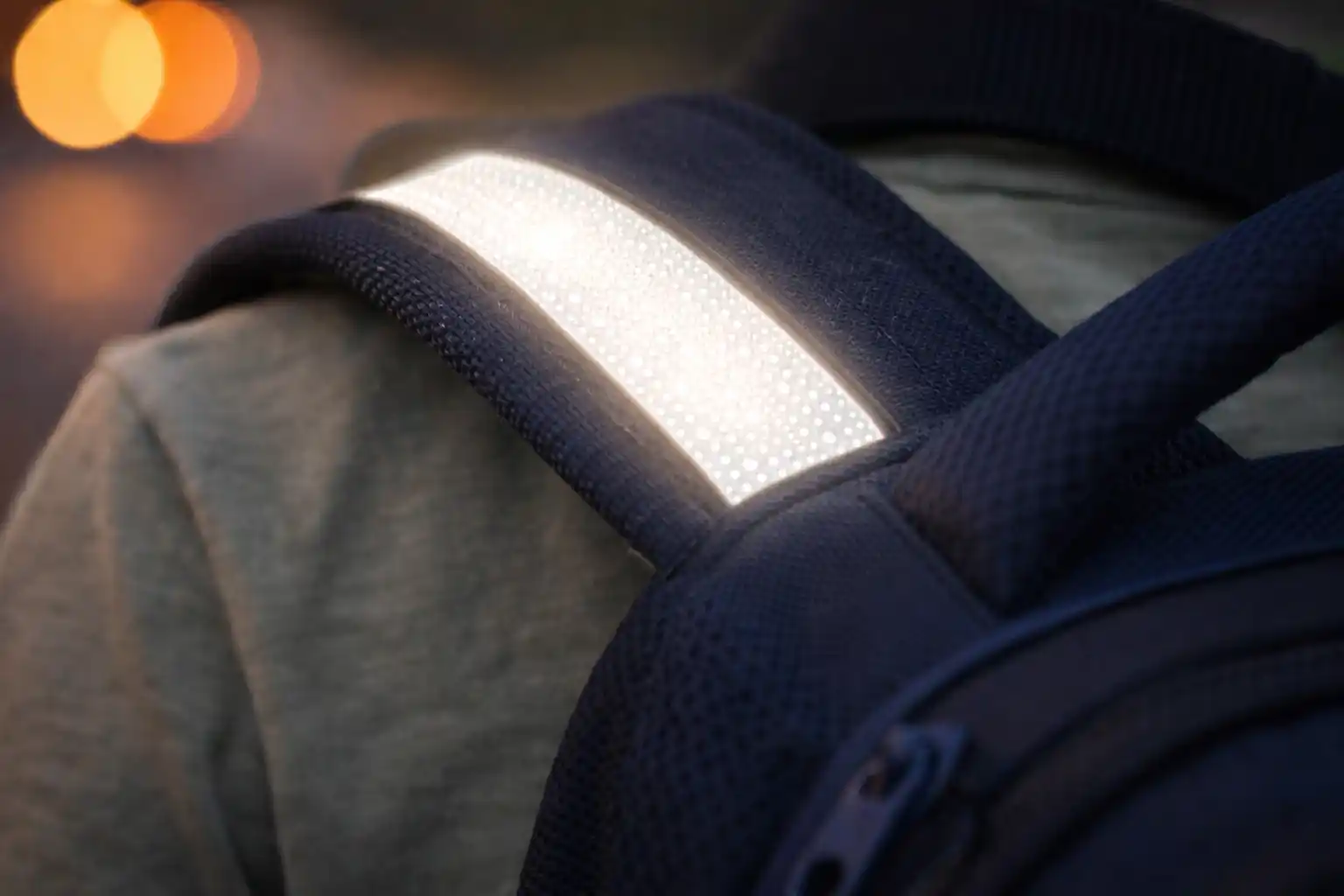
Reflective strips are specially designed materials applied to the exterior of school bags to enhance visibility when exposed to light. Unlike bright colors that rely on daylight, reflective materials function by returning light back toward its source, making the wearer more noticeable in dim or dark environments.
How Reflective Materials Work
Reflective materials operate on the principle of retroreflection, meaning they reflect light directly back to where it originated rather than scattering it in multiple directions. When headlights from a car or streetlights shine on reflective valiz lekòl, the reflective strips bounce the light back toward the driver’s eyes, making the child more visible from a greater distance. This reaction occurs instantly and does not depend on batteries, switches, or user behavior, which is why reflective features are widely recommended for child safety products.
The effectiveness of reflective strips becomes particularly noticeable during dawn, dusk, and nighttime conditions, when contrast between a child and the surrounding environment is reduced. In these situations, reflective elements often outperform standard colors, as they remain visible even when ambient light is minimal.
Common Types of Reflective Strips Used on School Bags
Not all reflective strips are identical, and understanding the differences helps parents evaluate quality and performance. Some school bags use sewn-in reflective fabric strips, while others rely on heat-pressed reflective patches or piping along seams. High-quality school backpack reflective strips are designed to remain flexible, durable, and visible after repeated use and cleaning.
Reflective elements may appear on shoulder straps, front panels, side pockets, or as outlining details along the edges of the bag. While the size of the reflective area matters, placement and orientation often play a more significant role in ensuring visibility from multiple angles.
Why School Bags with Reflective Strips Improve Child Safety
The primary purpose of reflective strips is to enhance a child’s visibility in situations where lighting is limited. This improvement in visibility directly contributes to accident prevention by giving others more time to notice and react.
Visibility in Low-Light Conditions
Low-light conditions are common during school commutes, particularly in winter months or in regions with shorter daylight hours. Reflective backpack for kids designs ensure that even when a child is wearing darker clothing, their school bag remains visible to oncoming traffic. Reflective strips catch and return light from headlights, streetlamps, and bicycle lights, helping to define the child’s outline and movement.
Visibility is not only about being seen but also about being recognized as a pedestrian. Reflective elements help drivers distinguish children from static objects in the environment, reducing reaction time and improving overall road safety.
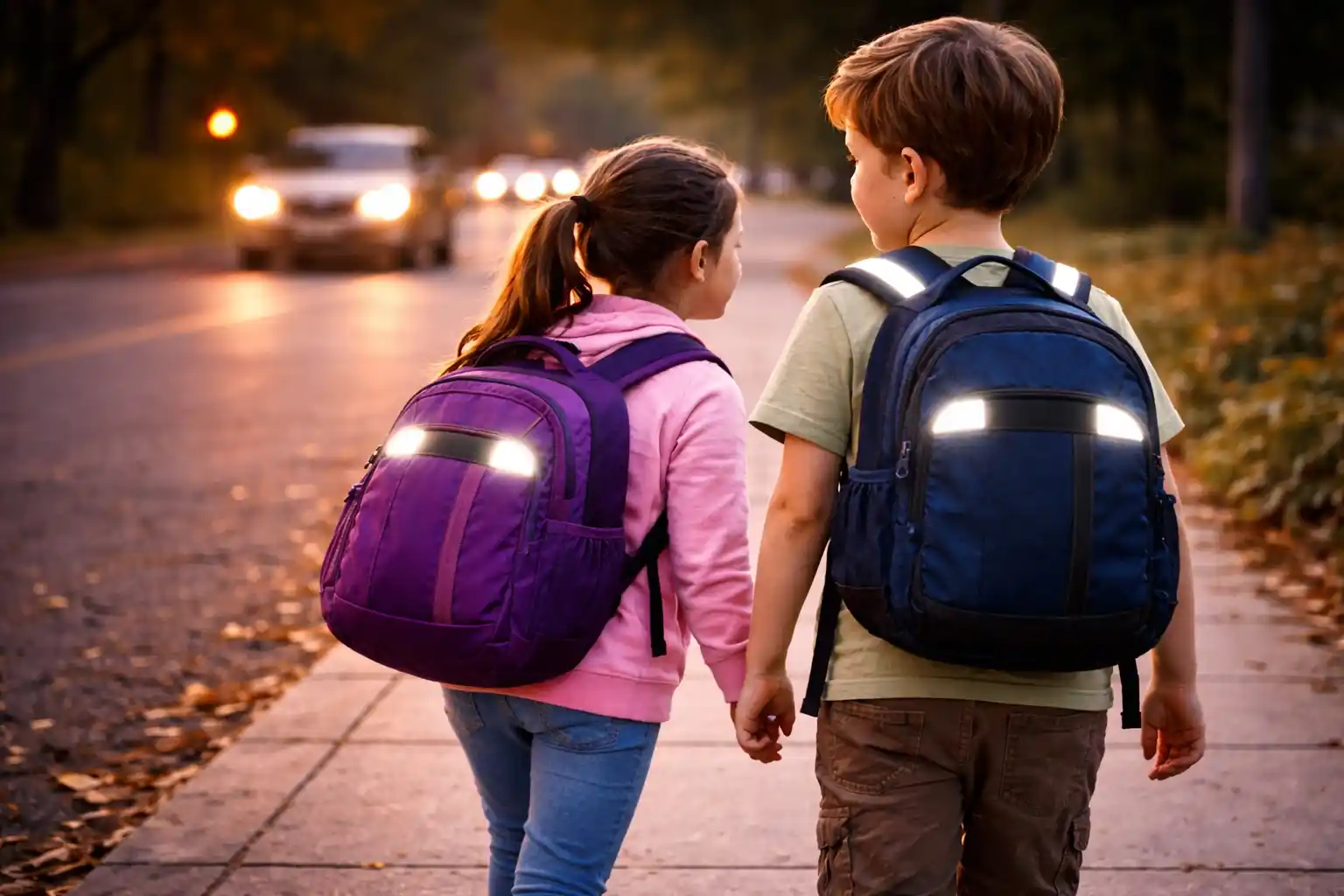
Reducing Roadside and Crossing Risks
Many school-related accidents occur near roads and crossings, where children may be partially obscured by parked vehicles, trees, or other obstacles. Kids school bag safety improves when reflective strips are placed in areas that remain visible from the side or back, even when the child turns or changes direction. This added visibility is especially valuable during road crossings, where brief moments of recognition can make a critical difference.
Key Safety Scenarios Where Reflective School Bags Matter Most
Reflective strips provide consistent benefits, but their importance becomes most evident in specific everyday scenarios that children encounter during their routines.
Walking to School Early in the Morning
Early morning commutes often take place before full daylight, particularly during colder seasons. In these conditions, school bags with reflective strips help ensure that children are visible even when the sun has not fully risen. Morning traffic can be fast-paced, and reflective elements provide an extra layer of protection by improving detection distance for drivers.
After-School Activities and Evening Commutes
After-school programs, sports activities, and tutoring sessions may extend a child’s return time into the evening. As daylight fades, reflective features become increasingly important. Reflective backpack safety in low light conditions allows children to remain noticeable during these later hours, even if street lighting is inconsistent or partially obstructed.
Bad Weather Conditions and Reduced Visibility
Rain, fog, and snow can significantly reduce visibility, even during daytime hours. Reflective strips continue to function effectively in these conditions, as moisture and low contrast environments often amplify the visibility benefits of reflective materials. In such situations, reflective school bags act as a passive safety tool that does not rely on the child remembering to activate or adjust anything.
Where Reflective Strips Should Be Placed on a School Bag
Placement plays a critical role in the effectiveness of reflective features. Even high-quality reflective materials may offer limited benefits if they are positioned poorly.
Shoulder Straps and Upper Back Area
Shoulder straps are among the most effective locations for reflective strips because they move with the child and remain visible from multiple angles. Reflective elements placed along the upper back area help ensure visibility when a child is walking away from traffic, a common scenario during school commutes. Reflective school bags with well-designed shoulder strap placement often provide better overall visibility than bags with reflective elements limited to a single surface.
Front Panels and Side Pockets
Front panels and side pockets contribute to visibility when children face traffic or cross streets. Side placement is particularly important at intersections, where vehicles approach from different directions. Reflective elements on the sides of a school bag increase the chances of being noticed during lateral movement.
Why Placement Matters More Than Strip Size
While larger reflective strips may seem more effective, strategic placement often delivers better results. Smaller reflective areas placed at eye-catching points, such as moving straps or edges, can outperform larger static patches. Understanding this distinction helps parents evaluate school bag safety features parents should know rather than relying solely on visual size.
Reflective Strips vs Other School Bag Safety Features
When parents evaluate school bags with reflective strips, reflective elements are often compared with other common safety features. Understanding how these features differ—and how they complement each other—helps clarify why reflective strips are considered a foundational safety component rather than an optional add-on.
Reflective Strips vs LED Lights
LED lights are sometimes marketed as a modern alternative to reflective materials, offering active illumination through battery-powered light sources. While LED-equipped school bags can be visually striking, they depend heavily on proper usage, battery life, and regular maintenance. If a light is turned off, forgotten, or runs out of power, its safety benefit disappears entirely. In contrast, reflective school bags function passively, providing consistent visibility without requiring any action from the child. This reliability makes reflective strips more suitable for daily school routines, particularly for younger children who may forget to manage electronic features.
Another consideration is durability. LED components may fail after repeated exposure to moisture or impact, whereas high-quality reflective strips are designed to withstand daily wear and routine cleaning. From a long-term safety perspective, reflective elements offer a more dependable solution.
Reflective Strips vs Bright Colors
Bright colors such as yellow, orange, or neon green are often associated with visibility and safety. While these colors can improve daytime recognition, their effectiveness diminishes significantly in low-light conditions. Reflective backpack for kids designs outperform bright colors at dawn, dusk, and nighttime because reflective materials actively return light to its source. This distinction explains why safety guidelines frequently recommend reflective elements even on brightly colored school bags.
Rather than choosing between the two, the most effective approach combines both strategies. Bright colors enhance daytime visibility, while reflective strips provide critical support when lighting conditions change.
Why Reflective Features Should Complement Ergonomic Design
Safety should not be considered in isolation. A school bag that is highly visible but uncomfortable or poorly fitted may discourage proper use. Kids school bag safety improves when reflective features are integrated into an ergonomic design that supports posture, distributes weight evenly, and remains comfortable throughout the day. Reflective strips should enhance an already well-designed bag, not compensate for structural shortcomings.
How to Choose a Safe School Bag with Reflective Strips
Selecting a school bag with reflective features involves more than checking for shiny elements. Parents should evaluate quality, placement, and durability to ensure the bag delivers consistent safety benefits.
What Parents Should Check Before Buying
Before purchasing, parents should examine where reflective strips are placed and whether they are visible from multiple angles. Reflective elements should appear on areas that remain unobstructed when the bag is worn, such as shoulder straps and upper back panels. It is also important to check that reflective materials are securely attached and not merely decorative accents.
Comfort remains equally important. A bag that fits well encourages daily use, ensuring reflective features are consistently present during commutes. Best school bags with reflective strips for kids balance safety, comfort, and practicality rather than prioritizing one aspect alone.
Quality Standards for Reflective Materials
Not all reflective materials perform equally. High-quality reflective strips maintain visibility after repeated exposure to light, moisture, and friction. Parents should look for reflective elements that appear uniform, flexible, and securely integrated into the bag’s structure. Reflective materials that crack, peel, or fade quickly may lose effectiveness over time.
Although technical certifications are not always visible to consumers, well-constructed reflective elements typically feel smooth and durable rather than brittle or loosely attached. This attention to material quality directly influences long-term safety performance.
Durability and Wash Resistance of Reflective Strips
School bags experience frequent handling, contact with surfaces, and occasional cleaning. Reflective strips should retain their functionality after washing and daily wear. Reflective school bag safety depends on materials that do not degrade rapidly under normal use. Parents who consider durability as part of the selection process are more likely to choose a bag that remains effective throughout the school year.
Common Misconceptions About Reflective School Bags
Despite their proven benefits, reflective school bags are often misunderstood. Addressing these misconceptions helps parents make decisions based on facts rather than assumptions.
“Reflective Strips Are Only for Night Use”
One common misconception is that reflective strips are unnecessary during daytime. In reality, reflective materials can enhance visibility in shaded areas, tunnels, overcast conditions, and during sudden changes in lighting. School backpack reflective strips provide value beyond nighttime scenarios, supporting visibility whenever ambient light is reduced.
“Any Shiny Material Is Reflective”
Not all shiny surfaces offer reflective performance. Decorative metallic finishes may appear reflective but often lack retroreflective properties. True reflective materials are specifically engineered to return light toward its source. Parents should be cautious not to assume that appearance alone guarantees safety performance.
“Reflective Bags Are Less Stylish”
Some parents worry that reflective features compromise appearance. Modern school bag designs integrate reflective elements discreetly into seams, logos, or piping, maintaining a balanced look while enhancing safety. As awareness of child safety grows, reflective features are increasingly seen as a practical design detail rather than an aesthetic limitation.
Are Reflective School Bags Recommended by Safety Organizations
Reflective elements are widely recognized as an effective safety measure for children, particularly in traffic-related environments.
General School Safety Guidelines
Many child safety guidelines emphasize visibility as a key factor in preventing accidents. Reflective materials are often recommended for clothing, accessories, and school bags because they offer a simple, passive method of improving recognition by drivers and cyclists. Child safety school bag discussions frequently highlight reflective strips as an essential component rather than an optional feature.
What Child Safety Experts Emphasize
Safety experts consistently stress that reflective features should be part of a broader approach to child safety. Education, supervision, and safe routes remain important, but reflective elements provide an additional layer of protection that functions regardless of behavior or awareness. This passive safety advantage explains why reflective strips are commonly included in safety-focused recommendations.
Final Thoughts: Making School Bags Safer Without Compromising Comfort
Chwazi school bags with reflective strips is a practical step toward improving child safety during everyday school commutes. Reflective elements enhance visibility in low-light conditions, reduce roadside risks, and provide consistent protection without relying on batteries or user action. When combined with ergonomic design, durable materials, and thoughtful placement, reflective strips contribute meaningfully to a safer and more comfortable school experience.
Parents who evaluate school bags based on real-world use, long-term durability, and visibility benefits are better equipped to support their child’s daily routine. Rather than viewing reflective features as an optional add-on, recognizing them as an integral part of school bag safety helps ensure that children remain visible, comfortable, and protected throughout the school year.
FAQ: School Bags with Reflective Strips
1. Are school bags with reflective strips really safer for kids?
School bags with reflective strips are considered safer because they significantly improve a child’s visibility in low-light conditions such as early mornings, evenings, and bad weather. Reflective materials return light from headlights and street lamps back toward drivers, helping them notice children earlier and react more quickly. While reflective strips do not eliminate all risks, they add an important passive safety layer that works automatically without relying on batteries or user behavior.
2. Where should reflective strips be placed on a school bag?
Reflective strips are most effective when placed on areas that remain visible from multiple angles, such as shoulder straps, the upper back panel, and side sections of the school bag. These positions help ensure visibility when a child is walking, crossing roads, or changing direction. Placement often matters more than strip size, as moving parts like straps attract attention more effectively than static surfaces.
3. Do reflective school bags work during the daytime?
Although reflective strips are most noticeable in low-light environments, they can still provide benefits during daytime conditions with reduced visibility, such as heavy rain, fog, shaded streets, or tunnels. Reflective materials help increase contrast between the child and the surrounding environment, making them easier to spot even when lighting is inconsistent or partially obstructed.
4. Are reflective strips better than LED lights on school bags?
Reflective strips and LED lights serve different purposes, but reflective strips are generally more reliable for everyday school use. Reflective materials work passively at all times, while LED lights depend on batteries, switches, and maintenance. If an LED light is turned off or runs out of power, its safety benefit is lost, whereas reflective strips continue functioning without any action from the child.
5. How can parents check the quality of reflective strips on school bags?
Parents can assess reflective strip quality by examining how securely the material is attached and whether it remains flexible rather than brittle. High-quality reflective strips maintain visibility after regular use, cleaning, and exposure to weather. Poor-quality reflective elements may peel, crack, or fade over time, reducing their effectiveness and overall safety value.
Referans
-
Backpack Safety and Injury Prevention — American Academy of Pediatrics, Healthy Children Program
-
Visibility and Pedestrian Safety in Low-Light Conditions — National Highway Traffic Safety Administration (NHTSA)
-
Child Pedestrian Safety: Reducing Roadside Risks — Centers for Disease Control and Prevention (CDC)
-
Retroreflective Materials and Road Safety Applications — Transportation Research Board, Safety Research Publications
-
Schoolbag Design and Child Ergonomics — Karen Grimmer, University of South Australia, Ergonomics Studies
-
Protecting Child Pedestrians — World Health Organization, Child Injury Prevention Reports
-
Reflective Materials in Consumer Safety Products — Consumer Product Safety Commission (CPSC)
-
Road Visibility and Human Perception — Institute of Transportation Engineers (ITE), Safety Briefs
Key Safety Insights on School Bags with Reflective Strips
Why reflective school bags matter in daily commutes: School bags with reflective strips address a common but often overlooked safety risk faced by children during early morning and evening school commutes, when reduced ambient light and traffic activity increase the importance of early visual recognition. By improving how quickly children can be detected by drivers and cyclists, reflective elements help reduce reaction time without requiring any additional awareness or behavior from the child.
How reflective strips improve visibility: Reflective materials function by returning external light sources, such as vehicle headlights and street lighting, back toward their origin, making children more noticeable in low-light or poor weather conditions. Unlike bright colors that rely on daylight contrast, reflective strips remain effective whenever directed light is present, providing consistent visibility support across a wider range of real-world scenarios.
What determines the effectiveness of reflective features: The safety value of reflective strips depends not only on their presence but also on their placement and integration, as elements positioned on shoulder straps, upper back panels, and side sections remain visible from multiple angles while a child is walking, crossing roads, or changing direction. Strategic placement often has a greater impact than strip size alone.
How reflective strips compare with other safety options: Compared with active safety features such as LED lights, reflective strips provide a passive and maintenance-free solution that does not rely on batteries, switches, or user habits. This reliability makes reflective school bags particularly suitable for daily routines, where consistent performance is more valuable than occasional high visibility.
Key considerations for parents choosing reflective school bags: When reflective strips are combined with proper bag fit, ergonomic structure, and durable materials, they support a balanced approach to child safety that aligns visibility, comfort, and long-term usability. Parents who evaluate reflective school bags based on real-world commuting conditions rather than short-term appearance are better positioned to make informed, practical decisions.