Nylon vs Polyester Bags – Quick Answer
When comparing nylon vs polyester bags, the decision primarily depends on performance expectations and budget positioning.
-
Chwazi nilon if maximum durability, abrasion resistance, and heavy-load performance are critical.
-
Chwazi polyestè if cost efficiency, UV stability, and scalable production matter more.
For most gym bags, school backpacks, and daily-use bags, polyester provides sufficient durability at a lower cost. Nylon is better suited for outdoor, tactical, and high-performance applications where structural strength is essential.
1. Comparison of material properties
| Property | Nylon | Polyester |
| Chemical Composition | Polyamide (PA) | Polyethylene terephthalate (PET) |
| Tensile Strength | Pi wo | Slightly lower |
| Density | ~1.14 g/cm³ | ~1.38 g/cm³ |
| Water Absorption | Higher (~4%) | Very low (~0.4%) |
| Heat Resistance | Melting point ~220°C | Melting point ~260°C |
| UV Resistance | Modere | Stronger |
| Sustainability | Recyclable, but processing intensive | rPET technology mature |
| Koute | Pi wo | Pi ba |
Key Material Difference Summary
The core difference between nylon and polyester lies in durability versus cost efficiency. Nylon offers stronger abrasion resistance and flexibility, while polyester provides better UV stability and lower production cost.
2. Advantages and Disadvantages Comparison
2.1 Nylon Bags
Avantaj
-
Superior abrasion and tear resistance
Nylon fibers have higher tensile strength and elasticity, making them more resistant to tearing under heavy loads or rough outdoor conditions.
-
Better suited for high-load applications
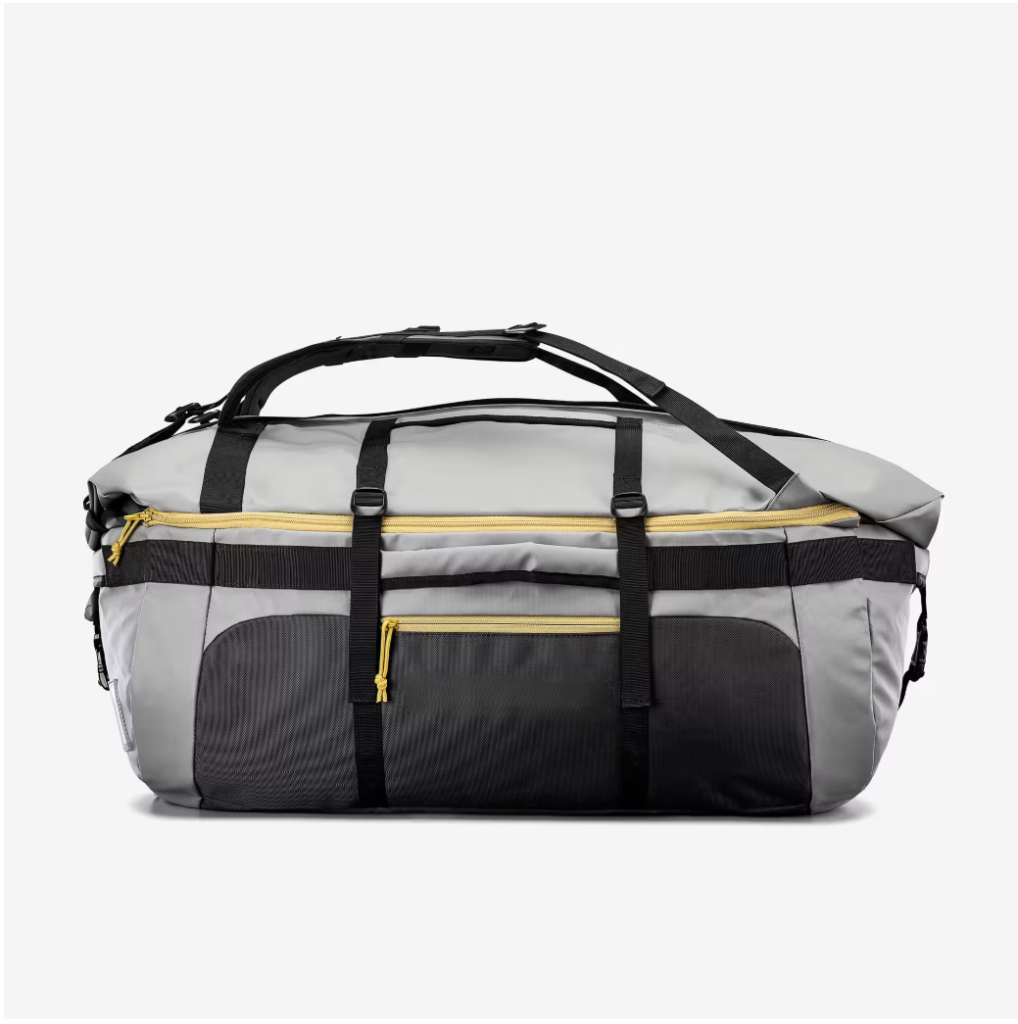
Due to its structural strength, nylon performs well in hiking backpacks, tactical bags, and heavy-duty travel duffels where load-bearing capacity is critical.
-
Greater flexibility and softer hand feel
Nylon fabric tends to be more flexible, allowing better adaptability to body movement and irregular packing shapes.
Dezavantaj
-
Higher water absorption rate
Nylon can absorb moisture in humid environments, potentially increasing overall bag weight without protective coating.
-
Higher raw material and processing costs
Compared to polyester, nylon requires more complex production processes, which increases final product pricing.
-
Moderate UV resistance
Prolonged sun exposure may cause gradual degradation unless additional UV-protective treatments are applied.
2.2 Polyester Bags
Avantaj
-
Cost-efficient and price-stable
Polyester offers lower and more predictable material costs, making it ideal for large-scale manufacturing and competitive retail pricing.
-
Stronger UV resistance
Polyester maintains color and structural integrity better under long-term sunlight exposure, making it suitable for outdoor daily-use bags.
-
Excellent shape retention
Polyester fibers resist stretching and deformation, helping bags maintain structure even after long-term use.
-
Manufacturing efficiency
Polyester fabric is easier to print, dye, and process, making it ideal for branded gym bags and promotional products.
Dezavantaj
-
Slightly lower abrasion resistance compared to nylon
While durable, polyester may show surface wear faster under extreme friction conditions.
-
Static buildup in dry climates
Polyester can accumulate static electricity, which may attract dust in certain environments.
-
Petrochemical dependency in traditional production
Conventional polyester relies on petroleum-based resources, although recycled polyester (rPET) significantly improves sustainability.
3 . Application scenario analysis
Lè evalye nylon vs polyester bags, the most practical way to decide is by matching material performance to real-world usage conditions. Different bag categories demand different priorities—durability, cost control, weather resistance, or brand positioning.
Nylon Application Scenarios
Nylon is typically preferred in applications where strength and long-term durability are critical:
-
Outdoor hiking backpacks
High tensile strength and abrasion resistance allow nylon to withstand rock friction, rough terrain, and heavy loads.
-
Tactical or heavy-duty bags
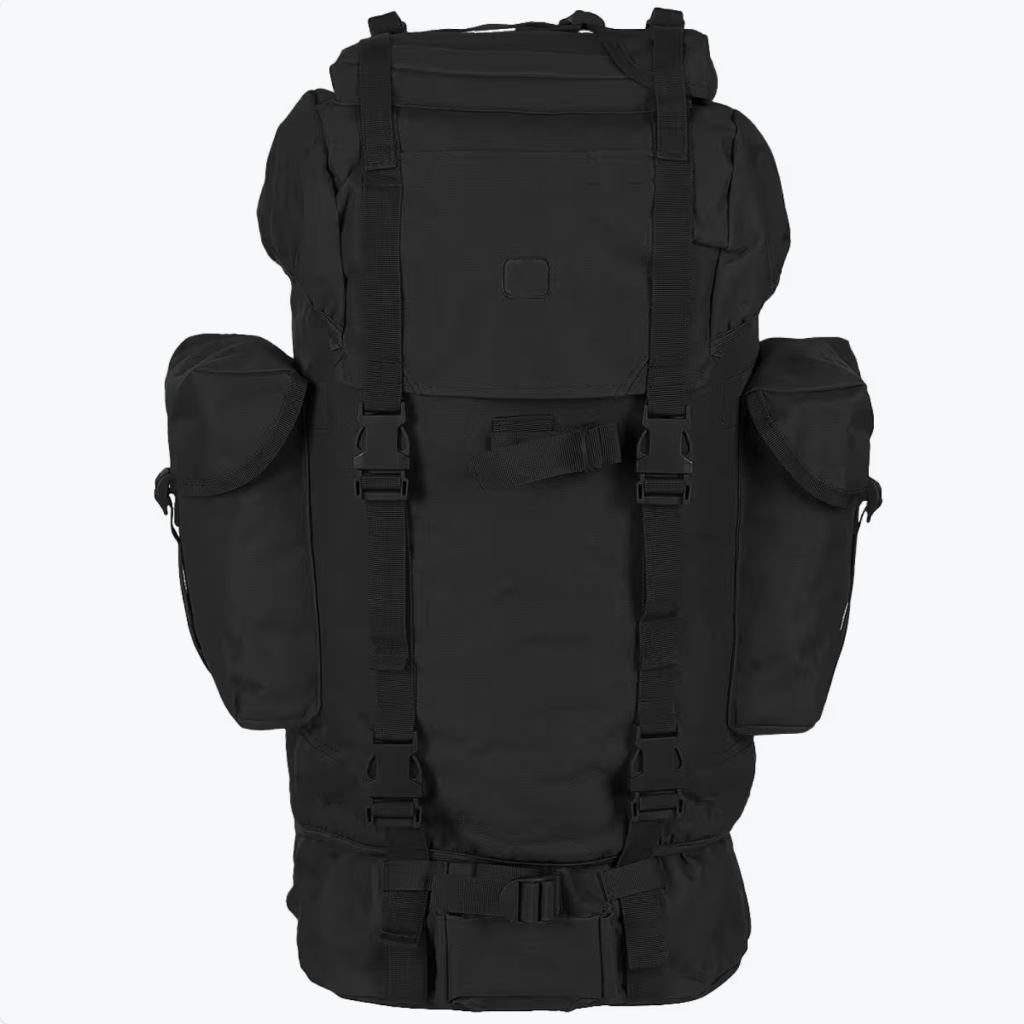
Nylon’s tear resistance and structural stability make it suitable for military-style, utility, or performance-driven designs.
-
Premium travel duffel bags
When bags are expected to endure repeated heavy packing and transport stress, nylon offers better longevity.
-
Water-resistant or technical bags
With PU or TPU coatings, nylon can provide strong waterproof performance for diving, adventure, or extreme-weather gear.
In high-load or harsh environments, nylon generally delivers better structural reliability.
Polyester Application Scenarios
Polyester is widely used in scenarios where cost-efficiency, UV resistance, and manufacturing scalability are prioritized:
-
Gym bags and daily-use backpacks
Polyester provides sufficient durability for routine use while maintaining competitive pricing.
-
School and commuter bags
Good shape retention and color stability make polyester suitable for long-term daily wear.
-
Promotional and branded merchandise
Polyester fabric is easier to dye and print, making it ideal for logo-heavy or custom production.
-
Light travel and foldable storage bags
Its wrinkle resistance and structural stability help maintain a clean appearance.
For mass-market products and large-scale OEM production, polyester offers a balanced combination of durability and affordability.
Practical Decision Insight
In short, nylon is better suited for performance-focused and heavy-duty applications, while polyester is more practical for cost-sensitive, everyday, and high-volume production needs.
When comparing nylon vs polyester bags, the best material depends on expected load intensity, environmental exposure, and target market positioning rather than a single performance metric.
4. Selection suggestion
When choosing between nylon vs polyester bags, the decision should be based on expected usage intensity, environmental exposure, budget constraints, and target market positioning.
4.1 Choose Nylon If:
-
The bag will carry heavy loads or experience frequent friction
-
Durability and long-term structural performance are priorities
-
The product targets outdoor, tactical, or premium travel markets
-
Higher production cost is acceptable for better performance
Nylon is the better option when performance and abrasion resistance outweigh cost considerations.
4.2 Choose Polyester If:
-
The bag is intended for daily use, gym, school, or commuting
-
Cost control and mass production efficiency are important
-
Strong UV resistance and color stability are required
-
The product is positioned for the mid-range or value market
Polyester offers a practical balance between durability, affordability, and scalable manufacturing.
4.3 Sustainability Consideration
For environmentally conscious projects, consider resikle polyestè (rPET) oswa recycled/bio-based nylon alternatives. These materials reduce environmental impact while maintaining acceptable performance standards.
4.4 Final Selection Logic
There is no universally “better” material in the nylon vs polyester comparison. Nylon excels in performance-driven applications, while polyester dominates cost-sensitive and high-volume production categories. The optimal choice depends on the bag’s functional requirements, expected lifespan, and market positioning.
5. Cost vs Performance: Which Material Delivers Better Value?
When comparing nylon vs polyester bags from a manufacturing and commercial perspective, the decision often comes down to performance requirements versus cost control.
Nylon offers higher structural strength, superior abrasion resistance, and better long-term durability under heavy load conditions. However, these performance advantages come with higher raw material costs and more complex processing requirements. As a result, nylon bags are typically positioned in premium, outdoor, tactical, or performance-driven product lines.
Polyester, on the other hand, provides more stable pricing and manufacturing efficiency. Its lower production cost, easier dyeing and printing process, and strong UV resistance make it ideal for large-scale OEM production and mass-market distribution.
From a business standpoint:
-
Chwazi nilon when product longevity and high-performance branding justify a higher retail price.
-
Chwazi polyestè when competitive pricing, scalability, and production efficiency are primary goals.
In practical terms, nylon maximizes performance value, while polyester maximizes cost efficiency and market scalability.
6. Future Trends in Nylon and Polyester Bag Materials
As sustainability standards, manufacturing technology, and consumer expectations evolve, both nylon and polyester continue to develop in different directions within the bag industry.
6.1 Nylon Development Trends
Nylon innovation is increasingly focused on performance enhancement and environmental improvement.
-
Growth of recycled nylon
Regenerated nylon made from industrial waste and discarded fishing nets is becoming more widely adopted in performance-driven products.
-
Lightweight reinforcement technologies
Advanced weaving techniques and high-tenacity yarn structures are improving strength-to-weight ratios without increasing fabric thickness.
-
Enhanced coating systems
Improved PU and TPU coatings enhance waterproof performance while maintaining flexibility.
Future nylon applications are likely to remain dominant in high-performance, outdoor, and technical bag segments.
6.2 Polyester Innovation Trends
Polyester development is centered around scalability, sustainability, and cost optimization.
-
Expansion of recycled polyester (rPET)
rPET production has become more standardized and commercially viable for large-scale bag manufacturing.
-
Improved eco-certification compliance
More manufacturers are aligning polyester production with global sustainability standards.
-
Smart surface treatments
Advances in water-repellent, stain-resistant, and UV-protective coatings are enhancing polyester’s functional performance.
Polyester is expected to maintain its dominance in gym bags, school backpacks, and mass-market products.
6.3 Hybrid Material Solutions
Blended fabrics combining nylon and polyester are increasingly used to balance durability and cost. By strategically mixing fibers, manufacturers can achieve improved abrasion resistance while maintaining production efficiency.
In the ongoing comparison of nylon vs polyester bags, hybrid materials may offer a practical middle-ground solution for brands seeking both performance and scalability.
6.4 Industry Outlook
Looking ahead, the future of bag materials will be shaped by sustainability regulations, cost control pressures, and evolving consumer demands for durability. Rather than one material replacing the other, nylon and polyester will continue to serve complementary roles across different product categories.
7. Final Verdict: Nylon vs Polyester Bags
In the comparison of nylon vs polyester bags, neither material is universally superior. Each serves a distinct role within the bag industry.
Nylon leads in durability, abrasion resistance, and heavy-load performance, making it the preferred choice for outdoor, tactical, and high-performance applications.
Polyester dominates in cost-efficiency, UV stability, and large-scale manufacturability, making it ideal for gym bags, school backpacks, commuter bags, and mass-market products.
The optimal material choice depends on:
Rather than asking which material is “better,” the more accurate question is which material better aligns with the intended function and market strategy.
Understanding this distinction allows manufacturers, designers, and buyers to make informed decisions when evaluating nylon vs polyester bags for different applications.
Kesyon yo poze souvan
1. Is nylon stronger than polyester for bags?
Yes, nylon is generally stronger than polyester in terms of tensile strength and abrasion resistance. This makes nylon bags more suitable for heavy-duty applications such as hiking backpacks, tactical gear, and performance travel bags.
2. Which lasts longer, nylon or polyester bags?
Nylon typically lasts longer under high-friction and heavy-load conditions due to its superior tear resistance. However, polyester can perform very well in daily-use scenarios where extreme durability is not required.
3. Is polyester more waterproof than nylon?
Neither material is inherently waterproof. Both nylon and polyester require coatings such as PU or TPU for full water resistance. However, polyester absorbs less moisture than nylon, which helps it dry faster in humid environments.
4. Which material is better for gym bags?
Polyester is commonly used for gym bags because it offers a strong balance between durability, cost efficiency, and UV resistance. Nylon may be preferred for premium or performance-focused gym bag designs.
5. Why is nylon more expensive than polyester?
Nylon production involves more complex chemical processing and higher raw material costs. Its superior strength and durability also position it in higher-end product categories, which contributes to a higher overall price.
6. Is recycled polyester (rPET) a good alternative?
Yes, recycled polyester (rPET) provides similar durability to traditional polyester while reducing environmental impact. It has become increasingly popular in sustainable bag manufacturing.
7. Can nylon and polyester be blended together?
Yes, hybrid fabrics combining nylon and polyester are often used to balance strength, flexibility, and cost. These blended materials allow manufacturers to optimize performance without significantly increasing production expenses.