Rezime rapid: La 40L vs 50L backpack decision comes down to mobility versus packing margin: 40L suits carry-on-focused trips and one-week travel, while 50L fits winter layers, heavy gear, and longer backpacking. This guide compares real travel capacity, airline carry-on risk, and when each size works best for international travel.
What Does 40L vs 50L Actually Mean in Real Travel?
The difference between a 40L and 50L backpack is not simply ten extra liters of empty space. In real travel situations, those additional liters often determine whether your bag feels compact and agile or bulky and storage-oriented.
A standard 40L backpack is usually designed around carry-on dimensions and mobility. It provides enough volume for multiple days of clothing, electronics, toiletries, and essential accessories without pushing into expedition territory.
A 50L backpack, by contrast, introduces more vertical height and compartment depth. That extra space allows for bulkier garments, heavier equipment, and less compressed packing — but it also increases overall size and, often, weight.
In practical terms:
-
40L prioritizes balance.
-
50L prioritizes margin.
Understanding this difference is critical before deciding which size aligns with your travel style.
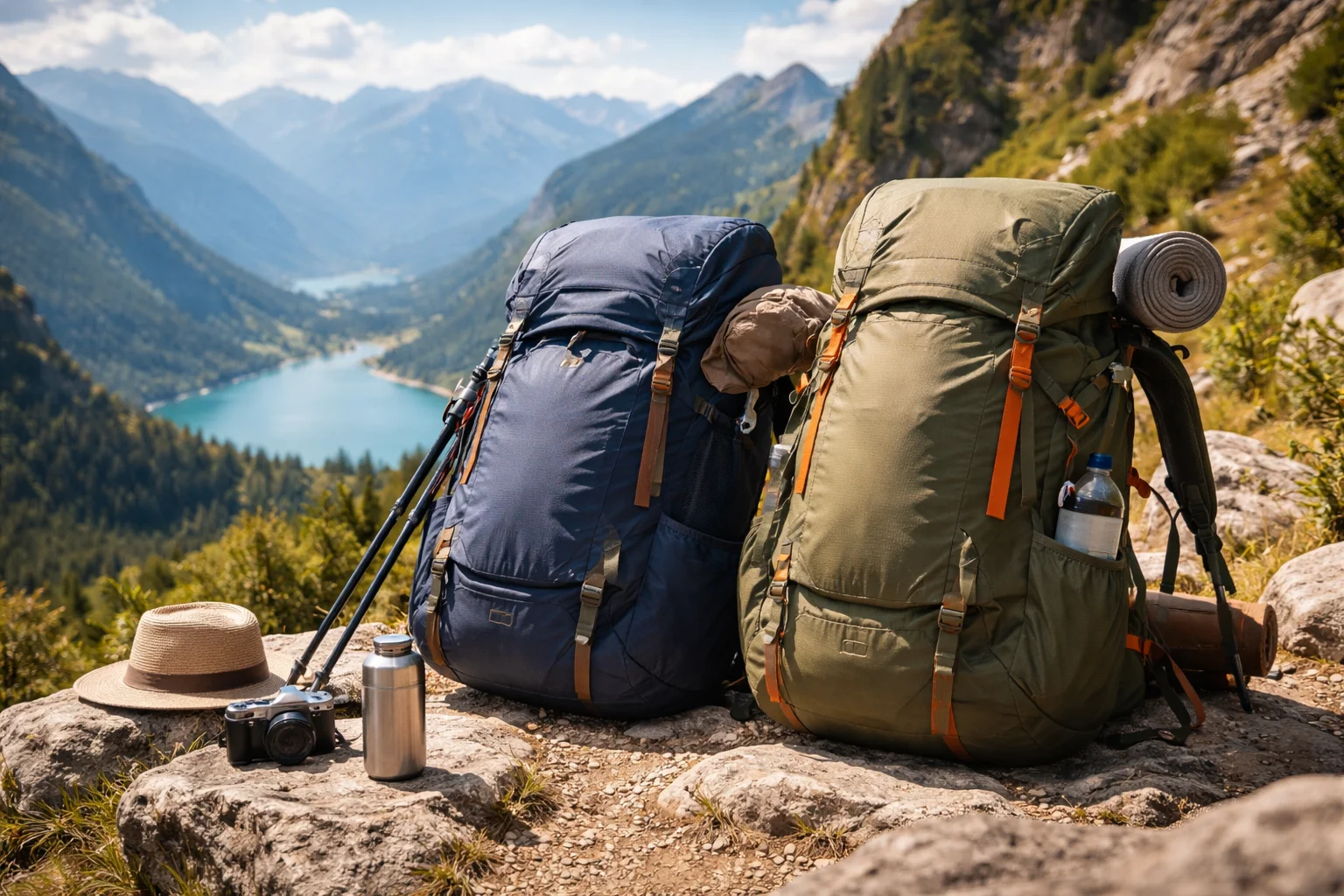
How Much Bigger Is a 50L Backpack Compared to 40L?
On paper, a 50L backpack offers 25% more capacity than a 40L model. In practice, the impact can feel more significant because travel items are not evenly distributed in volume.
The additional space in a 50L backpack typically translates into:
-
Greater depth in the main compartment
-
Extended height for layered storage
-
Additional organizational panels
-
Improved expansion capability
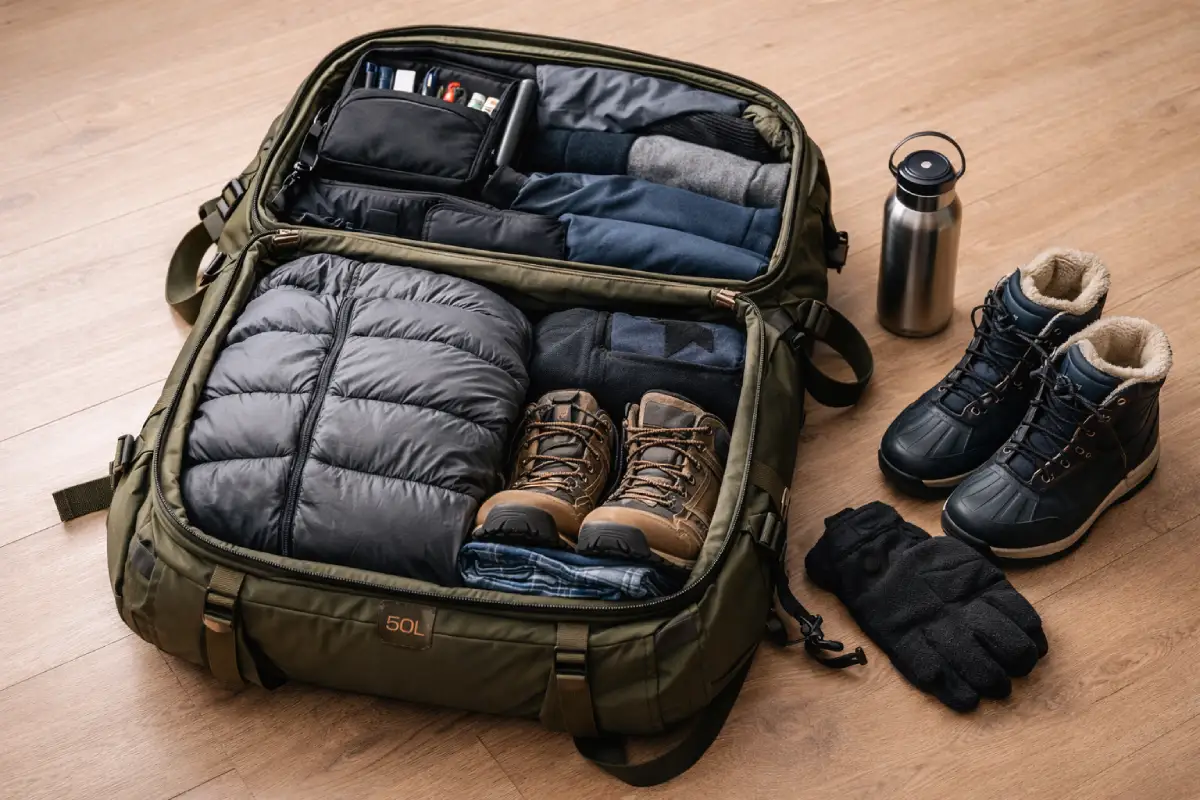
This becomes particularly noticeable when packing bulkier items such as insulated jackets, hiking boots, or camera equipment. Winter garments and structured gear do not compress easily, meaning the extra ten liters can prevent overstuffing and strain on zippers.
However, that added space also changes how the sakado vwayaje sits on your body. A 50L pack often extends lower toward the hips and protrudes further from your back, affecting center of gravity and balance during movement.
The size difference is not just numerical — it is structural.
Is 40L Enough for Travel?
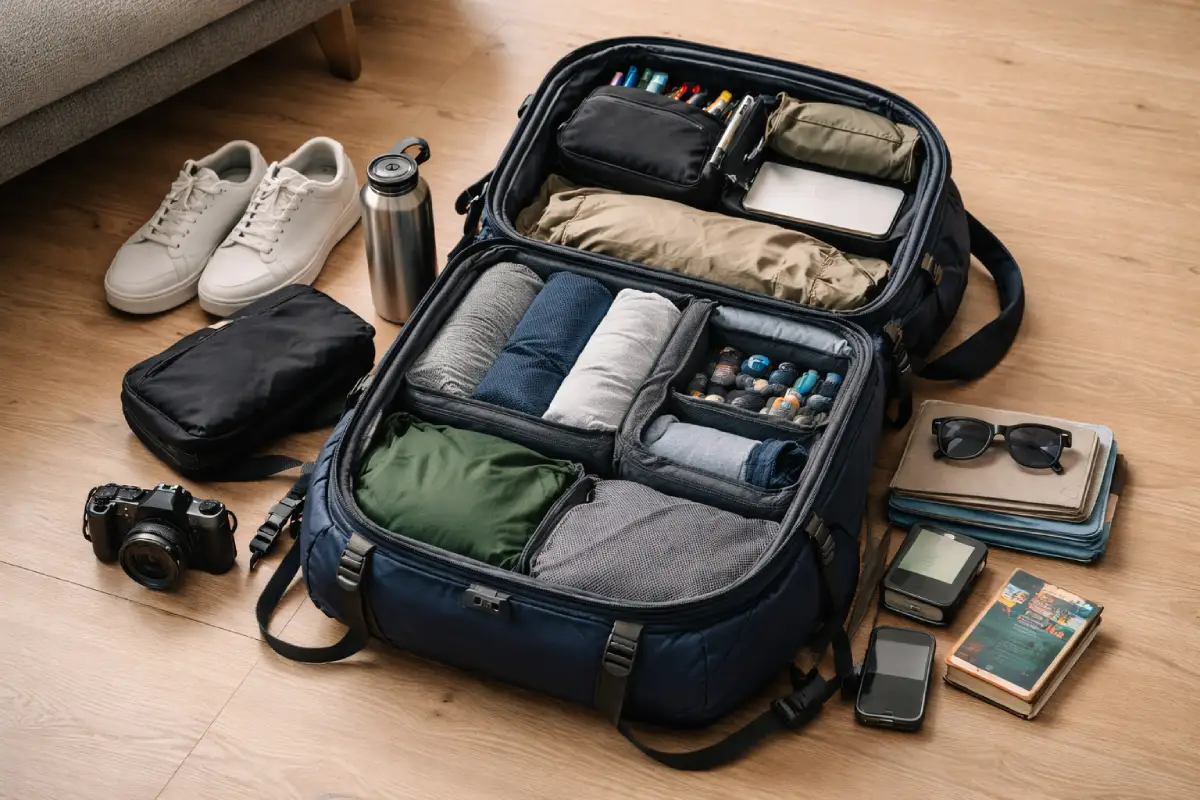
For most international trips lasting 5 to 7 days, especially in moderate or warm climates, a 40L backpack is more than adequate. When packed efficiently, it can accommodate:
The key variable is packing efficiency. Travelers who use compression cubes, limit footwear to two pairs, and avoid unnecessary extras can comfortably fit a week’s worth of essentials inside a 40L travel backpack.
Where 40L begins to feel restrictive is in colder climates or gear-heavy trips. Thick sweaters, insulated jackets, and heavy boots consume space rapidly, reducing usable capacity.
So is 40L enough?
For structured, carry-on-focused travel — yes.
For winter or equipment-heavy travel — possibly not.
Here’s a real example of what fits inside a 40L backpack for a 7-day trip.
When Does 50L Become Necessary?
A 50L backpack becomes practical when storage flexibility outweighs the need for agility.
Scenarios where 50L makes sense include:
Winter Destinations
Cold-weather layering significantly increases packing volume. A down jacket alone can occupy as much space as multiple summer garments. In these cases, 50L provides comfort and organization without forcing aggressive compression.
Long-Term Backpacking
For trips extending beyond two weeks, especially when laundry access is uncertain, additional clothing rotation and contingency items may be necessary. The extra capacity offers psychological and practical margin.
Photography and Professional Gear
Camera bodies, lenses, drones, and protective inserts quickly fill space. A 40L pack may technically fit the gear, but organization becomes tight. A 50L backpack allows better compartmentalization.
Mixed Travel Styles
If your itinerary combines city travel, outdoor exploration, and occasional formal events, 50L accommodates diverse packing needs more comfortably.
The decision here is not about overpacking. It is about flexibility.
40L vs 50L Backpack for Airline Carry-On Rules
Airline compliance is a major deciding factor.
Many 40L backpacks are intentionally designed to fit standard cabin baggage dimensions, often around 55 × 40 × 20 cm. Soft-shell models can compress slightly, increasing compatibility with overhead bins.
A 50L backpack, however, enters uncertain territory. While some slim-profile 50L models may technically fit in overhead storage if not fully packed, they frequently exceed depth or weight limits when loaded.
Budget airlines tend to enforce stricter measurements, making 50L less reliable for guaranteed carry-on approval.
If your travel strategy prioritizes avoiding checked baggage fees and maintaining airport mobility, 40L is generally the safer choice.
40L vs 50L for a 7-Day Trip
Seven days is the most common benchmark travelers use when selecting backpack size.
In warm climates with lightweight fabrics and access to occasional laundry, a 40L backpack can easily manage a week-long trip. With thoughtful packing, it maintains efficiency without excess bulk.
In colder climates, however, a week can stretch the limits of 40L capacity. Bulky layers and footwear can push the pack to maximum compression, reducing accessibility and comfort.
For a seven-day trip, the decision often hinges on climate rather than duration.
Warm environment + disciplined packing = 40L works well
Cold environment + layered clothing = 50L becomes comfortable
Trip length alone is rarely the determining factor.
Mobility vs Storage: The Core Trade-Off
The real difference between 40L and 50L backpacks lies in mobility versus storage capacity.
A 40L backpack:
-
Moves easily through crowded airports
-
Navigates train stations efficiently
-
Reduces shoulder fatigue
-
Feels agile during long walking days
A 50L backpack:
-
Offers packing margin
-
Reduces stress about “what if” items
-
Improves organization flexibility
-
Supports gear-heavy travel
Choosing between them is choosing between streamlined movement and expanded adaptability.
Neither is universally superior — they serve different travel priorities.
How Heavy Is a 40L vs 50L Backpack in Real Use?
When comparing backpack sizes, many travelers focus on volume but overlook weight distribution and load mechanics. The difference between a 40L and 50L backpack is not only about what fits inside — it is also about how the pack feels after several hours of movement.
A typical 40L backpack weighs between 1.2–1.6 kg (2.6–3.5 lbs) when empty. A 50L backpack generally ranges from 1.6–2.2 kg (3.5–4.8 lbs), depending on frame structure and materials.
That difference may seem minor at first glance, but once fully loaded, a 50L backpack can easily weigh 2–4 kg more than a 40L pack.
The impact of that added weight shows up in:
However, higher-capacity backpacks often include better structural support, such as reinforced frames and padded hip belts, which can transfer weight more effectively to the hips. In longer hiking scenarios, a well-designed 50L pack may actually feel more balanced than an overloaded 40L pack with no frame support.
This is why comfort depends not only on size, but on design and total load.
If your trip lasts around one week, it’s worth reviewing our guide on what size backpack for a 7-day trip before deciding between 40L and 50L.
Common Misconceptions About 40L and 50L Backpacks
Backpack size decisions are often influenced by assumptions rather than real travel needs.
“Bigger Is Always Safer”
Many travelers believe choosing 50L eliminates risk. In reality, larger backpacks often encourage overpacking. Extra space invites “just in case” items, increasing weight and travel fatigue.
“40L Is Too Small for Serious Travel”
For structured international trips with laundry access and lightweight fabrics, 40L is more than sufficient. Many experienced minimalist travelers complete multi-week trips with 40L packs.
“50L Cannot Be Used on Planes”
While most 50L backpacks exceed standard carry-on size when fully packed, some slim-profile designs can fit overhead compartments if not overloaded. Airline enforcement varies significantly, especially between full-service and budget carriers.
Understanding these misconceptions prevents overestimating or underestimating your true volume needs.
Which Backpack Size Is Better for Europe Travel?
Europe travel often involves frequent movement — trains, cobblestone streets, compact hotels, and city walking.
For typical 7–10 day Europe itineraries:
Mobility matters in Europe. Navigating train platforms with a 50L pack can feel noticeably heavier during multiple transfers.
If your trip emphasizes urban exploration and efficiency, 40L generally offers a smoother experience.
If your trip includes alpine regions, hiking segments, or winter layering, 50L may justify its added bulk.
40L vs 50L for Backpacking: Is 50L Necessary?
Backpacking can mean different things. Urban backpacking differs dramatically from wilderness trekking.
For urban backpacking across multiple countries, a 40L backpack can handle essentials if you pack strategically and plan occasional laundry.
For wilderness trekking or remote travel where gear such as sleeping systems, extra footwear, or outdoor equipment is required, 50L often becomes the more appropriate choice.
In these cases, the additional space is not luxury — it is functional necessity.
The definition of “backpacking” determines which size is appropriate.
The Decision Framework: How to Choose Between 40L and 50L
Instead of asking “Which is better?”, ask the following questions:
1. How Long Is the Trip?
5–7 days with laundry access → 40L works well
10+ days with limited laundry → 50L adds flexibility
2. What Is the Climate?
Warm climates → 40L sufficient
Cold climates with layered clothing → 50L safer
3. Are You Traveling Carry-On Only?
If avoiding checked baggage is a priority, 40L offers higher compliance probability.
4. Will You Carry Heavy Equipment?
Photography gear, drones, hiking boots, or specialty clothing increase volume quickly. 50L may be necessary.
5. Are You Comfortable Packing Efficiently?
If you enjoy optimized packing and minimalism, 40L aligns well.
If you prefer relaxed packing without compression, 50L offers breathing room.
The correct size is not determined by fear of running out of space. It is determined by alignment with travel behavior.
The Trend Toward Carry-On Travel and Compact Mobility
Airline baggage fees continue to rise, and international carriers are tightening cabin size enforcement. At the same time, more travelers are adopting minimalist travel strategies to reduce airport friction and transit fatigue.
This shift has increased demand for 40L backpacks, which sit at the upper boundary of practical carry-on travel while still offering multi-day capacity.
However, outdoor travel, digital content creation, and long-term backpacking trends continue to support demand for 50L backpacks, especially among gear-heavy travelers.
In other words:
40L aligns with mobility-focused travel culture.
50L aligns with adaptability-focused travel culture.
Understanding which travel philosophy you follow clarifies the decision.
Final Verdict: 40L vs 50L Backpack
If your travel style emphasizes:
-
Carry-on efficiency
-
Urban mobility
-
Moderate climates
-
Structured packing
Then a 40L backpack is likely the smarter, more agile choice.
If your travel style includes:
Then a 50L backpack provides the flexibility and margin required.
The right backpack size is not the largest one available. It is the one that matches your real travel demands without creating unnecessary burden.
For most structured international trips, 40L represents a balanced solution.
For extended, gear-intensive travel, 50L becomes a practical upgrade.
FAQ
1. Is 40L enough for a week of travel?
Yes, a 40L backpack is typically sufficient for a 5–7 day trip, especially in warm or moderate climates. Efficient packing, lightweight clothing, and occasional laundry access make it highly practical for international travel.
2. Is 50L too big for carry-on luggage?
In most cases, a fully packed 50L backpack exceeds standard carry-on dimensions. Some slim-profile models may fit overhead bins, but compliance depends on airline size and weight restrictions. Always verify specific airline policies before traveling.
3. How much heavier is a 50L backpack compared to 40L?
Empty weight differences typically range from 0.4–0.6 kg (1–1.3 lbs). Once packed, total weight can increase by several kilograms depending on what you carry. Larger volume often encourages heavier loads.
4. Which backpack size is better for winter travel?
For winter travel involving insulated jackets, boots, and layered clothing, a 50L backpack is generally more comfortable and flexible than a 40L pack.
5. Can I backpack Europe with a 40L backpack?
Yes. Many travelers successfully backpack Europe with 40L backpacks, particularly in spring and summer. It supports mobility across trains and cities while staying within practical carry-on limits.
Semantic Wrap-Up: How to Choose the Right Backpack Size with Confidence
What matters more than liters?
Backpack liters are a helpful reference, but real usability comes from how items behave in space: winter layers, boots, and camera inserts do not compress like T-shirts. That’s why a 10L difference can feel “small” in summer yet “decisive” in cold weather or gear-heavy itineraries.
Why 40L often wins for international travel
A 40L pack tends to sit in the sweet spot where capacity still supports a 5–7 day trip, while size remains manageable for airports, trains, and crowded city streets. It also carries lower risk under airline carry-on limits, which matters when you want predictable travel with minimal baggage friction.
When 50L becomes the smarter option
A 50L backpack is not just for “more stuff.” It becomes practical when you need margin: winter clothing, outdoor add-ons, professional equipment, or longer travel without reliable laundry. In these cases, the extra volume reduces over-compression, improves access, and lowers the chance of awkward packing compromises.
Option analysis: mobility vs margin
If your trips involve frequent transfers, long walking days, and carry-on-only planning, 40L supports speed and comfort. If your trips involve unpredictable climates, bulkier gear, or extended durations, 50L provides the flexibility to travel without constantly optimizing every inch of space.
Considerations that change the decision
Airline enforcement, weight limits, and itinerary density can flip the outcome. A compact 50L that exceeds cabin limits creates cost and stress, while an overloaded 40L can feel uncomfortable and disorganized. The most reliable choice is the size that matches your climate, gear load, and packing tolerance.
Trend insight: the rise of “carry-on economy” travel
As airlines tighten baggage policies and travelers prioritize speed, 40L backpacks continue to grow in popularity for international trips. At the same time, 50L remains essential for winter travel, outdoor routes, and creators carrying equipment. The best size is the one that aligns with how you actually travel—not how you hope to travel.