Laburpen azkarra:
When choosing a backpack for a Europe trip, the ideal size depends on trip duration, climate, and packing style. A 30L backpack is suitable for short, warm trips with minimalist packing, while a 40L pack is often the best choice for a balanced, multi-city itinerary. For winter travel or gear-heavy routes, a 50L backpack provides necessary space and flexibility.
Europe travel is different from most other international trips. It often involves multiple cities, frequent train transfers, narrow sidewalks, cobblestone streets, and budget airlines with strict carry-on rules. Choosing the right backpack size is not just about how many days you are traveling — it is about how often you move, what climate you encounter, and how efficiently you pack.
For most travelers, a 40L backpack is the most balanced option for a Europe trip. However, a 30L backpack can work for short summer itineraries, while a 50L backpack becomes practical for winter travel or gear-heavy routes. The ideal size depends on mobility, climate, and packing discipline — not simply duration.

Why Europe Travel Requires a Different Backpack Size Strategy
When people ask what size bidaia-motxila they need for Europe, they often think in terms of days. But Europe travel is rarely static. Many itineraries include three to five cities within a single week, connected by trains, buses, or low-cost flights.
Unlike destinations where you stay in one hotel, Europe often means:
-
Carrying your bag through train stations
-
Climbing stairs in historic buildings without elevators
-
Rolling or carrying luggage over uneven stone streets
-
Boarding budget airlines with strict baggage enforcement
Mobility matters more than maximum volume.
A bag that feels manageable in a suburban airport may feel heavy after walking 20 minutes across a historic city center. This is why choosing between 30L, 40L, or 50L is a decision about movement efficiency as much as storage capacity.

30L, 40L, or 50L — What Works Best for Europe?
Backpack size for Europe depends on three major factors:
-
Climate
-
Trip duration
-
Packing style
Let’s break it down realistically.
Is 30L Enough for Europe Travel?
A 30L backpack can work well for Europe in specific situations. If your trip is 2–4 days, focused on one or two cities, and scheduled in summer, 30 liters can be surprisingly efficient. Warm-weather clothing packs compactly, and with compression cubes plus a carry-on-only strategy, mobility stays high.
If you’re unsure whether 30 liters is sufficient for multi-day travel, this detailed guide to 30L backpack for international travel explains what realistically fits inside and when 30L begins to feel restrictive.
Where 30L struggles is winter. Thick sweaters, insulated jackets, boots, and layered outfits dramatically increase volume. For variable climates or longer routes across multiple cities, flexibility becomes limited.
Why 40L Is Often the Sweet Spot for Europe
For most Europe trips lasting 7–10 days, a 40L backpack offers the best balance between mobility and capacity. It supports multiple outfits, a toiletry kit, electronics, and one extra pair of shoes without becoming cumbersome in transit.
In fact, many experienced travelers consider 40L the ideal backpack size for a 7-day trip, especially when combining train travel, urban walking, and airline cabin compliance.
This size allows small margin for layering in unpredictable weather while still remaining manageable on stairs, metro systems, and crowded platforms.
If you prioritize agility without sacrificing flexibility, 40L is often the smartest choice.
When 50L Makes Sense in Europe
A 50L backpack becomes practical under specific conditions — most notably winter travel or gear-heavy itineraries.
Heavy coats, boots, gloves, and outdoor equipment consume space quickly. Extended trips of 10–14 days without laundry access may also justify increased capacity.
However, before choosing 50L, it’s important to understand the real difference between capacity and mobility. This in-depth comparison of 40L vs 50L backpack explains when the additional volume improves comfort and when it simply adds weight.
For travelers prioritizing flexibility over minimalism, 50L provides margin. For urban mobility and frequent transfers, it may feel oversized.
Europe Airline Carry-On Rules You Must Consider
Backpack size decisions in Europe are heavily influenced by airline policies. Budget carriers such as Ryanair and EasyJet often enforce personal item and cabin bag dimensions strictly.
Typical European cabin luggage limits are around:
55 × 40 × 20 cm
7–10 kg weight limit
Ondo diseinatutako bat 40L backpack often fits within these dimensions if not overstuffed. A 50L pack may exceed depth restrictions depending on structure.
Travelers who aim to avoid checked baggage fees usually find 30L or 40L more compatible with European airline systems.
Carry-on compliance is not just about size — it is about how fully packed the bag is and how rigid its frame may be.
Backpack vs Suitcase for Europe Travel
Many travelers debate whether to bring a backpack or suitcase to Europe.
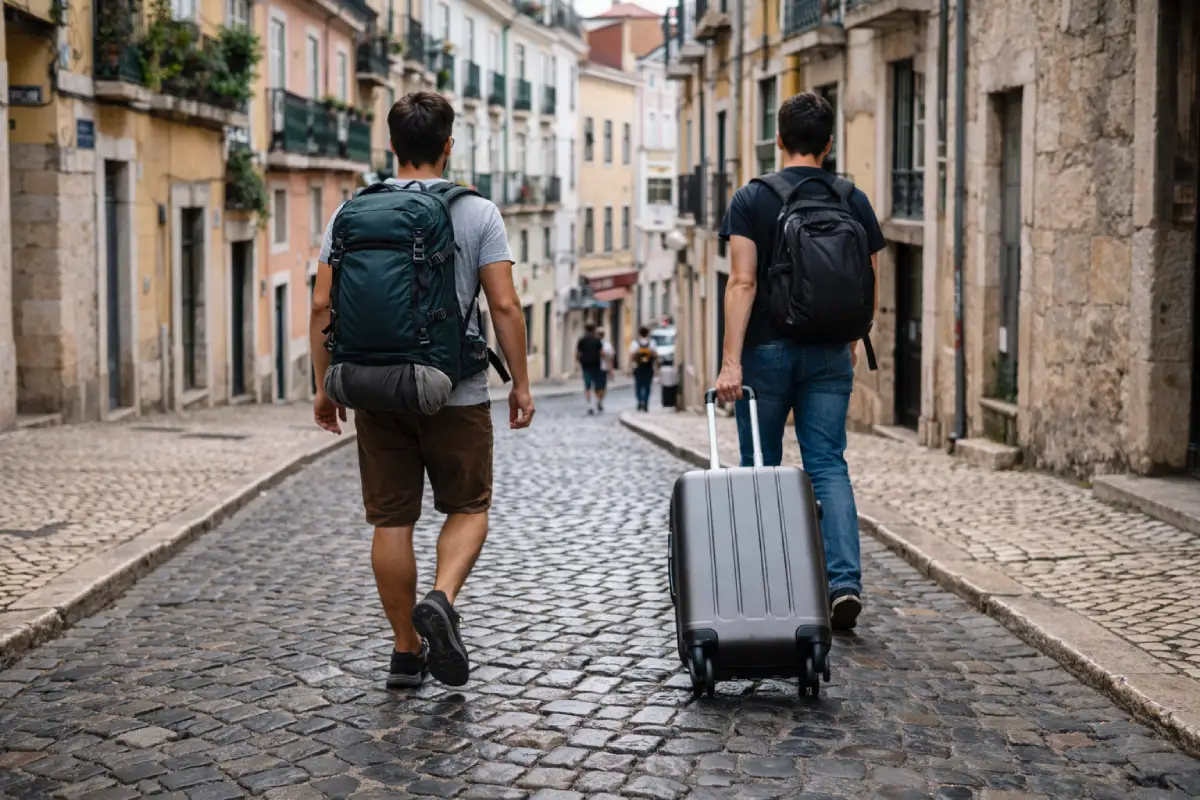
Suitcases roll smoothly in airports but struggle on cobblestone streets, uneven sidewalks, and stair-heavy train stations. Backpacks distribute weight evenly and allow hands-free movement.
If your Europe trip includes frequent city changes, public transport transfers, or historic neighborhoods, a backpack typically improves overall mobility.
In this context, choosing between 30L, 40L, and 50 bidaia-motxila becomes part of a broader strategy: move efficiently rather than carry maximum capacity.
Backpack Size for 7 Days vs 10 Days in Europe
For a 7-day Europe trip, 40 is often ideal. It allows enough clothing rotation while maintaining cabin compatibility.
For 10 days, the decision becomes climate-dependent. Warm summer travel may still work within 40L if laundry is available. Colder seasons or bulkier outfits may push the need toward 50L.
Duration alone does not determine volume. Climate and packing discipline influence capacity requirements more than day count.
How to Pack Efficiently for Europe — Making 30L or 40L Work
Backpack size only solves half the problem. Packing strategy determines whether your chosen volume feels efficient or restrictive.
Travelers who struggle with capacity usually overpack “just in case” items. Europe travel rewards flexibility over redundancy.
Prioritize Layering Over Bulk
European climates can shift throughout the day, especially in spring and autumn. Instead of packing multiple heavy garments, choose lightweight layers.
A compact insulated jacket plus a waterproof shell often replaces:
-
A thick coat
-
A heavy hoodie
-
A separate rain jacket
Layering reduces volume while maintaining adaptability.
Shoes are the largest space consumers in any backpack. For Europe trips involving walking tours and train transfers:
More than two pairs usually pushes a 40L pack toward compression limits.
Plan Laundry Instead of Overpacking
For trips longer than five days, access to laundry dramatically reduces volume needs. Many European cities offer laundromats or hotel laundry services.
Instead of packing 10 outfits for 10 days, pack five and rotate.
Use Compression Strategically
Compression packing cubes can reduce clothing volume by approximately 20–30%. However, over-compressing makes backpacks rigid and harder to fit into overhead bins.
Balance organization with flexibility.
Decision Framework — What Size Backpack Should You Choose for Europe?
Rather than asking, “What size is best?” use this structured decision method.
Step 1: Define Climate
Warm, dry summer travel reduces clothing bulk.
Cold, wet, or layered climates increase volume significantly.
Step 2: Define Movement Frequency
Are you staying in one city or changing locations every two days?
Frequent transfers reward lighter, smaller backpacks.
Step 3: Define Airline Strategy
Carry-on only?
Budget airline heavy enforcement?
Flexible with checked luggage?
If cabin compliance is important, 30L or 40L usually align better.
Step 4: Define Packing Personality
Minimalist packers can stretch 30L further.
Comfort-oriented packers often prefer 40L.
Gear-heavy travelers may require 50L.
The Mobility Advantage of Smaller Backpacks in Europe
One underestimated factor is fatigue.
Walking through Rome’s historic districts, navigating Paris Metro staircases, or transferring trains in Berlin with a fully loaded 50L pack can quickly reveal the value of lighter systems.
A slightly smaller bag:
In dense urban environments, mobility often improves overall travel comfort more than additional storage capacity.
When to Choose 30L, 40L, or 50L for Europe — Summary Logic
Aukeratu 30L if:
Aukeratu 40 if:
Aukeratu 50 if:
The best backpack size for Europe is the one that matches real conditions — not theoretical duration.
Final Perspective: Europe Travel Is About Movement, Not Volume
Europe rewards flexibility. Compact streets, rail networks, historic architecture, and strict airline policies make oversized luggage inconvenient.
For most travelers, 40L represents the optimal balance between capacity and agility.
30L works for disciplined packers and short summer routes.
50L serves winter travelers and extended journeys.
The right decision aligns backpack size with climate, movement frequency, and packing strategy.
The goal is not maximum space.
The goal is efficient movement across cities.
Ohiko galderak
1. Is 40L enough for a Europe trip?
For most 7–10 day Europe trips, a 40L backpack provides sufficient capacity. It supports multiple outfits, toiletries, and electronics while remaining manageable for train transfers and airline cabin compliance. Climate and packing style ultimately determine whether it feels comfortable or tight.
2. Is 30L too small for Europe travel?
30L can work for short summer trips or minimalist travelers. However, winter clothing, multiple shoes, or frequent city changes may make 30L restrictive. It performs best in warm climates and carry-on-focused itineraries.
3. Is 50L too big for Europe?
50L is not inherently too large, but it may feel cumbersome in urban environments. It is most appropriate for winter travel, outdoor routes, or extended trips without laundry access. For typical city-focused travel, it may exceed practical needs.
4. What size backpack for 2 weeks in Europe?
Two-week trips vary significantly by climate. In summer with laundry access, 40L may suffice. In colder conditions or gear-heavy travel, 50L provides additional flexibility. Duration alone does not determine volume requirements.
5. Can I travel Europe carry-on only?
Yes. Many travelers successfully explore Europe using 30L or 40L backpacks that comply with cabin size restrictions. Careful packing, lightweight clothing, and strategic layering are key to maintaining carry-on-only travel efficiency.
Erreferentziak
-
“Carry-On Baggage Size and Weight Guidelines” — International Air Transport Association (IATA), IATA Cabin Standards Documentation
-
“Traveling Europe by Train: Luggage and Mobility Tips” — Rick Steves, Rick Steves’ Europe Travel Guide
-
“How to Choose the Right Backpack Volume” — REI Co-op Expert Advice, REI
-
“Airline Personal Item and Cabin Baggage Policies Comparison” — Skyscanner Travel Research Team, Skyscanner
-
“Urban Mobility and Travel Load Management Study” — Journal of Travel Medicine & Health Research
-
“Backpacking Capacity and Ergonomic Load Distribution” — Outdoor Industry Association (OIA) Research Report
-
“Budget Airline Cabin Baggage Enforcement in Europe” — European Consumer Travel Association (ECTA)
-
“Packing Light for Multi-City European Travel” — Lonely Planet Travel Editors, Lonely Planet Guide Series
Backpack Size Decision for Europe Trip: How to Choose the Right Volume
What is the best backpack size for a Europe trip?
The ideal backpack size depends on multiple factors. For travelers heading to Europe for a week or more, the most balanced option is a **40L backpack**, which offers enough capacity for clothing and essentials while still being easy to carry through train stations and narrow streets. A **30L backpack** works best for short trips or minimalist travelers, while a **50L backpack** becomes essential for winter travel or those carrying bulky equipment like photography gear or camping equipment.
Why is 30L enough for a short Europe trip?
A **30L backpack** is compact and ideal for summer trips where lightweight clothing and minimal packing are required. It can easily fit into airline carry-on limits and provides the freedom to move easily through crowded European streets. However, for longer trips or those requiring heavy outerwear, **40L** or **50L** backpacks provide greater flexibility.
When should you opt for a 40L backpack?
A **40L backpack** offers the perfect balance between packing capacity and mobility. This size is ideal for multi-city trips where you need to carry extra clothing and accessories. It also works well for longer trips where laundry access is available and weather conditions are mild to moderate. For most travelers, **40L** provides ample room without being too bulky.
Considerations for 50L backpacks in Europe
When traveling to cold climates or engaging in outdoor activities, a **50L backpack** provides the additional space needed to carry thicker clothing, winter gear, or professional equipment. The added space reduces the need for tight packing but may require more effort to carry. It’s important to consider the type of trip, transportation methods, and the level of comfort you need when choosing between 40L and 50L.
Final Thought: Backpack Size for Europe
Ultimately, the right backpack size for your European trip depends on your itinerary, packing style, and climate. **30L backpacks** are perfect for minimalists and short trips, **40L** works for most travelers seeking a balanced experience, while **50L** backpacks are necessary for those needing extra space for winter travel or specialized gear. Make your choice based on your travel needs and packing habits, and consider mobility over capacity for the most comfortable journey.