Laburpen azkarra
This guide explains how parents can choose the right school bag for kids by focusing on size, weight, ergonomic design, material durability, and safety features. Instead of prioritizing style or brand alone, it outlines how a properly fitted school bag supports posture, comfort, and daily usability for kindergarten and primary school children. The article provides practical considerations to help families select a school bag that matches a child’s age, body structure, and everyday school needs.
Sarrera
Why Choosing the Right School Bag for Kids Matters More Than You Think
For many families, a school bag is treated as a simple back-to-school purchase. In reality, the right school bag for kids plays a far more important role in a child’s daily comfort, posture, safety, and long-term physical development. Children carry their school bags every weekday, often for several hours at a time, and the wrong choice can quietly create strain on their shoulders, back, and spine.
Unlike adults, children’s bodies are still developing. Their muscles, bones, and posture habits are more sensitive to uneven weight distribution and poor ergonomics. A poorly designed or oversized bag can contribute to fatigue, discomfort, and even posture issues over time. This is why choosing the right school bag should be based on fit, function, and comfort—not just appearance or price.
This guide explains how parents can choose a suitable school bag for kids by understanding weight limits, sizing, ergonomic design, materials, safety features, and common mistakes to avoid. The goal is not to find the most popular or stylish option, but the one that supports a child’s daily school life in a healthy and practical way.
What Makes a School Bag Suitable for Kids
Weight and Comfort Considerations
One of the most important factors when choosing a school bag for kids is weight. A bag that looks manageable in a store can quickly become too heavy once books, notebooks, stationery, lunch boxes, and water bottles are added.
Health professionals commonly recommend that a fully loaded school bag should not exceed 10–15% of a child’s body weight. Exceeding this range on a regular basis increases pressure on the shoulders and lower back, especially for younger children. This is why a lightweight school backpack for children is often a better choice than one with excessive padding, rigid panels, or unnecessary compartments.
Comfort also depends on how the weight is distributed. Bags that sit too low or pull backward force children to lean forward while walking, which can strain the neck and spine. A well-designed bag should sit close to the body and feel balanced rather than dragging the shoulders down.
Size and Capacity for Daily School Needs
Size matters just as much as weight. Many parents choose a larger bag with the idea that it will last longer as their child grows. However, an oversized bag often leads to poor weight distribution and unnecessary strain.
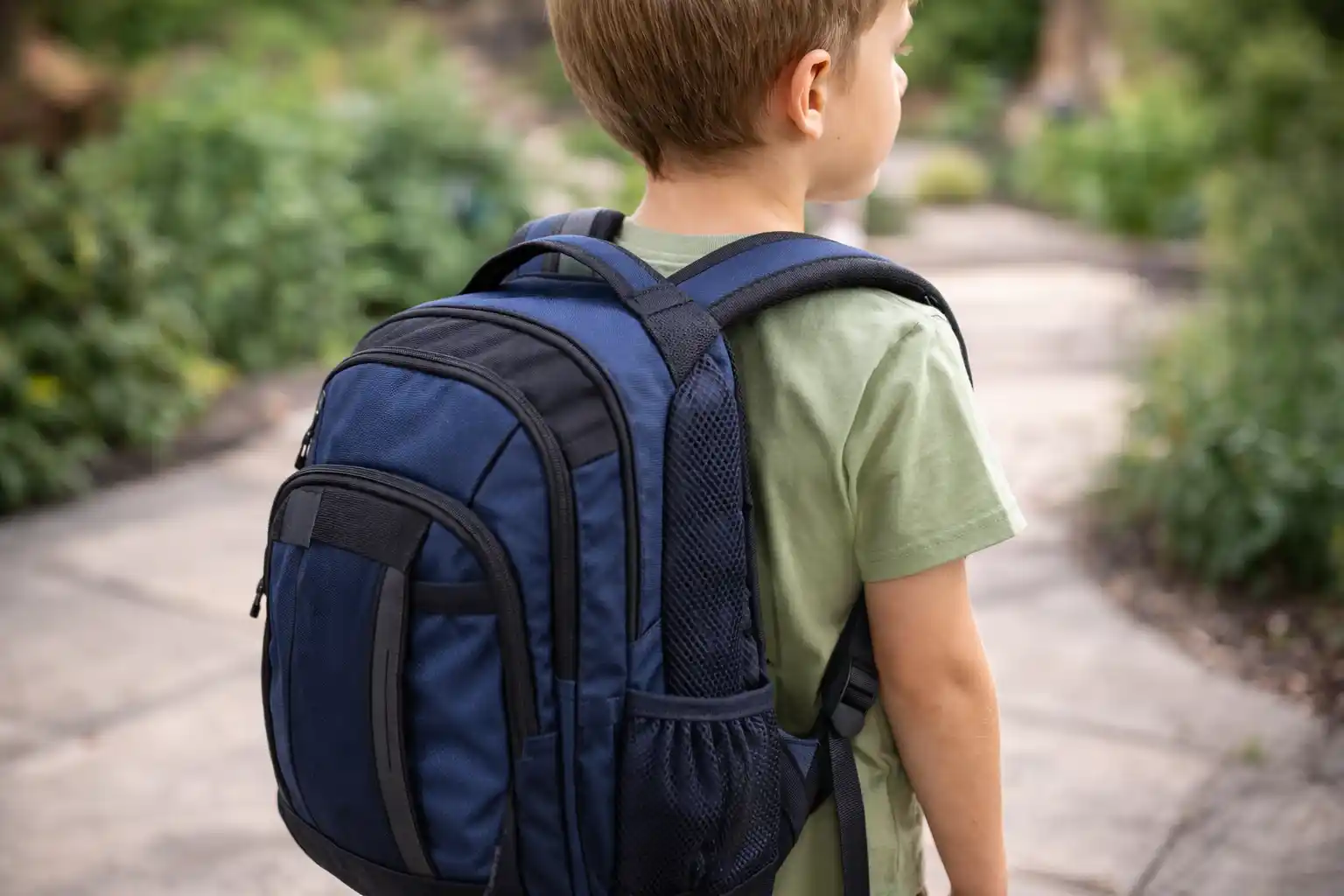
The ideal school bag size for kids should match the child’s height and torso length. The top of the bag should sit just below the shoulders, and the bottom should rest around the lower back—not below the hips. Capacity should be sufficient for daily school items, but not so large that it encourages carrying unnecessary weight.
A properly sized bag helps children develop good carrying habits and reduces the risk of discomfort throughout the school day.
How to Choose a School Bag Based on Your Child’s Age
School Bags for Kindergarten Kids
Young children in kindergarten have very different needs compared to older students. Their school bags typically carry light items such as snacks, a water bottle, spare clothes, or small books. For this age group, the best school bag for kindergarten kids is simple, lightweight, and easy to manage independently.
Soft materials, minimal compartments, and wide padded straps help ensure comfort without overwhelming small shoulders. Zippers and buckles should be easy to open and close, allowing children to use the bag without frustration.
At this stage, simplicity and comfort matter far more than storage capacity or advanced features.
School Bags for Primary School Students
As children move into primary school, the weight of their daily items increases. Textbooks, notebooks, and school supplies add up quickly, making bag design more important. A school bag for primary school students should offer better structure and support while remaining comfortable.
This is the stage where ergonomic features begin to play a bigger role. Adjustable shoulder straps, breathable back padding, and reinforced stress points help manage heavier loads. At the same time, the bag should still fit the child’s body properly rather than being chosen “one size larger for later years.”
Why Ergonomic Design Is Essential for Kids’ School Bags
Back Support and Spine Protection
An ergonomic school bag for kids is designed to support natural posture and distribute weight evenly across the back. This usually includes padded back panels that contour slightly to the shape of the child’s back, helping to reduce pressure on the spine.
Good back support prevents the bag from collapsing inward or sagging away from the body. When weight stays close to the back, children are less likely to lean forward while walking, which reduces strain on the neck and shoulders.
While ergonomic design does not replace proper posture or regular movement, it plays an important role in minimizing unnecessary stress during daily school routines.
Shoulder Straps and Load Distribution
Shoulder straps are often overlooked, yet they are one of the most critical components of a school bag. A school bag with padded straps helps distribute weight across a wider surface area, reducing pressure points on the shoulders.
Straps should be adjustable so the bag can be positioned correctly as the child grows. Narrow or thin straps tend to dig into the shoulders, especially when the bag is fully loaded. Well-designed straps improve comfort and encourage children to wear the bag properly rather than slinging it over one shoulder.
Choosing the Right Materials for a Durable School Bag
Fabric Durability and Daily Wear
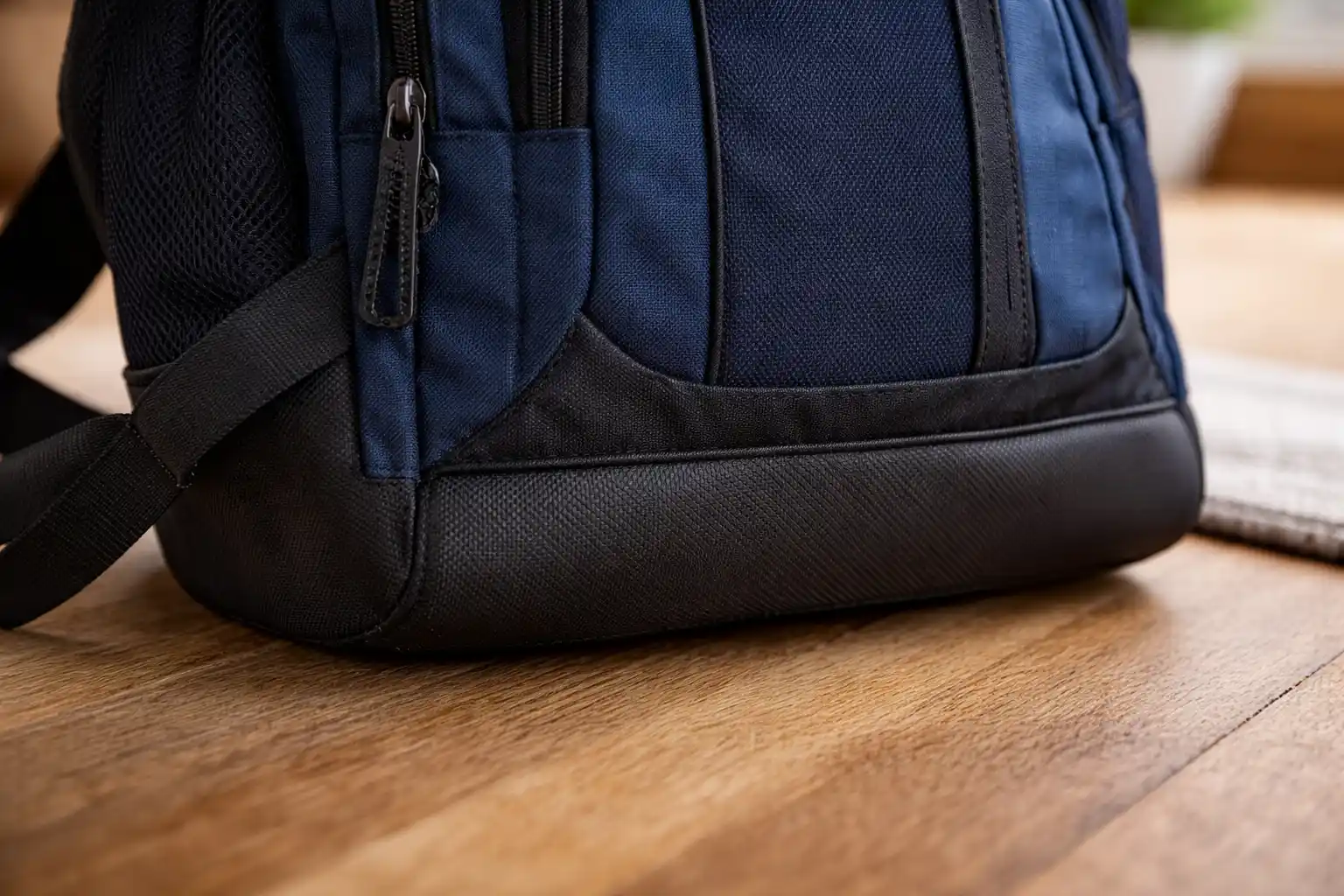
Children use their school bags intensively. Bags are placed on floors, dragged across desks, exposed to dirt, and handled roughly during playtime. A durable school bag for kids must withstand daily wear without tearing, fraying, or losing shape.
Common materials include poliesterra, nylon, and coated fabrics. Durability depends not only on the fabric itself but also on stitching quality and reinforcement at stress points such as strap attachments and base corners. A bag that looks strong but lacks proper construction may fail quickly under regular use.
Water Resistance and Easy Cleaning
School bags are frequently exposed to rain, spills, and dirt. A water resistant school backpack helps protect books and supplies from light moisture, especially during unexpected weather changes.
Parents also benefit from materials that are easy to clean. Fabrics that resist stains or can be wiped down reduce maintenance effort and keep the bag looking presentable throughout the school year. An easy to clean school bag is often more practical than one that requires special care.
Safety Features Parents Should Not Ignore
Reflective Elements and Visibility
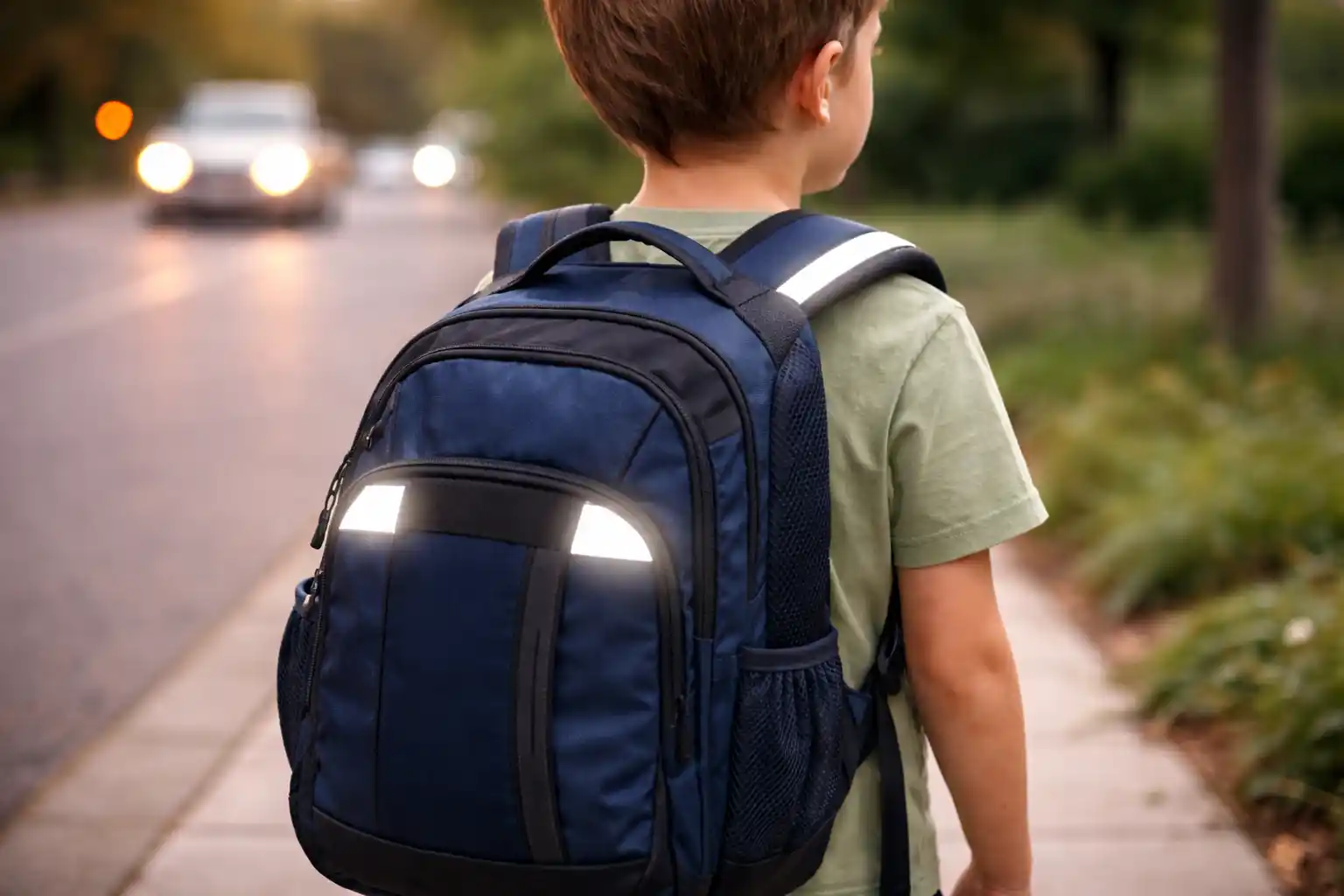
Safety is an important consideration, particularly for children who walk to school or wait near roads. A school bag with reflective strips improves visibility in low-light conditions such as early mornings or late afternoons.
Reflective elements help drivers and cyclists notice children more easily, adding an extra layer of safety without affecting comfort or usability.
Zippers and Closure Quality
Zippers should open smoothly and withstand repeated use. Poor-quality zippers are one of the most common points of failure in school bags. Closures should also be designed to avoid pinching fingers or snagging clothing, especially for younger children.
Comfort vs Style: How to Find the Right Balance
Children often care deeply about how their school bag looks. Colors, patterns, and characters can influence whether a child enjoys using the bag. While style should not be ignored, it should not outweigh comfort and fit.
The best approach is to first narrow down options that meet comfort, size, and safety requirements. From there, children can participate in choosing a design they like. This balance helps ensure that the bag is both practical and enjoyable to use.
Common Mistakes Parents Make When Buying School Bags
One common mistake is buying a bag that is intentionally oversized to last multiple years. While this may seem economical, it often leads to discomfort and poor posture. Another frequent issue is focusing on appearance or brand reputation rather than fit and ergonomics.
Ignoring weight limits and assuming that children will “get used to it” is another risk. Discomfort may not always be voiced immediately, but it can accumulate over time. Choosing the right school bag for kids means prioritizing health and comfort over trends.
A Simple Checklist for Choosing the Right School Bag for Kids
Before making a final decision, parents can use a simple checklist:
-
Is the bag lightweight when empty?
-
Does the size match the child’s height and build?
-
Are the shoulder straps padded and adjustable?
-
Is the material durable and easy to clean?
-
Are safety features such as reflective elements included?
Using this checklist helps turn an overwhelming choice into a practical decision.
Bukaera
How the Right School Bag Supports Healthy and Comfortable School Life
Choosing the right school bag is a small decision with long-term impact. A well-fitted, comfortable, and durable school bag for kids supports healthy posture, reduces daily strain, and makes school routines more comfortable.
By focusing on fit, ergonomics, materials, and safety—rather than size or trends—parents can make a choice that benefits their child throughout the school year. The right school bag is not just an accessory; it is a daily companion that supports learning, movement, and well-being.
Ohiko galderak
1. What size school bag is best for kids?
The best school bag for kids should match the child’s height and body frame rather than their age alone. A properly sized bag sits close to the back, with the top just below the shoulders and the bottom resting around the lower back. Oversized bags may encourage children to carry unnecessary items and can lead to poor weight distribution. Choosing the right size helps maintain comfort and reduces strain during daily school use.
2. How heavy should a school bag be for a child?
Most health professionals recommend that a loaded school bag should weigh no more than 10–15% of a child’s body weight. Exceeding this limit on a regular basis can place stress on the shoulders and spine. Selecting a lightweight school backpack for children and regularly checking bag contents helps prevent unnecessary load and discomfort.
3. Are ergonomic school bags really important for kids?
Yes, an ergonomic school bag for kids plays an important role in supporting posture and comfort. Features such as padded back panels, adjustable shoulder straps, and balanced weight distribution help reduce pressure on the back and shoulders. While no bag can replace good posture habits, ergonomic design minimizes strain during long school days.
4. What materials are best for a durable school bag?
A durable school bag for kids is typically made from strong fabrics such as polyester or nylon, combined with reinforced stitching at stress points. Durability depends not only on fabric choice but also on construction quality. Bags designed for daily use should resist tearing, maintain shape, and withstand frequent handling throughout the school year.
5. What safety features should parents look for in a school bag?
Parents should look for safety features such as reflective strips, smooth zippers, and secure closures. A school bag with reflective strips improves visibility in low-light conditions, helping children stay noticeable during their commute. Quality closures also reduce the risk of items falling out or fingers getting pinched during daily use.
Erreferentziak
-
Backpack Safety and Injury Prevention — American Academy of Pediatrics, Healthy Children Initiative
-
The Impact of Schoolbag Weight on Children’s Posture — Karen Grimmer, University of South Australia, Ergonomics Journal
-
Backpack Use and Musculoskeletal Health in Children — David Negrini, World Health Organization Collaborating Studies
-
Ergonomic Design Principles for Children’s Backpacks — Occupational Safety and Health Administration (OSHA), Ergonomic Guidelines
-
Textile Performance Standards for Everyday Products — The Textile Institute, Textile Progress Series
-
Visibility and Child Pedestrian Safety — National Highway Traffic Safety Administration (NHTSA), Safety Research Reports
-
Load Carriage and Spine Development in Children — British Chiropractic Association, Clinical Education Resources
-
Designing Products for Child Comfort and Safety — Consumer Product Safety Commission (CPSC), Product Safety Publications
Key Insights on Choosing the Right School Bag for Kids
Choosing a school bag for kids is not only about appearance or storage capacity. It is a practical decision that affects daily comfort, posture development, and long-term usability. A suitable school bag should match a child’s body size, sit close to the back, and distribute weight evenly rather than pulling on the shoulders or lower spine.
From a functional perspective, weight and ergonomics matter more than trends. Lightweight construction, padded and adjustable shoulder straps, and supportive back panels help reduce physical strain, especially as schoolwork and carried items increase over time. These design elements are particularly important for primary school children who carry heavier loads daily.
Material choice also plays a critical role in long-term performance. Durable fabrics, reinforced stitching, and water-resistant finishes help school bags withstand daily wear,
exposure to weather, and frequent handling. Easy-to-clean materials reduce maintenance effort for parents and help keep the bag usable throughout the school year.
Safety considerations should not be overlooked. Reflective elements improve visibility in low-light conditions, while reliable zippers and closures prevent accidental spills or discomfort during use. These features contribute to a safer and more predictable daily school routine.
Ultimately, the best school bag is one that balances comfort, durability, and age-appropriate design. Parents who evaluate school bags based on fit, function, and real-world use rather than short-term appearance are more likely to support their child’s comfort and healthy school experience over time.