Laburpen azkarra:
This backpack size guide explains what size backpack you need for travel based on climate, trip length, footwear bulk, and mobility. For many travelers, a 30L backpack works for short warm-weather trips, 40L is the most versatile carry-on travel backpack size for 4–7 days, and 50L is best for winter travel or gear-heavy itineraries. Use this complete capacity guide to decide between 30L, 40L, and 50L without overpacking or losing carry-on flexibility.
Travelers often ask, “What size backpack do I need?” The question sounds simple, but the answer depends less on destination and more on how volume behaves under different conditions. Backpack capacity is not a measure of trip length — it is a reflection of packing density, clothing structure, climate, and mobility needs.
A 30L, 40L, or 50L backpack does not represent “short,” “medium,” or “long” travel in isolation. Capacity determines how much flexibility you have inside your system. The real decision is not about maximizing space, but about matching internal volume to real packing behavior.
Understanding this difference prevents overpacking, reduces travel fatigue, and improves overall mobility.
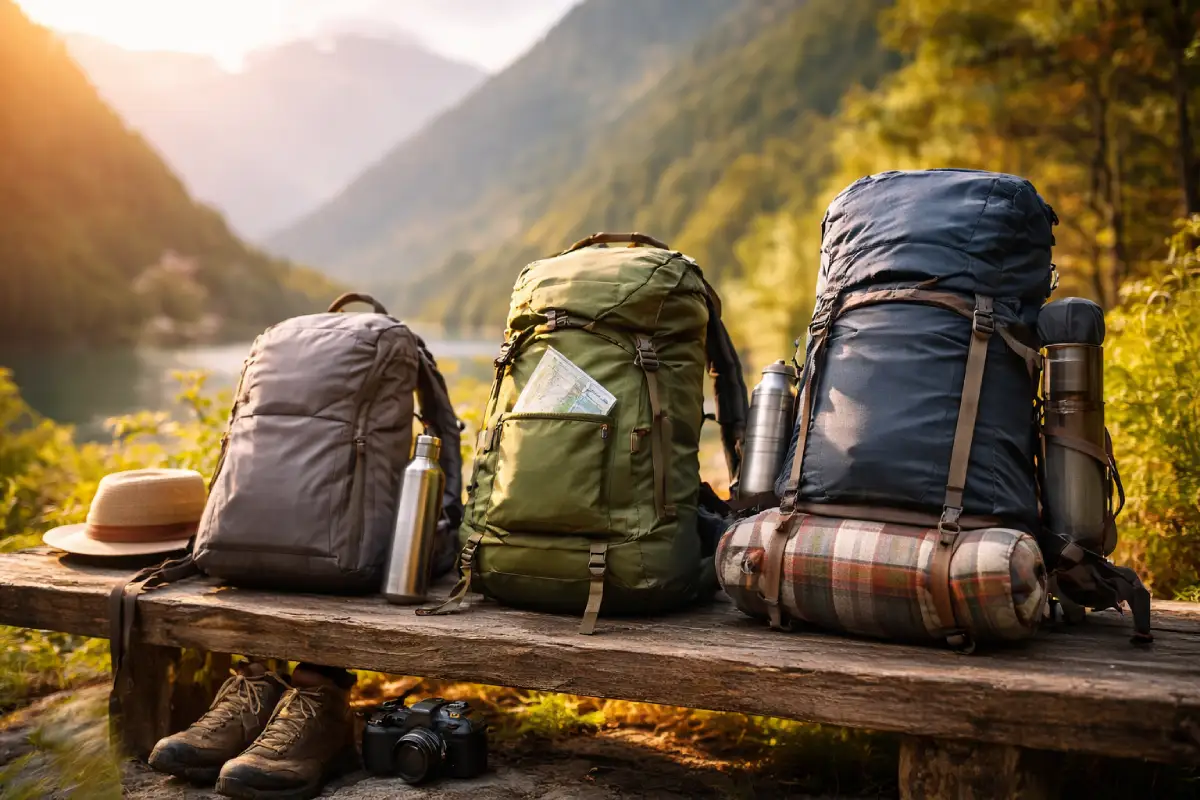
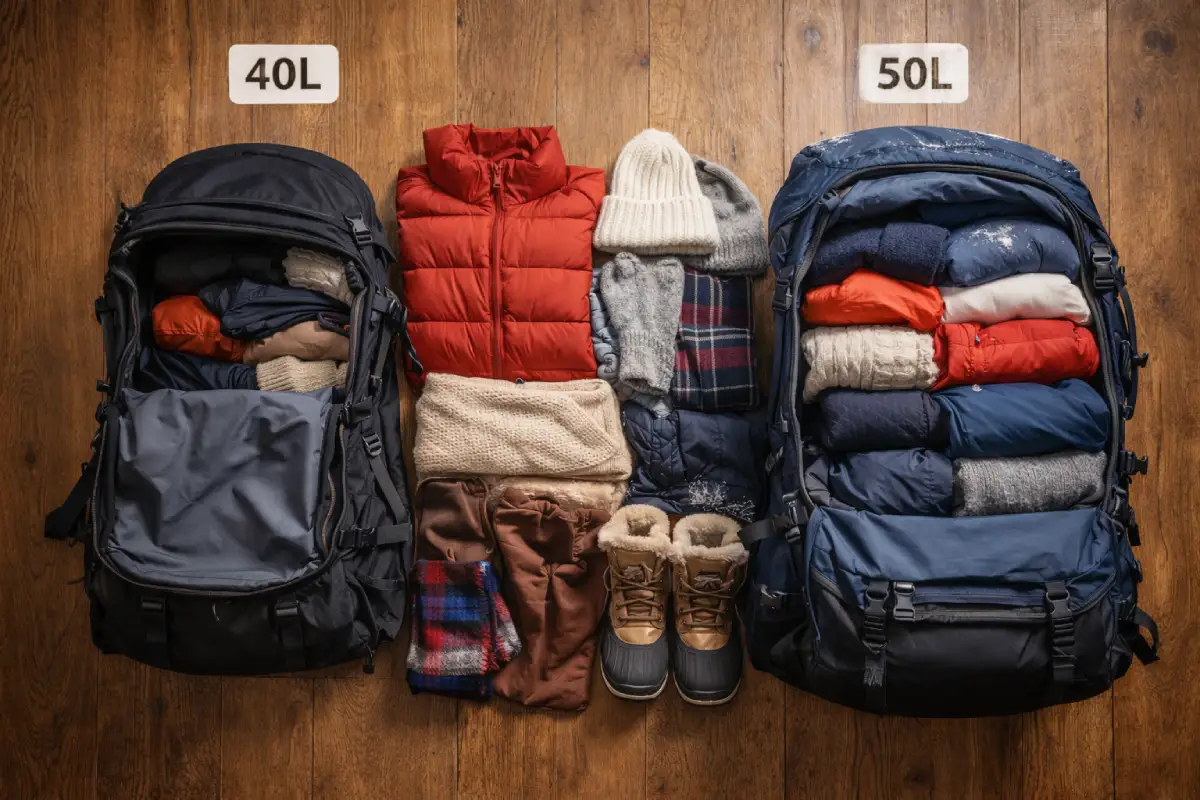
A real-world comparison of 30L, 40L, and 50L backpacks showing how packing volume increases for winter travel, especially when carrying insulated clothing and bulkier gear.
What Backpack Size Actually Measures
Backpack size is expressed in liters, which represent total internal volume. However, usable volume is influenced by:
-
Fabric thickness
-
Compartment structure
-
Shoe rigidity
-
Climate-based layering
-
Compression strategy
Two travelers carrying the same 40L backpack may experience entirely different space constraints depending on how they pack.
Summer travel compresses easily. Winter travel expands quickly. Business travel introduces rigid items. Digital nomad travel adds electronics. Volume behaves dynamically.
This is why capacity decisions should begin with packing context, not duration alone.
The Three Most Common Travel Sizes Explained
While travel styles vary, three backpack capacities dominate modern travel systems: 30L, 40L, and 50L.
30L: Controlled Minimalism
A 30L backpack represents efficient, disciplined packing. It works best when:
The advantage of 30L is mobility. Airports, train stations, urban transit, and narrow streets become easier to navigate. However, margin is limited. Bulky clothing or additional shoes quickly consume available space.
For travelers leaning toward minimalist strategies, this analysis of whether a 30L backpack is enough for international travel explores mobility, airline limits, and long-distance practicality.
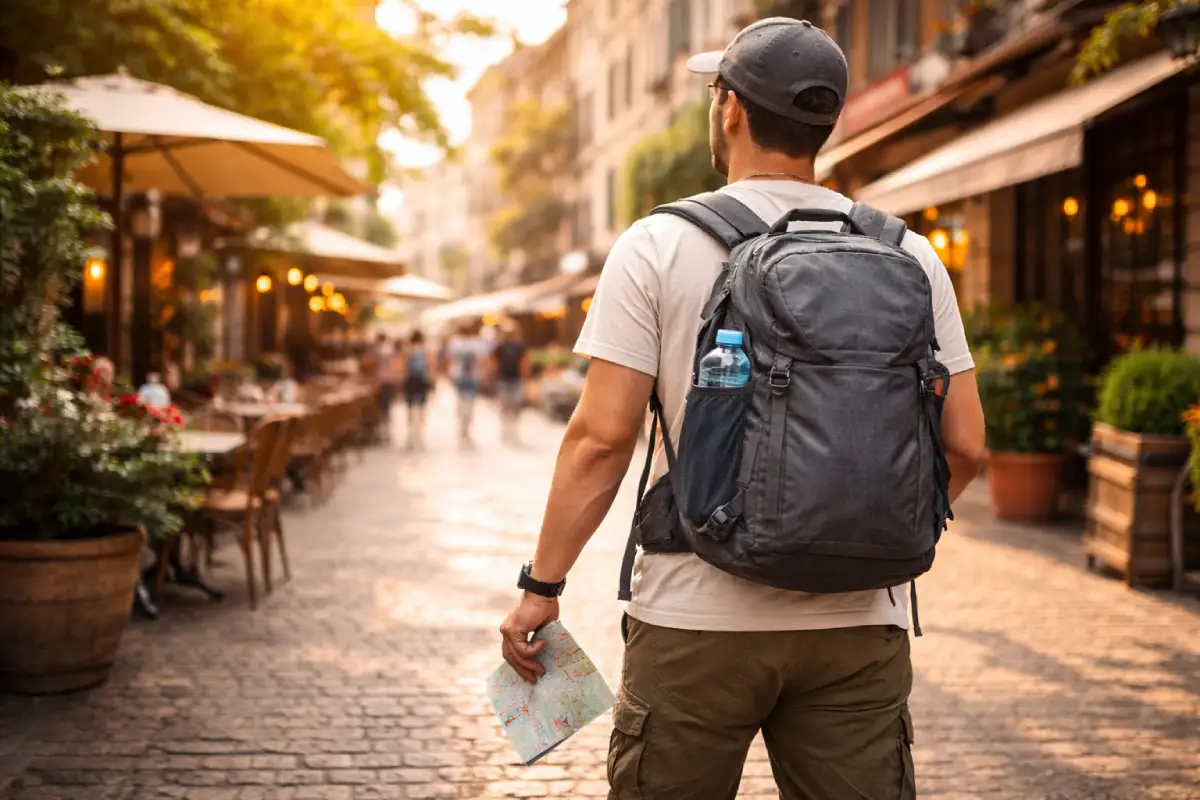
A traveler carrying a 30L backpack explores a European street, demonstrating how smaller backpacks work well for warm-weather and minimalist travel.
40L: Balanced Flexibility
A 40L backpack sits at the center of modern carry-on travel. It typically offers enough capacity for:
-
4–7 day trips
-
International carry-on compliance
-
Moderate seasonal layering
-
One extra footwear option
This size balances structure and mobility. It is often considered the most versatile option for travelers who move frequently between cities.
50L: Insulation and Margin
A 50L backpack introduces breathing room. It supports:
The trade-off is increased weight and reduced compactness. A 50L pack prioritizes packing comfort over urban agility.
None of these sizes are universally correct. Each represents a different tolerance for compression and movement.
Travelers still deciding between moderate flexibility and expanded storage may find this in-depth 40L vs 50L backpack comparison helpful for understanding mobility trade-offs and real-world volume differences.
Backpack Size by Trip Duration (Without Oversimplifying)
Many guides suggest:
-
30L for short trips
-
40L for week-long trips
-
50L for longer travel
While this works as a rough starting point, duration alone is incomplete.
A five-day summer trip to Southern Europe may fit comfortably inside 30L.
A three-day winter trip to Northern Europe may require 40L or more.
Trip length influences clothing rotation, but climate determines clothing bulk. The interaction between these two factors defines your true volume requirement.
This is why comparing trip duration without climate context often leads to misjudgment.
Climate as a Capacity Multiplier
Climate changes how clothing behaves inside a backpack.
Warm climates allow:
-
Lightweight fabrics
-
Thin layering
-
Flexible footwear
Cold climates introduce:
-
Insulated jackets
-
Wool layers
-
Structured boots
-
Thermal accessories
Winter clothing can increase packing volume by up to 30–50% compared to summer garments of similar outfit counts. The difference is not number of pieces — it is material density and air retention.
Backpack size decisions become more sensitive in colder destinations.
Mobility vs Margin: The Core Trade-Off
When choosing backpack size, you are not simply choosing volume. You are choosing friction type.
Smaller backpacks reduce:
-
Physical strain
-
Transit inconvenience
-
Overpacking temptation
Larger backpacks reduce:
-
Compression stress
-
Outfit limitation
-
Cold-weather tightness
In crowded airports and city streets, compactness improves agility. In remote or cold destinations, internal margin reduces repacking frustration.
The ideal size aligns with which friction affects your travel more: movement or compression.
Airline Carry-On Reality
Modern travel increasingly favors carry-on-only strategies. Most international airlines allow cabin luggage dimensions around 55 × 40 × 20 cm, with weight limits between 7–10 kg.
Soft 40L backpacks often align well with these requirements.
Some 30L backpacks qualify as personal items.
50L backpacks may require more careful packing to remain cabin-compliant.
Airline rules do not eliminate larger sizes, but they influence how confidently you can avoid checked baggage.
Carry-on compliance is no longer a convenience — it is part of capacity planning.
Packing Behavior Matters More Than Size
A backpack does not determine efficiency. Packing discipline does.
Travelers who struggle with 40L often:
Travelers who succeed with 30L:
-
Use layering intelligently
-
Plan mid-trip laundry
-
Wear bulky items during transit
-
Choose multi-use clothing
Capacity is the container. Strategy is the variable.
Understanding this relationship is the foundation of choosing the best backpack size for travel.
How to Choose the Right Backpack Size for Your Travel Style
At this point, the question is no longer “Is 40L enough?”
The real question becomes:
What kind of traveler are you — and what kind of friction are you willing to tolerate?
Backpack size selection is not about maximum storage. It is about alignment between climate, duration, packing behavior, and movement frequency.
Let’s break it down into a structured decision model.
Step 1: Define Your Climate Intensity
Climate acts as a volume multiplier.
Mild or warm destinations allow compression. Lightweight fabrics fold efficiently and adapt to tighter internal space.
Cold destinations expand your system automatically. Insulated jackets trap air. Wool retains structure. Boots occupy rigid space. Gloves, scarves, and thermal layers introduce small but cumulative bulk.
If your trip includes sub-zero environments or outdoor winter exposure, your volume requirement shifts upward regardless of duration.
Climate severity always overrides trip length when determining backpack size.
Step 2: Assess Trip Duration — Realistically
Duration affects clothing rotation, not just total quantity.
For 2–3 days:
A 30L backpack may be sufficient if packing is disciplined.
For 4–7 days:
40L becomes the balanced option for most travelers.
For 8+ days without laundry:
50L provides margin, especially if seasonal layering is required.
However, a five-day winter trip may require more volume than a seven-day summer trip. Duration must be interpreted through seasonal context.
Step 3: Evaluate Mobility Requirements
How often will you move?
Backpack size matters most when movement is frequent.
Urban multi-city travel:
Smaller packs reduce fatigue and improve maneuverability in trains, buses, and narrow sidewalks.
Single-destination stays:
Larger packs introduce less inconvenience once unpacked.
Backpack size influences how efficiently you transition between environments. Mobility increases the value of compactness.
If your itinerary includes frequent train transfers or compact urban stays, this guide on the best backpack size for a Europe trip examines mobility across historic cities and public transport systems.
Shoes are often the hidden capacity disruptor.
Light sneakers compress. Winter boots do not. Hiking boots maintain structure and consume fixed volume.
If your travel requires multiple rigid footwear options, capacity requirements increase significantly.
Limiting packed footwear is often more impactful than reducing clothing count.
Step 5: Decide Between Compression or Margin
This is the core trade-off.
Choosing 30L or 40L prioritizes compression discipline. You accept tighter packing in exchange for mobility.
Choosing 50L prioritizes margin. You accept slightly increased bulk in exchange for flexibility and reduced internal pressure.
Neither is objectively superior. The correct decision reflects your tolerance for packing density versus your desire for space comfort.
Backpack Size by Travel Scenario
Instead of asking “Which size is best?”, consider scenario alignment.
Urban International Travel
Frequent transit, cabin luggage compliance, compact hotel rooms.
→ 40L often provides optimal balance.
Short International Trips
2–4 days in warm climates with efficient packing.
→ 30L can work effectively.
Winter City Travel
Layered clothing, moderate cold, structured footwear.
→ 40L works with discipline; 50L adds comfort.
Cold-Weather Outdoor Travel
Insulated jackets, boots, accessories, extended exposure.
→ 50L provides necessary margin.
Extended Multi-Week Travel
Clothing rotation, electronics, mixed climates.
→ 50L increases adaptability.
Backpack size aligns with environmental complexity more than geographic region.
Common Mistakes When Choosing Backpack Size
Even experienced travelers miscalculate capacity because they focus on days, not density.
Mistake 1: Choosing by Trip Length Alone
Five days does not equal 40L automatically. Climate and footwear change the equation.
Mistake 2: Underestimating Winter Bulk
Winter garments consume space disproportionately compared to summer clothing.
Mistake 3: Overestimating Carry-On Limits
Some assume all 50L packs fit overhead bins. Compliance depends on structure and packing density.
Mistake 4: Ignoring Movement Frequency
A slightly oversized backpack feels manageable in a hotel room, but exhausting during repeated transit.
Avoiding these errors simplifies capacity selection.
The Capacity Balance Model
To simplify decision-making, use this alignment framework:
If climate is warm
AND movement is frequent
AND footwear is minimal
→ Lean toward 30L–40L
If climate is cold
OR footwear is bulky
OR trip exceeds one week without laundry
→ Lean toward 40L–50L
If you value mobility over packing ease
→ Choose the smaller viable option
If you value packing comfort over compactness
→ Choose the larger margin option
Backpack size is a balance equation, not a fixed rule.
Final Perspective: The Best Backpack Size Is Contextual
There is no universal “perfect size.”
30L supports disciplined minimalism.
40L supports balanced flexibility.
50L supports insulation and adaptability.
The correct size emerges from the intersection of:
Climate
Iraupena
Footwear
Higikortasun
Packing behavior
When these variables align, capacity feels natural. When they conflict, the backpack feels either restrictive or excessive.
The best backpack size for travel is not the largest one available. It is the one that matches how you actually move, pack, and adapt during your journey.
Ohiko galderak
1. What size backpack is best for international travel?
The best backpack size for international travel depends on climate, trip duration, and packing discipline. For short trips in warm climates, a 30L backpack may be sufficient. For 4–7 day trips with moderate layering, 40L is often the most balanced choice. For winter travel or longer journeys without laundry access, 50L provides additional flexibility and packing margin.
2. Is 40L enough for a week of travel?
Yes, a 40L backpack is typically enough for a week-long trip in mild or warm climates if you pack efficiently. It supports multiple outfits, one additional pair of shoes, and essential electronics while remaining carry-on friendly for most airlines. In colder climates with heavier clothing, space may feel tighter.
3. Is 50L too big for travel?
A 50L backpack is not necessarily too big, but it may reduce mobility during frequent transit. It works best for cold-weather trips, outdoor activities, or longer journeys where extra clothing and gear are required. Travelers prioritizing compact carry-on convenience may prefer 40L instead.
4. Can I travel carry-on only with a 40L backpack?
In most cases, yes. Many soft 40L travel backpacks fit within international airline cabin size limits, typically around 55 × 40 × 20 cm. However, compliance depends on structure, packing density, and airline policies. Always verify specific airline restrictions before departure.
5. Is 30L enough for multi-day travel?
A 30L backpack can work for 2–4 day trips, especially in warm climates or when laundry access is available. It requires disciplined packing and limited footwear. For winter destinations or trips longer than five days, 40L generally offers better flexibility.
6. How much does climate affect backpack size?
Climate significantly affects backpack capacity needs. Winter clothing and insulated footwear can increase packing volume by 30–50% compared to summer garments. Cold-weather travel often requires more space even for shorter trips due to bulkier materials.
7. How do I choose between 40L and 50L?
The decision depends on climate intensity, trip duration, footwear bulk, and mobility frequency. If you prioritize movement efficiency and carry-on compliance, 40L is often ideal. If you require insulation, extra gear, or longer clothing rotation, 50L provides additional margin.
Backpack Size Decision Insight
What does backpack size really determine?
Backpack size determines your available “packing margin” — how much flexibility you have after essentials are loaded. Liters are not a direct measure of trip length. Clothing structure, footwear rigidity, and climate-driven layering change how efficiently volume can be used, which is why two travelers can experience the same 40L backpack very differently.
Why does climate change the recommended travel backpack size?
Warm-weather travel compresses easily, while cold-weather travel expands. Insulated jackets trap air, wool layers retain thickness, and winter boots occupy fixed volume. In practical terms, winter packing often requires 30–50% more space than summer packing for the same number of days, making climate intensity a primary driver of capacity choice.
How should you choose between 30L, 40L, and 50L?
Choose 30L when your trip is short, warm, and footwear is minimal. Choose 40L when you want a balanced carry-on backpack size that supports 4–7 days with moderate flexibility. Choose 50L when insulation, outdoor gear, or extended travel without laundry increases bulk, and you need margin to reduce compression stress.
Option analysis: mobility vs packing margin
Smaller backpacks reduce friction during movement — airports, trains, stairs, and city navigation become easier. Larger backpacks reduce friction during packing — less compression, fewer compromises, and more adaptable layering. The best backpack size for travel is the smallest option that still gives you enough margin for your climate and itinerary.
Consideration: carry-on reality and packing behavior
Airline cabin limits make structure and packing density as important as liters. A soft 40L pack is often the safest carry-on choice, while a fully loaded 50L may require careful compression or airline-specific checks. Ultimately, disciplined packing — limiting footwear, using layers wisely, and avoiding duplicate “just-in-case” items — has more impact than size alone.
Strategic conclusion
Use a simple decision model: climate intensity + trip duration + footwear bulk + movement frequency. When these variables align, capacity feels natural and travel becomes lighter, faster, and less stressful. This guide acts as a central reference you can revisit before any trip to choose the right backpack size with confidence.