ملخص سريع:
تعمل أنظمة الظهر ذات التهوية والألواح الخلفية التقليدية لحقيبة الظهر على توفير الراحة بطرق مختلفة بشكل أساسي. تركز التصميمات ذات التهوية على تدفق الهواء وتقليل الحرارة وإدارة الرطوبة، مما يجعلها مناسبة لحقائب المشي لمسافات طويلة المستخدمة في المناخات الدافئة والأحمال الخفيفة. تؤكد اللوحات الخلفية التقليدية على ثبات الحمل، وتوزيع الضغط، وتقليل التعب على المدى الطويل، وهو أمر ضروري لحقائب الرحلات التي تحمل أوزان أثقل على مسافات طويلة. تشرح هذه المقالة كيفية تصميم كل نظام، وكيفية أدائه في ظل ظروف العالم الحقيقي، وكيف يمكن للمتنزهين والمتنزهين اختيار تصميم اللوحة الخلفية المناسب بناءً على التضاريس والحمل والمدة بدلاً من ادعاءات التسويق.
مقدمة: لماذا تعتبر الألواح الخلفية لحقيبة الظهر أكثر أهمية مما يدركه معظم المتنزهين
بالنسبة للعديد من المستخدمين في الهواء الطلق، اختر أ حقيبة المشي لمسافات طويلة أو حقيبة الرحلات غالبًا ما يبدأ بالسعة أو الوزن أو متانة القماش. ومع ذلك، في الاستخدام الواقعي - خاصة بعد 3-6 ساعات على الطريق - نادرًا ما يتم تحديد الراحة من خلال الحجم وحده. ويظهر الاختلاف الحقيقي في الواجهة بين حقيبة الظهر وجسم الإنسان: نظام اللوحة الخلفية.
آلام الظهر, تراكم الحرارة، وضغط الحمل غير المتكافئ، والتعب المبكر ليست مضايقات عشوائية. إنها نتائج يمكن التنبؤ بها لكيفية إدارة اللوحة الخلفية لحقيبة الظهر لتدفق الهواء ونقل الأحمال والحركة الديناميكية. هذا هو المكان الذي يصبح فيه الجدل بين الأنظمة الخلفية ذات التهوية والألواح الخلفية التقليدية لحقيبة الظهر أكثر من مجرد تفضيل تصميمي - بل يصبح قرارًا هندسيًا.
فهم الفرق بين حقيبة التنزه وحقيبة الرحلات يساعد تصميم اللوحة الخلفية المستخدمين والمشترين والمصنعين على اتخاذ خيارات مستنيرة تتوافق مع التضاريس والحمل والمدة.
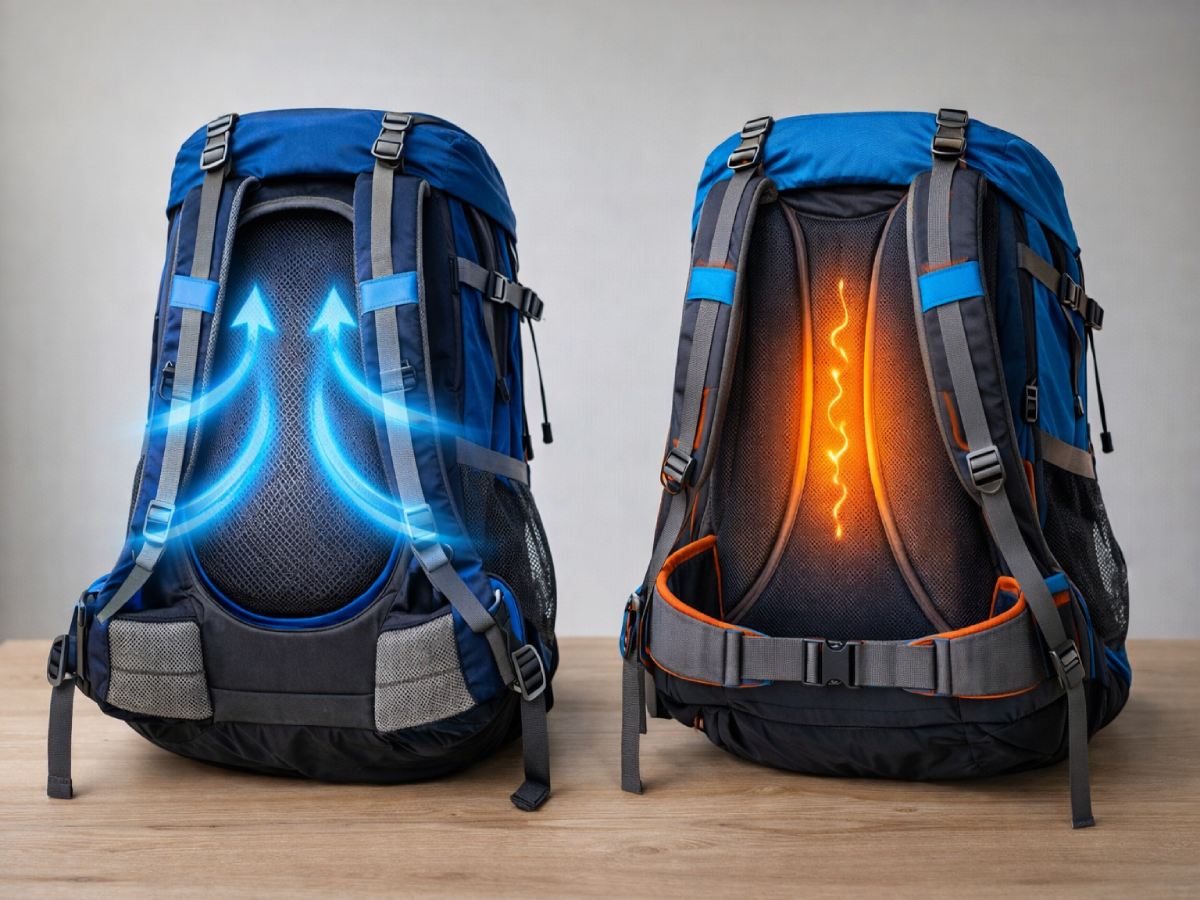
تعمل أنظمة الظهر ذات التهوية على إنشاء تدفق هواء بين حقيبة الظهر وظهر المستخدم، بينما تعطي الألواح المبطنة التقليدية الأولوية لاستقرار الحمل والاتصال المباشر.
فهم اللوحات الخلفية لحقيبة الظهر: واجهة التحميل المخفية
ما الذي تفعله اللوحة الخلفية لحقيبة الظهر في الواقع
اللوحة الخلفية لحقيبة الظهر ليست مجرد حشوة. تعمل كواجهة ميكانيكية توزع الحمل من جسم العبوة إلى الهيكل العظمي لمرتديها. من الناحية المثالية، يجب نقل 60-70% من إجمالي الحمل إلى الوركين، في حين يتم تثبيت 30-40% المتبقية عن طريق الكتفين. يؤدي التصميم السيئ للوحة الخلفية إلى تعطيل هذا التوازن، مما يزيد من إرهاق العضلات وإجهاد المفاصل.
من الناحية الهندسية، تتحكم اللوحة الخلفية في ثلاثة متغيرات رئيسية:
تظهر الدراسات في بيئة العمل أن الضغط غير المتساوي الذي يتجاوز 4-6 كيلو باسكال في مناطق الظهر الموضعية يزيد بشكل كبير من الشعور بعدم الراحة خلال 90 دقيقة من الحركة المستمرة.
كيف يؤثر تصميم اللوحة الخلفية على أداء المشي لمسافات طويلة والرحلات
في المشي لمسافات قصيرة السيناريوهات والتوقفات المتكررة والأحمال الخفيفة تقلل من الضغط التراكمي. ومع ذلك، أثناء الرحلات - حيث غالبًا ما يحمل المستخدمون ما بين 12 إلى 20 كجم لعدة أيام - يؤثر أداء اللوحة الخلفية بشكل مباشر على القدرة على التحمل.
قد تبدو اللوحة الخلفية غير المتطابقة مقبولة عند بداية الطريق ولكنها يمكن أن تسبب عدم استقرار تدريجي، وتمايل العبوة، والضغط الحراري مع زيادة المسافة.
ما هو نظام الظهر التهوية؟
المبادئ الهيكلية وراء الأنظمة الخلفية ذات التهوية
تم تصميم أنظمة الظهر ذات التهوية لتقليل الاتصال المباشر بين جسم حقيبة الظهر وظهر مرتديها. تشمل الهياكل الأكثر شيوعًا ما يلي:
-
ألواح شبكية معلقة تحت التوتر
-
إطارات منحنية أو مقوسة تخلق تجويفًا لتدفق الهواء
-
قنوات التحميل المحيطية التي تعيد توجيه الضغط إلى حواف الإطار
تخلق هذه الأنظمة فجوة هوائية تبلغ حوالي 20-40 ملم، مما يسمح بتدفق الهواء الحملي أثناء الحركة. تظهر القياسات الميدانية أن هذا التصميم يمكن أن يقلل درجة حرارة السطح الخلفي بمقدار 2-4 درجات مئوية مقارنة بألواح التلامس الكاملة في ظل ظروف المشي المعتدلة.
المواد الشائعة المستخدمة في الأنظمة الخلفية ذات التهوية
تعتمد أنظمة التهوية على تآزر المواد بدلاً من سمك الحشو. تشمل المكونات النموذجية ما يلي:
-
أقمشة شبكية عالية الشد (غالبًا مزيج من البوليستر أو النايلون 200D-300D)
-
إطارات من الألومنيوم أو الألياف الزجاجية خفيفة الوزن مع حدود تشوه مرنة أقل من 5%
-
الأقمشة المباعدة للتنفس والتي تزيد نفاذية الهواء فيها عن 500 مم/ثانية
استخدام الرغوة ضئيل للغاية ويتم وضعه بشكل استراتيجي لتجنب عرقلة مسارات تدفق الهواء.
ما هي اللوحة الخلفية التقليدية لحقيبة الظهر؟
الألواح الخلفية ذات القاعدة الرغوية وتصميمات الاتصال المباشر
تعتمد الألواح الخلفية التقليدية على الاتصال المباشر بين حقيبة الظهر وظهر المستخدم. تستخدم هذه الأنظمة عادةً طبقات من رغوة EVA أو PE تتراوح سماكتها من 8 إلى 15 مم، وأحيانًا يتم دمجها مع قنوات مقولبة.
على الرغم من أن تدفق الهواء محدود، إلا أن لوحات الاتصال المباشر تتفوق في استقرار الحمل. يكون توزيع الضغط أكثر اتساقًا، وغالبًا ما يحافظ على ضغط التلامس ضمن نطاق أضيق من 2 إلى 4 كيلو باسكال عند تركيبه بشكل صحيح.
لماذا لا تزال اللوحات الخلفية التقليدية تهيمن على العديد من حقائب التنزه سيرًا على الأقدام
على الرغم من شعبية التصاميم التي تركز على التهوية، إلا أن الألواح التقليدية تظل شائعة في المنازل صانع حقائب التنزه و مصنع حقائب الرحلات الإنتاج لعدة أسباب:
للمصنعين الذين ينتجون كميات كبيرة حقيبة الرحلات بالجملة غالبًا ما تفوق الطلبات والاتساق والمتانة الحد الأقصى من فوائد تدفق الهواء.
الألواح الخلفية ذات التهوية والألواح الخلفية التقليدية: مقارنة هندسية جنبًا إلى جنب
أداء تدفق الهواء وتبديد الحرارة
يمكن لأنظمة التهوية أن تزيد من كفاءة التبريد بالتبخير بحوالي 15-25% في المناخات الدافئة. تتحسن معدلات تبخر العرق، مما يقلل من الرطوبة الملحوظة.
تستفيد الألواح التقليدية، رغم أنها أكثر دفئًا، من العزل الحراري في البيئات الباردة، مما يقلل من فقدان الحرارة أثناء فترات الراحة.
ثبات التحميل والتحكم في تأرجح العبوة
متوسط سعة تأرجح العبوة - التي يتم قياسها كحركة جانبية أثناء المشي:
على الأراضي غير المستوية، يمكن أن يؤدي زيادة التأثير إلى رفع استهلاك الطاقة بنسبة تصل إلى 8%، وفقًا لنماذج كفاءة المشي.
توزيع الوزن ومركز الثقل
تعمل أنظمة التهوية على تحويل مركز التحميل إلى الخلف قليلاً (عادةً 10-20 ملم). على الرغم من أنه لا يكاد يذكر بالنسبة لأحمال المشي لمسافات طويلة الخفيفة، إلا أن هذا التحول يصبح أكثر وضوحًا فوق 15 كجم، مما يؤثر على التوازن عند الصعود الحاد.
حقيبة المشي لمسافات طويلة مقابل حقيبة الرحلات: لماذا يغير اختيار اللوحة الخلفية النتيجة
احتياجات اللوحة الخلفية في حقائب المشي لمسافات طويلة
بالنسبة للنزهات النهارية والأحمال الخفيفة (5-10 كجم)، توفر أنظمة الظهر ذات التهوية مزايا واضحة:
تتوافق هذه الفوائد بشكل جيد مع سيناريوهات المشي لمسافات طويلة الترفيهية والمناخات الدافئة.
احتياجات اللوحة الخلفية في حقائب الرحلات
في الرحلات التي تستغرق عدة أيام، يفوق الاستقرار التهوية. اللوحات الخلفية التقليدية:
-
الحفاظ على محاذاة تحميل أقرب
-
تقليل التعب العضلي التراكمي
-
تحسين التحكم أثناء النزول
وهذا ما يفسر سبب استمرار العديد من حزم الرحلات الاستكشافية في تفضيل تصميمات الاتصال المباشر.
سيناريوهات العالم الحقيقي: عندما تعمل أنظمة التهوية - وعندما لا تعمل
مسارات الغابات والمشي لمسافات طويلة في المناخ الحار
في البيئات الرطبة، تعمل أنظمة التهوية على تقليل تراكم العرق بشكل كبير. تظهر الاختبارات الميدانية انخفاضًا ملحوظًا في رطوبة الظهر بنسبة تصل إلى 30% بعد ساعتين من المشي المستمر.
تضاريس جبال الألب والرحلات لمسافات طويلة
على الممرات الصخرية أو شديدة الانحدار، توفر اللوحات التقليدية ردود فعل أفضل للتحسس وتقلل من تنشيط العضلات التصحيحية، مما يحسن السلامة والقدرة على التحمل.
الراحة ليست مجرد تهوية: بيئة العمل تتجاوز تدفق الهواء
هندسة حزام الكتف وتفاعل اللوحة الخلفية
حتى أفضل اللوحة الخلفية تفشل إذا تجاوزت زوايا حزام الكتف النطاقات المثالية. تحافظ التصميمات المناسبة على زوايا الحزام بين 45-55 درجة لتقليل الضغط شبه المنحرف.
نقل حمل حزام الورك وتصلب اللوحة الخلفية
يمكن لأحزمة الورك الفعالة تفريغ ما يصل إلى 70% من إجمالي وزن العبوة. وهذا يتطلب صلابة كافية للوحة الخلفية؛ قد تؤدي أنظمة التهوية المرنة للغاية إلى تقليل كفاءة النقل.
اتجاهات الصناعة: إلى أين يتجه تصميم اللوحة الخلفية لحقيبة الظهر
أنظمة اللوحة الخلفية الهجينة
تمزج التصاميم الحديثة بشكل متزايد بين التهوية والاستقرار. تهدف المناطق الشبكية الجزئية جنبًا إلى جنب مع إطارات الرغوة المنظمة إلى تحقيق التوازن بين تدفق الهواء والتحكم في الحمل.
ما هي أولويات مصنعي حقائب الظهر اليوم؟
يؤكد المصنعون الآن على:
وتعكس هذه الاتجاهات التوقعات المتطورة في كليهما حقيبة المشي لمسافات طويلة و حقيبة الرحلات الأسواق.
المعايير واللوائح والاختبارات خلف اللوحات الخلفية لحقيبة الظهر
اختبار الحمل ومعايير التعب
تخضع الألواح الخلفية لاختبار الحمل الدوري، والذي غالبًا ما يتجاوز 50000 دورة عند حمل مقدر بنسبة 80-100%. عادة ما يعتبر التشوه الذي يتجاوز 10% عتبة الفشل.
سلامة المواد والامتثال البيئي
يجب أن تمتثل الرغاوي والمنسوجات لمعايير السلامة الكيميائية، بما في ذلك القيود المفروضة على انبعاثات المركبات العضوية المتطايرة ومتطلبات السلامة عند ملامسة الجلد.
كيفية اختيار نظام اللوحة الخلفية المناسب لحالة الاستخدام الخاصة بك
دليل القرار لحقائب المشي لمسافات طويلة
اختر أنظمة التهوية عندما:
دليل القرار لحقائب الرحلات
اختر اللوحات التقليدية عندما:
الأسئلة المتداولة حول اللوحات الخلفية التقليدية لحقيبة الظهر ذات التهوية
1. هل أنظمة الظهر ذات التهوية مناسبة لحقائب المشي لمسافات طويلة وحقائب الرحلات؟
تعد أنظمة الظهر ذات التهوية أكثر ملاءمة بشكل عام لحقائب المشي لمسافات طويلة المستخدمة في الرحلات القصيرة إلى المتوسطة المدة بأحمال أخف، عادةً ما تكون أقل من 12 كجم. تكمن ميزتها الأساسية في تحسين تدفق الهواء وتقليل تراكم الحرارة أثناء الحركة النشطة في البيئات الدافئة أو الرطبة. بالنسبة لحقائب الرحلات المصممة للرحلات التي تستغرق عدة أيام بأحمال أثقل، قد تؤدي أنظمة التهوية إلى عدم استقرار طفيف في الحمل بسبب المسافة المتزايدة بين الحقيبة وظهر مرتديها. ونتيجة لذلك، تستخدم العديد من حقائب الرحلات إما الألواح الخلفية التقليدية أو الأنظمة الهجينة التي توازن التهوية مع الصلابة الهيكلية.
2. هل تعمل الألواح الخلفية ذات التهوية على تقليل آلام الظهر أثناء المشي لمسافات طويلة؟
يمكن للألواح الخلفية ذات التهوية أن تقلل من الانزعاج المرتبط بالحرارة وتراكم العرق وتهيج الجلد، وهي عوامل شائعة تساهم في آلام الظهر أثناء المشي لمسافات طويلة. ومع ذلك، غالبًا ما يكون سبب آلام الظهر هو سوء توزيع الحمل وليس درجة الحرارة وحدها. إذا كان نظام الظهر المهواة يفتقر إلى الصلابة الكافية أو كان مثقلًا بما يتجاوز سعته المقصودة، فقد يؤدي ذلك إلى زيادة إجهاد العضلات وإجهادها. يعد الملاءمة المناسبة ونطاق التحميل وظروف الاستخدام عوامل أكثر أهمية من التهوية وحدها عند معالجة آلام الظهر.
3. ما هو الفرق الرئيسي بين تصميم اللوحة الخلفية لحقيبة التنزه سيرًا على الأقدام وحقيبة الرحلات؟
الفرق الأساسي بين حقيبة المشي لمسافات طويلة ويكمن تصميم اللوحة الخلفية لحقيبة الرحلات في أولويات إدارة الأحمال. تركز حقائب المشي لمسافات طويلة على الراحة والتهوية والمرونة للأحمال الخفيفة والفترات الأقصر. تعطي حقائب الرحلات الأولوية لاستقرار الحمل وتوزيع الضغط وتقليل التعب على المدى الطويل في ظل الأحمال الثقيلة. ولهذا السبب تعتمد حقائب الرحلات في كثير من الأحيان على الألواح الخلفية التقليدية أو المعززة، في حين تعتمد حقائب المشي لمسافات طويلة بشكل أكثر شيوعًا على أنظمة خلفية جيدة التهوية.
4. هل يمكن لحقيبة الرحلات استخدام نظام خلفي جيد التهوية دون التضحية بالاستقرار؟
يمكن أن تشتمل حقيبة الرحلات على نظام خلفي جيد التهوية إذا تم تصميمها كتصميم هجين. تجمع هذه الأنظمة عادةً بين قنوات تدفق الهواء الجزئي والإطارات المعززة ومناطق الرغوة المنظمة للحفاظ على التحكم في الحمل. في حين أن التصميمات الشبكية المعلقة بالكامل أقل شيوعًا في تطبيقات الرحلات الثقيلة، إلا أنها هجينة تسمح الألواح الخلفية للمصنعين بتحسين التهوية دون المساس بشكل كبير بالاستقرار، خاصة بالنسبة للأحمال المعتدلة التي تستغرق عدة أيام.
5. كيف يقوم مصنعو حقائب الظهر بتقييم راحة وأداء اللوحة الخلفية؟
يقوم مصنعو حقائب الظهر بتقييم راحة اللوحة الخلفية باستخدام مجموعة من الاختبارات المعملية والتجارب الميدانية. تشمل الطرق الشائعة رسم خرائط الضغط لقياس توزيع قوة الاتصال، والتحليل الحراري لتقييم تراكم الحرارة، واختبار الحمل الدوري لمحاكاة الاستخدام على المدى الطويل. يعد اختبار التآكل على مسافات طويلة أمرًا بالغ الأهمية أيضًا، حيث غالبًا ما تظهر مشكلات الراحة تدريجيًا وليس على الفور. تساعد هذه التقييمات في تحديد ما إذا كان تصميم اللوحة الخلفية يعمل بشكل متسق عبر أنواع الجسم والأحمال وظروف التضاريس المختلفة
الخلاصة: التهوية ميزة – الاستقرار هو النظام
أنظمة الظهر ذات التهوية والألواح الخلفية التقليدية لحقيبة الظهر ليست ابتكارات متنافسة؛ إنها أدوات مصممة لظروف مختلفة. تظهر الراحة الحقيقية عندما تعمل التهوية والاستقرار وبيئة العمل كنظام موحد بدلاً من ميزات معزولة.
المراجع
-
حمل حقيبة الظهر والإجهاد العضلي الهيكلي، ديفيد ج. كنابيك، معهد أبحاث الجيش الأمريكي، مراجعة بيئة العمل العسكرية
-
آثار وضع الحمل على المشي ونفقات الطاقة, جي لافياندرا وآخرون، مجلة الميكانيكا الحيوية التطبيقية
-
الراحة الحرارية وإدارة العرق في أنظمة حقائب الظهر، M. هافينيث، جامعة لوبورو، دراسات الفسيولوجيا الحرارية البشرية
-
توزيع الضغط والراحة في معدات حمل الحمولة، ر. ستيفنسون، مجلة بيئة العمل
-
مبادئ تصميم أنظمة تعليق حقائب الظهر الخارجية، ج. هنتر، مراجعة هندسة المعدات الخارجية
-
كفاءة نقل الأحمال في أنظمة حزام الورك على الظهر، إس. لويد، مجلة الهندسة الرياضية الفصلية
-
العوامل البشرية في تصميم المعدات الخارجية، ر. بريدجر، مطبعة CRC، بيئة العمل التطبيقية
-
طرق التقييم الميداني لراحة حقيبة الظهر، المجموعة الأوروبية الخارجية، إرشادات اختبار المنتج
رؤية متكاملة: كيف يشكل تصميم اللوحة الخلفية لحقيبة الظهر الراحة والأداء
ما الذي يميز اللوحات الخلفية ذات التهوية والتقليدية حقًا:
الفرق بين أنظمة الظهر ذات التهوية والألواح الخلفية التقليدية لحقيبة الظهر ليس تجميليًا. يكمن الأمر في كيفية إدارة كل تصميم للواجهة بين الحمل وحركة الجسم والتنظيم الحراري. توفر أنظمة التهوية إمكانية التحكم في الفصل وتدفق الهواء، بينما تحافظ الألواح التقليدية على الاتصال المباشر لتثبيت الأحمال الثقيلة.
كيف تؤثر هذه الأنظمة على الراحة في العالم الحقيقي:
تتشكل الراحة من خلال متغيرات متعددة تعمل معًا. تعمل أنظمة الظهر ذات التهوية على تقليل تراكم الحرارة وتراكم الرطوبة أثناء المشي لمسافات طويلة، خاصة في البيئات الدافئة أو الرطبة. تعمل اللوحات الخلفية التقليدية، من خلال الحفاظ على اتصال وثيق وصلابة أعلى، على تحسين محاذاة الحمل وتقليل جهد العضلات التصحيحي أثناء الرحلات الطويلة.
لماذا لا تحدد التهوية وحدها الأداء:
بينما يعمل تدفق الهواء على تحسين الراحة الحرارية، إلا أنه لا يقلل من التعب تلقائيًا. يمكن أن يؤدي الفصل المفرط بين العبوة والجسم إلى تغيير مركز الجاذبية، مما يزيد من عدم الاستقرار تحت الأحمال الثقيلة. ولهذا السبب يجب تقييم التهوية جنبًا إلى جنب مع صلابة الإطار وسعة الحمولة والاستخدام المقصود وليس كميزة مستقلة.
خيارات التصميم المستخدمة في حقائب المشي لمسافات طويلة والرحلات:
عادةً ما تعتمد حقائب المشي لمسافات طويلة أنظمة شبكية معلقة أو أنظمة خلفية مهواة قائمة على القنوات لإعطاء الأولوية للتهوية والمرونة. غالبًا ما تعتمد حقائب الرحلات على الألواح الخلفية التقليدية أو الهجينة التي تجمع بين التهوية الجزئية ومناطق الدعم المعززة، مما يوازن تدفق الهواء مع التحكم في الحمل للاستخدام لعدة أيام.
الاعتبارات الرئيسية للمستخدمين والمشترين:
يعتمد الاختيار بين الألواح الخلفية ذات التهوية والألواح الخلفية التقليدية على وزن الحمولة وتعقيد التضاريس والمناخ ومدة الرحلة. من أجل أحمال المشي لمسافات طويلة الخفيفة، تعمل التهوية على تعزيز الراحة. بالنسبة لأحمال الرحلات الثقيلة، يصبح الاستقرار وتوزيع الضغط أكثر أهمية. يتيح فهم هذه المقايضات للمستخدمين والمشترين اتخاذ قرارات مستنيرة دون الاعتماد على تسميات تسويقية مبالغ فيها.
الوجبات الجاهزة الشاملة:
تخدم أنظمة الظهر ذات التهوية والألواح الخلفية التقليدية لحقيبة الظهر أغراضًا مختلفة في هندسة حقيبة الظهر. تعمل التصميمات الأكثر فعالية على مواءمة التهوية والهيكل وبيئة العمل مع سيناريوهات الاستخدام الواقعية. عند تقييمها على أنها أنظمة متكاملة وليست ميزات معزولة، تصبح تصميمات اللوحة الخلفية مؤشرًا واضحًا للأداء والموثوقية المقصودين لحقيبة الظهر.